Austerity and liberalisation won't rebuild the country
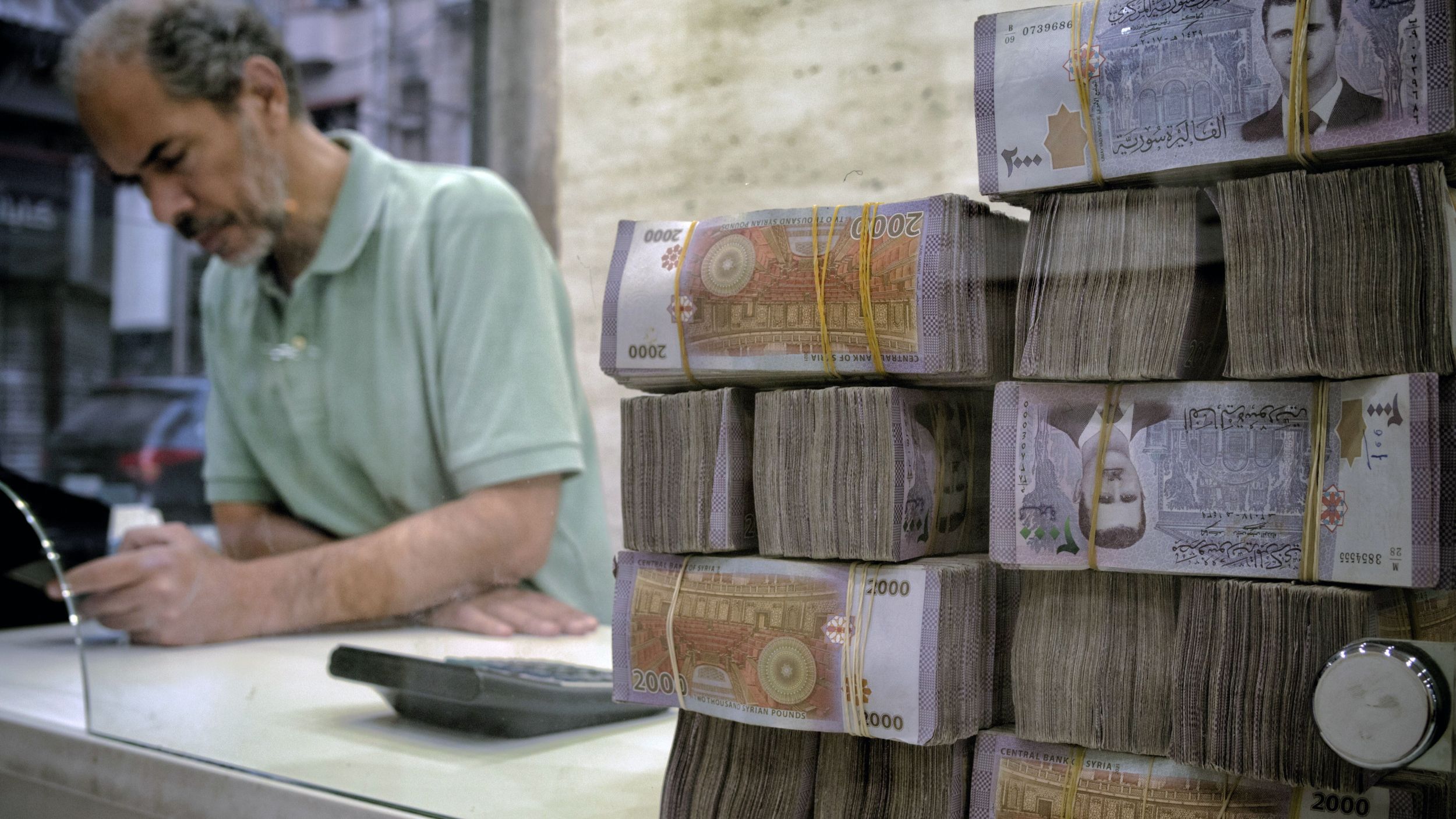
One year after the fall of Bashar al-Assad's regime, the international legitimisation of the new government in Damascus remains an ongoing process. Interim President Ahmed al-Sharaa's visit to the White House for a meeting with US President Donald Trump in November, and the gradual lifting of US and international sanctions, mark a considerable shift.
Al-Sharaa has aimed to solidify the country's new geopolitical alliance with the US and its regional partners—Saudi Arabia, Turkey, Qatar and the UAE—which includes steps towards normalising relations with Israel. This realignment has served al-Sharaa's efforts to consolidate his rule and opened the door to much-needed foreign investment and international reconstruction aid.
The path toward economic recovery remains beset with challenges. Syria's needs are dire: the cost of reconstruction is estimated to range between $140 billion and $345 billion, with a central estimate of $215.6 billion, according to the World Bank. According to UN officials, 16.5 million Syrians still need humanitarian aid.
However, the economic policies pursued by the interim government do not provide the necessary pillars for reconstruction and a sustainable economic recovery. In its bid to attract foreign investment, the government has embraced a neoliberal model of economic liberalisation, sharp austerity and a shrinking public sector. These measures have been accompanied by policies and decisions that reinforce the concentration of economic power among the new ruling elite, while the vast majority of Syrians continue to live in poverty.
Boosting investment, shrinking the state
Syria's new government has repeatedly reiterated its plans for a free-market economy, with the private sector expected to drive reconstruction while the state's role in providing social services and leading growth is reduced. This strategy is based around securing foreign investment, expanding trade and privatising state infrastructure.
The primary objective of the new ruling elites has been to open up the economy to Foreign Direct Investments (FDI), particularly from Western states, the Gulf monarchies and Turkey. So far, the majority of these investments have been in tourism, real estate and financial services, reflecting a focus on short-term profits at the expense of productive sectors such as manufacturing and agriculture.
HTS must reject Assad-era neoliberalism
Syrians are facing immense economic challenges—an unstable currency, shortages and a soaring cost of living—while the transitional government doubles down on Assad's neoliberal policies. True recovery demands a new approach.
Damascus has secured numerous economic agreements and memoranda of understanding (MoUs) with foreign companies, attracting around $28 billion in investments between January and July 2025, largely from Gulf-based companies. However, many of these projects are still just announcements and have yet to be implemented on the ground.
Meanwhile, Syrian officials have continued to signal plans to scale back the role of the state. In mid-October, Finance Minister Muhammad Yasser Berniyeh said that Syria’s "goal is to have a smaller public sector with a smaller budget." So far, this has involved laying off state employees en masse and cutting or eliminating subsidies on key products and services.
An unfair tax regime
Syria's new tax system, announced in mid-July and due to take effect at the start of 2026, also reflects the new authorities' prioritisation of investment from large foreign companies and high-net-worth investors over the state. The reform introduces a unified tax structure that is likely to further reduce the state's financial capacity. Flat corporate tax rates will apply to all businesses, regardless of size, weakening the state's ability to expand its revenue base.
More than 95% of Syria's private sector consists of small- and medium-sized enterprises (SMEs), most of which need support to modernise, access finance and reduce production costs. A flat-rate corporate tax will not help to tackle these structural challenges and is fundamentally unfair. A large company accumulating vast profits should not be taxed at the same rate as a small family enterprise with modest revenue.
Foreign capital, aid and local businessmen are being relied upon to drive reconstruction and recovery, both through investments and drives for donations such as the Syrian Development Fund. Instead, a more equitable and progressive tax system should be implemented to redistribute wealth, reduce socio-economic disparities and promote social reforms. Likewise, the new government should adopt policies that protect and empower SMEs.
Spiralling living costs
Austerity measures are impoverishing the population. The decision in October to significantly reduce electricity subsidies sparked intense criticism among wide sectors of society and even protests in several cities. According to figures from Syria Report, electricity costs could increase as much as 30-fold to 60-fold per household.
Industrialists and farmers argue that higher electricity prices will raise production costs and further burden local production, already weakened by the rapid trade liberalisation pursued by the government since the start of the year. The country's negative balance of trade has only deepened.
Sex work, captagon and currency
Having grown significantly during the war, Syria's informal market for sex, drugs and money continues to thrive. Meanwhile, weak regulation is discouraging investment in the formal economy.
The increase in prices will also lead to a rising inflation rate, pushing the cost of living even higher for Syria's population. Although the authorities raised public-sector salaries and pensions by 200% in July, most of the population, whether employed by the state or the private sector, still cannot cover their monthly needs with their salaries and wages.
According to estimates by Kassioun at the end of September 2025, the minimum cost of living for a Syrian family of five living in Damascus was approximately 7.1 million Syrian Pounds (around $645). Large segments of society rely on remittances from relatives abroad, which amount to around $4 billion annually, according to estimates earlier this year.
That's why the finance minister's announcement in November of an additional 200% salary increase for workers in the health and education sectors is still insufficient. Wage increases are being outpaced by rising prices.
New elites, old patterns
The new leadership has enacted a series of measures that concentrate economic power in their hands. Reuters reported in July that a committee led by Hazem al-Sharaa, brother of the president, has been reshaping the Syrian economy through covert acquisitions of companies previously owned by businessmen linked to the Assad regime. According to the investigation, the committee has already taken control of assets worth more than $1.6 billion.
Hazem al-Sharaa's central task is to manage relations with local businessmen, attract other Syrian businessmen currently outside the country to invest and oversee investments and development funds established by President al-Sharaa. Another of the president's brothers, Maher al-Sharaa, has also been installed as secretary-general to the presidency, acting as a link between the presidency and state bodies.
Meanwhile, allocation of state contracts to private companies linked to figures affiliated with Hay'at Tahrir al-Sham (HTS), the militia formerly led by al-Sharaa, has increased. Private firms are increasingly being integrated within state institutions, blurring the line between the private and public sectors.
The establishment of new economic institutions—such as the Syrian Development Fund and a Sovereign Fund—has also raised concerns about the growing centralisation of power in the hands of Ahmed al-Sharaa and his family.
Far from challenging existing dynamics of wealth concentration and socioeconomic inequality, the interim government's economic policies reinforce them. Patterns of corruption and lack of transparency reminiscent of the former Assad regime have persisted, now adapted to benefit the new ruling elites.
© Qantara.de