Kuwait is stripping its leading intellectuals of citizenship
It came as a shock the Arab cultural world: in June, through a series of decrees, the Kuwaiti government stripped 2,193 people and their family members of their citizenship overnight. Among those affected are renowned figures from the worlds of art, literature and academia who have shaped Kuwait's identity for decades.
At the top of the lists of names is the internationally renowned Kuwaiti novelist and storyteller Talib al-Rifai, closely followed by the historian Hisham al-Awadi and the composer duo Youssef and Abdul Muhsin al-Muhanna.
The mass expatriation is part of a campaign, now in its second year, to rectify an alleged error in the granting of citizenship. The authorities' specific reasons in individual cases have not been made public.
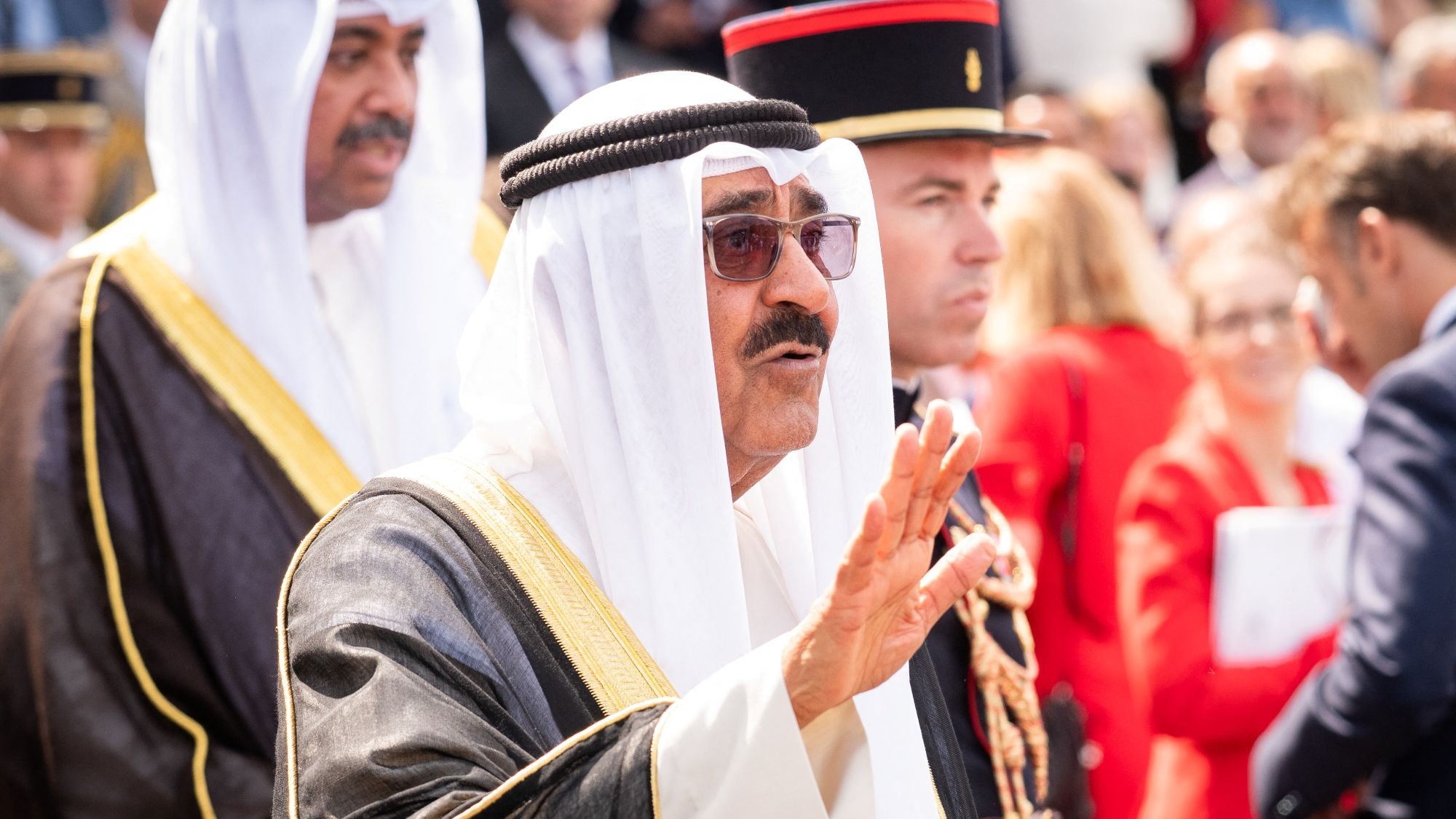
With the accession of Emir Mishal al-Ahmad al-Sabah in December 2023, a political project aimed at reversing Kuwait's democratic gains since the 1990s has moved to the centre of power. In revoking citizenship, the authorities are relying on the Nationality Act of 1959, which defines "native Kuwaitis" as those families who settled in Kuwait before 1920 and have maintained their permanent residence there.
By April 2026, over 71,000 people had already been affected by the campaign, not including their family members. In total, up to 300,000 Kuwaitis—that is, around 20 percent of Kuwait's population—may have lost their citizenship.
In June 2026, the UN Office of the High Commissioner for Human Rights (OHCHR) warned that women and children would suffer most from the legal consequences, as the loss of citizenship by a head of household automatically applies to them as well.
However, the expatriation of Talib al-Rifai and other intellectuals has a further dimension: experts view the revocation of citizenship from prominent cultural figures, without the disclosure of specific legal grounds, as an attempt to stifle critical discourse following the unconstitutional dissolution of parliament in May 2024.
Al-Rifai: chronicler of the marginalised
Talib al-Rifai was born in Kuwait in 1958. His literary work was never driven by a mere desire for fame. Rather, he conducts a painful deconstruction of the social transformation of Kuwaiti society. His novels and short stories are characterised by an unwavering commitment to the marginalised.
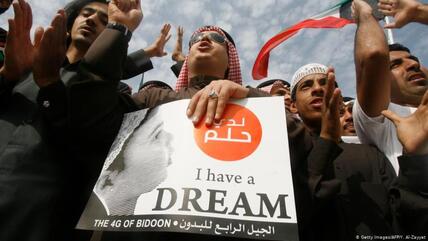
As early as his 1988 novel "Shadow of the Sun" (ظل الشمس), he broke a fundamental taboo in the Gulf states by writing about the systematic exploitation of migrant workers. He also addressed the issue of the so-called Bedoon, a minority in the Gulf that has long been stateless.
The Bedoons – Kuwait's stateless minority
For more than 50 years, the Bedoons have been living in Kuwait without citizenship status. Now, it seems this problematic situation is finally being addressed. There may be light at the end of the tunnel. By Dina Elbasnaly
The author received a state grant for his 2002 novel "The Scent of the Sea" (رائحة البحر); he was later awarded the prestigious state prize for his life's work. It borders on a Shakespearean tragedy that, as a result of an administrative decision, he is now facing the same fate as many of the characters in his novels: a life without an official identity.
Al-Rifai's influence extends far into the Arab cultural scene. He is regarded as one of the most influential voices in contemporary Arabic literature and, amongst other things, served for many years as an adviser to the Kuwaiti National Council for Culture, Arts and Literature (NCCAL) until 2018. He also chaired the jury of the International Prize for Arabic Fiction (IPAF) in 2010. In 2015, he founded the al-Multaqa Cultural Forum and the al-Multaqa Prize for Arabic Short Stories.
Support from across the Arab world
The news of al-Rifai's expatriation sparked an unprecedented wave of solidarity. The General Union of Arab Writers called on the Kuwaiti authorities to reverse the decision. A letter of solidarity, signed by dozens of Arab and European academics, translators and authors, stated:
"The news of al-Rifai's expatriation has caused deep consternation and sadness in Arab studies circles both in Europe and across the Arab world. We value his talent as a gifted novelist and his character, which is shaped by noble humanist values, and count him amongst the most outstanding Kuwaiti intellectuals."
On social media, intellectuals expressed their anger, as documented in a report by Al-Araby TV. The renowned Iraqi literary critic Abdullah Ibrahim wrote: "I have never met a citizen who loves his country as much in word and deed as Talib al-Rifai."
The Algerian writer Waciny Laredj asked, dismayed: "How can a citizen with such deep roots suddenly find himself without a homeland?" Lebanese poet Abdo Wazen added: "To you, my great one, all our Arab identities belong."
A window into the Kuwaiti soul
Does the German literary scene have a blind spot when it comes to Arabic literature? Abdulrahman Afif makes the case for the works of Kuwaiti writer Taleb Alrefai, whose socially critical literature deftly side-steps orientalist expectations.
Critical intellectuals are being targeted
Another case demonstrates that intellectuals who voice social criticism are apparently being deliberately stripped of their citizenship. In mid-June, the decrees also affected the historian Hisham al-Awadi, who teaches at the American University in Kuwait.
Al-Awadi is known for his courageous work on Kuwaiti "history from below". With works such as "The History of Slaves in the Arabian Gulf" (2021) and "The Forgotten History of Kuwait" (2025), he brings workers and women out from the shadows of official, elitist historiography.
The Egyptian philosopher and thinker Youssef Ziedan reacted strongly to the expatriation of his colleagues. According to Ziedan, the standing of nations is also measured by the symbolic capital contributed by their thinkers and key cultural figures.
Societies that cast out their own intellectuals rob themselves of their civilisational identity. The revocation of citizenship, generations after a supposedly incorrect naturalisation, raises fundamental questions about the criteria for belonging in the Middle East.
Ultimately, the case of Talib al-Rifai highlights a structural problem in many legal systems across the Arab world. In many places, citizenship is not understood as an inalienable fundamental right, but as a flexible privilege that can be revoked by the executive for political reasons and without fair judicial oversight.
At the same time, these developments also make it clear that, whilst governments and authorities have the power to annul passports, documents and administrative certificates with the stroke of a pen, they cannot erase the authors' sense of belonging to their homeland from their works. Literature cannot be stripped of its citizenship.
This text is an edited translation of the German original. Translated by Max Graef Lakin with the support of AI-assisted translation tools.
© Qantara.de