"There's room for everyone between the river and the sea"
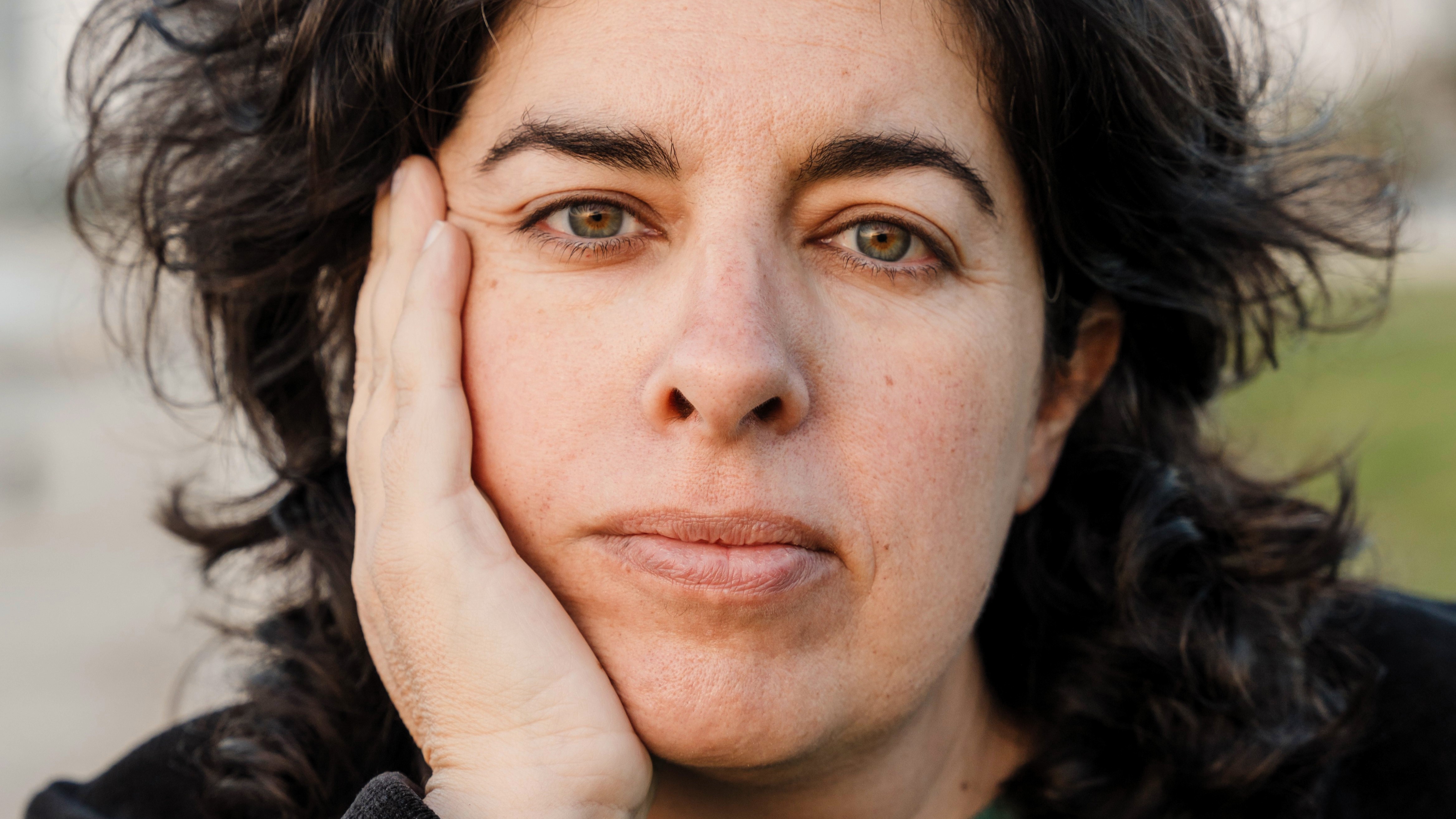
Qantara: You were recently in Berlin to screen your film "Shooting". Tell us a little about it.
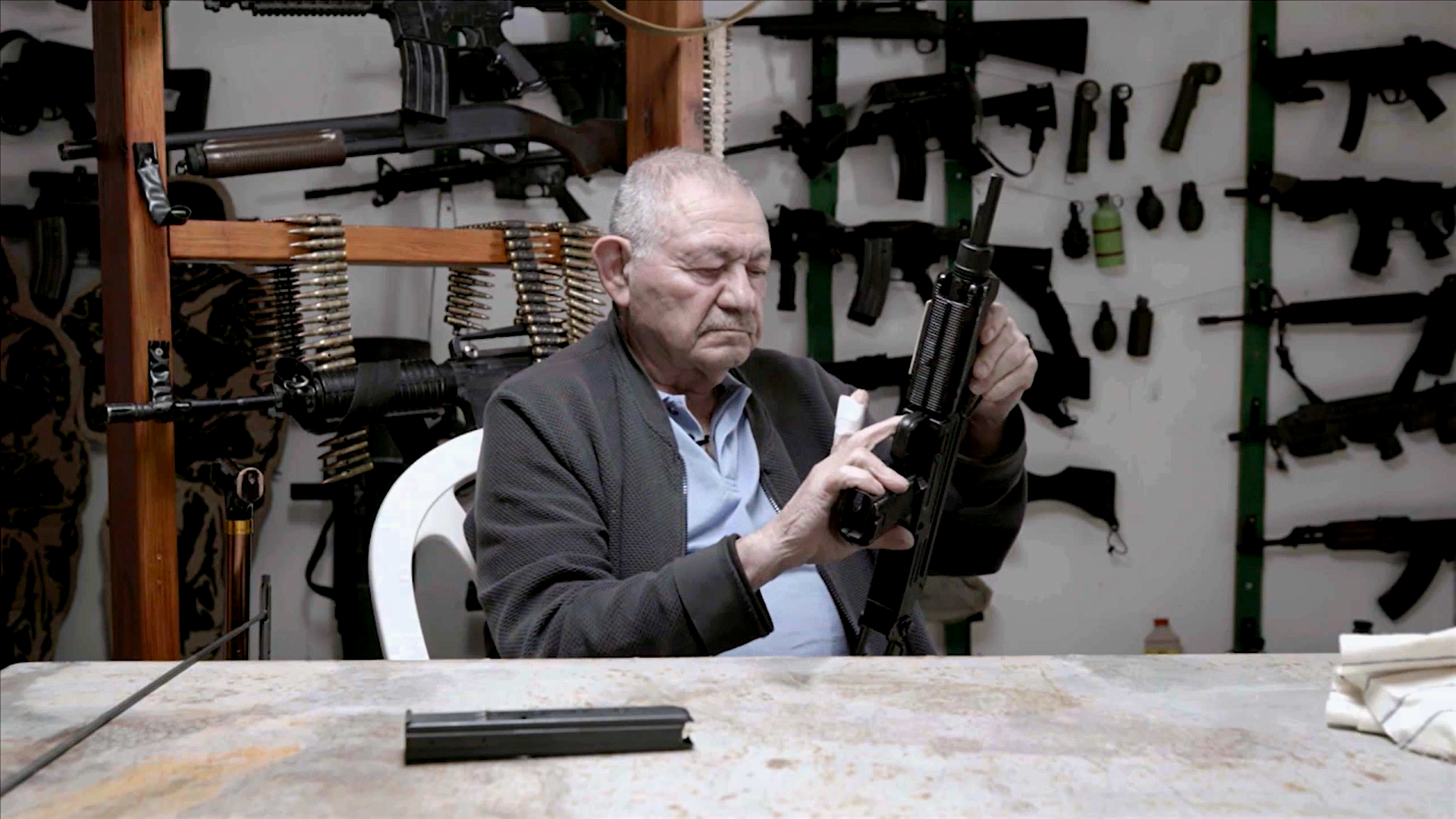
Netalie Braun: The film looks at the Israeli film and television industry and its collaboration with the security establishment, the army and the police, through three specific stories. One, for example, is about an elderly Israeli man who rents out fake weapons to film productions. The different stories have fascinating connections with each other.
They are linked by the theme of screen representations of combat and violence. The elderly man's weapon facsimiles can, for instance, be seen in the well-known series "Fauda", which deals with the Israeli-Palestinian conflict. Does Israeli society glorify war?
The army resides in the DNA of Israeli society. It is in the education system and the media, in cinema, television and the myriad images that surround society. In the 1990s, there were winds of change. It seemed that we were heading towards a different future that would rescue us from endless wars. A peace agreement was signed with Jordan, Rabin and Arafat shook hands.
But after Rabin's assassination (in 1995, ed.), Netanyahu's entry into the government (in 1996, ed.) and the legitimacy he gave to racist parties, society in Israel entered a deep regression to the low point where we find ourselves today.
Last year, both "Shooting" and your feature film "Oxygen" were screened in Israel. Both deal with war and both criticize the IDF. What made you produce anti-war films?
I observe the reality in which I live and respond to it. Both films are anti-militaristic, because that is my political and ethical position. And as an artist, it is difficult for me to create anything else. The greatest urgency in this space is to end the occupation and enable an equal and fair life for both (Israeli and Palestinian, ed.) peoples.
"Oxygen" won Best Film at the Jerusalem Film Festival in 2025. The judges praised "the radical reading of Israeli existence centred on a mother who courageously chooses to stop being a victim of the Israeli ethos." What do you see as the "Israeli ethos"?
The belief that every Israeli grew up with is that we have no choice but to live by our swords and that everyone is out to destroy us, as it says in the Haggadah that everyone reads on Passover Eve. Clearly, this is a belief that stems from the tragic history of the Jewish people that led to the establishment of the state of Israel.
But it is impossible to live and relive this collective trauma indefinitely. Over the years, and after much bloodshed, we have succeeded in establishing a relatively stable peace with Egypt and Jordan. And when the Palestinians finally receive their own state in this area, we will also be able to establish peace with other countries around us.
The ethos of eternal life by the sword requires the sacrifice of children to the army, generation after generation. In the face of this sacrifice, which stands in total contrast to the maternal/parental instinct, I created "Oxygen."
For the film, I wrote the character of a mother who collaborated with the militaristic and educational establishment, she herself is the daughter of a 'Hero of Israel' and was raised on this ethos from childhood. When her son is scheduled to be sent to war in Lebanon, she undergoes a metamorphosis.
The current Israeli Culture Minister, Miki Zohar, has become notorious for his criticism of films that reflect negatively on the IDF. He also denounced your film. Has the political climate made your job difficult?
Public film funds in Israel operate independently, and I started working on both films many years ago, when there was no overt or covert pressure on the industry. Both of my films were publicly funded. Unfortunately, today, it is hard for me to believe that this would have been possible.
The supposed "Culture Minister" does not usually watch the films he criticizes but still discouraged Israelis from seeing "Oxygen" at the Jerusalem Film Festival last year because, according to him, it harms the morale of the army and serves the enemy's narrative.
When I held a screening of the film for the organizations Breaking the Silence and Standing Together at Tel Aviv University, we had to move the location several times because it had been leaked and right-wing activists were called to sabotage it.
This is the situation. Domestically, there is censorship and violence against critical cinema by the government and its proxies, and internationally, a boycott of any Israeli work regardless of its content.
Why is there such an intense boycott of Israeli work?
For most audiences abroad, Israelis are a monolith. What represents Israeliness now is our sick government, which is truly horrific. This government does represent parts of the country, but there is also a broad public that despises the government, fights against it, and suffers under it.
But some of the justifiably harsh criticism of Israel crosses into illegitimate areas. Opposition to the very existence of Israel is also racism, especially in the historical context of the founding of the state of Israel as a refuge for Jews. It's hard for me to understand that. There's enough room for everyone between the river and the sea.
"The system is based on violence"
In this interview, the head of Israeli NGO B’Tselem discusses the increasingly boundless violence in the region and argues that defending Palestinian rights is defending human rights worldwide. She urges Germany to lead in upholding international law.
In the Q&A section after the film screening in Berlin you mentioned that you are considering leaving Israel, depending on the results of the upcoming parliamentary elections. Is this still true?
This is a very painful issue. My oldest sister left the country with her family just before her eldest son turned 16 so that he wouldn't be drafted into the IDF. It's very difficult for me today to identify as an Israeli, and it's hard for me to pay taxes to a government that uses them to finance crimes that I oppose with every fibre of my being.
On the other hand, this is my home and my language. This is my struggle and my moral obligation to continue trying to change the reality in this space. And on a personal level, my elderly parents and my younger sister and her family live here.
However, if the current government of nightmares is elected in one form or another in the next elections, if they even take place and aren't postponed by another wave of war and the creation of incessant states of emergency, I will do everything to leave with my children and take my extended family with me. I don't know if I will continue to make films about Israel from abroad or if I will continue to make films at all. The extreme uncertainty we are in affects every aspect of my life.
Do you think that another kind of Israel is possible?
I hold within me contradictory movements of equal strength. Great pessimism and anxiety, and on the other hand, from a broader and historical perspective, many nations have managed to escape from unimaginable low points and re-educate themselves. So maybe there is always a chance.
© Qantara.de