"Our documents reveal how state terror was organised"
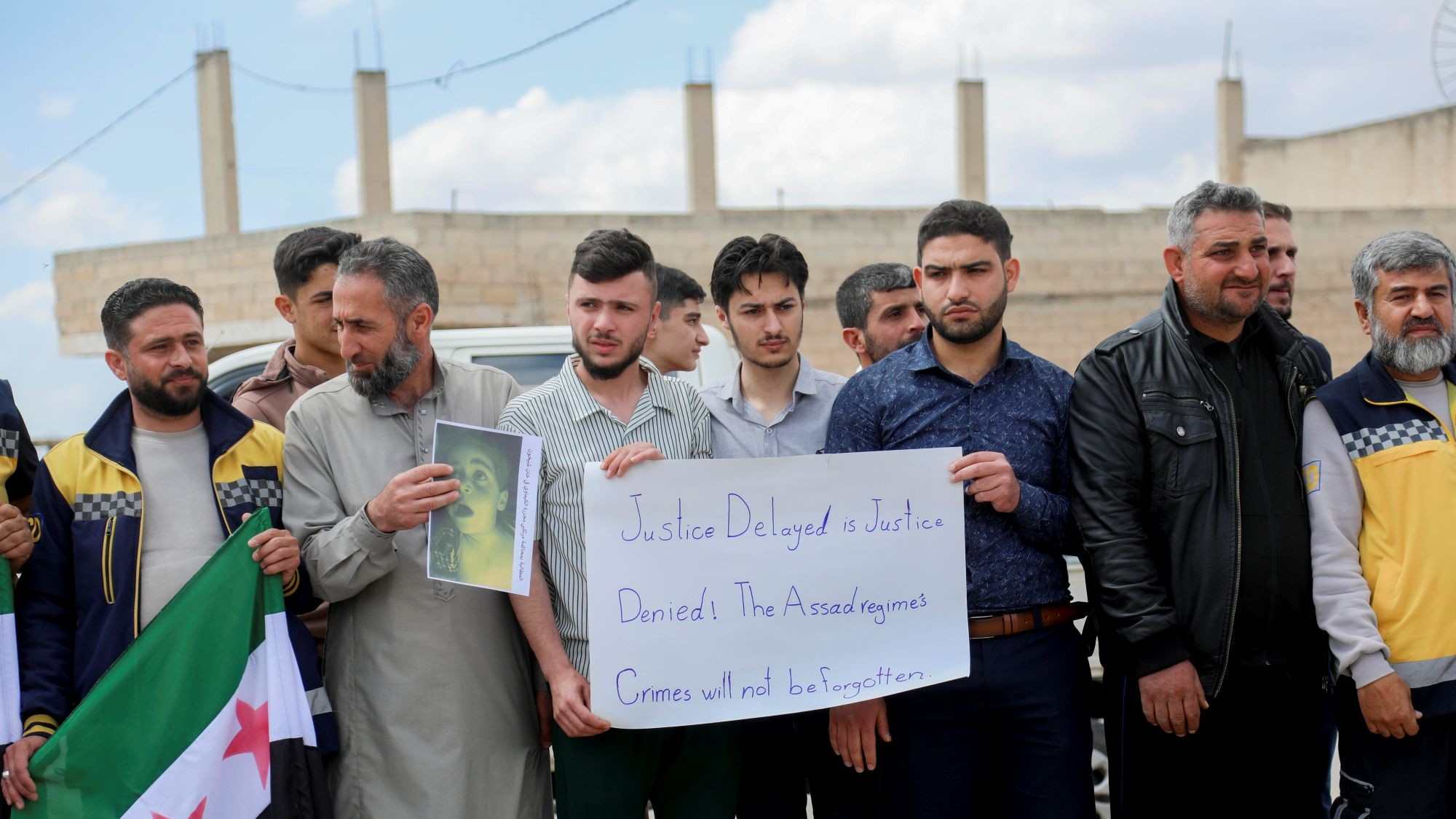
Qantara: A year ago, rebels toppled dictator Bashar al-Assad. How does it feel to mark this anniversary?
Hassan al-Hariri: I'm still euphoric. We can now walk through the streets without fear. I wasn't surprised when Assad was overthrown. It was obvious that the man was finished. He had so many opportunities to lead his country better, and he didn't take a single one.
During the dictatorship, you had to hide your identity. Now you give interviews to foreign journalists using your full name. How does that feel?
I'm glad I can now speak openly about my work. We Syrians feel that the values on which our revolution was built are actually being realised: freedom, dignity and freedom of opinion. We can be politically active. This was impossible under the old regime.
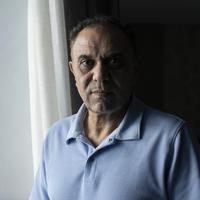
During the war, you and your team collected more than a million documents proving the atrocities committed by Assad and his officials. You risked your life for it. What motivated you?
I've always been critical of the Assads, both Hafez and his son Bashar. They oppressed their people and turned Syria into a surveillance state that made any form of criticism impossible. That's why I lived in Kuwait for several years. When the revolution started in 2011, I immediately returned to Syria. I attended the funerals of people who had been killed by the regime's bullets during peaceful protests. I knew many of them personally. I quickly realised that we had to document everything in order to prove the crimes later.
When did you start collecting evidence?
The moment the revolution turned into an armed conflict. The regime responded to the peaceful protests with a brutal crackdown. Then, young men defected from the army, founded the Free Syrian Army and fought against the regime. By the end of 2012, opposition forces had captured some areas.
That same year, I co-founded CIJA and recruited a team of Syrian investigators. We were 17 men and women. We started training, for example, on how to preserve evidence. It was important for us to start working while the war was still ongoing. We were afraid that otherwise important evidence might be lost.
Where did you find the documents?
We found them primarily in areas where the rebels had taken control and driven out Assad's forces. There, we combed through the abandoned buildings of the regime, the military, the security forces and the intelligence services.
We then divided the documents and hid them in different places. It would have been too risky to keep them all in one place. If fighting had broken out, they would all have been lost at once. We took them to remote areas and gave some to Bedouins living in tents. We were sure the regime wouldn't look for them there.

The false saviour
Ahmed al-Sharaa is celebrated for liberating Syria from the Assad regime. But the former militia leader has a dark past. Will the people, out of desperation, once again fall prey to a brutal dictator?
How did you manage to smuggle the documents past the regime's checkpoints?
We always had to come up with new ideas. Sometimes we would join a funeral procession and mix with the people dressed in black, because they weren't stopped. Or we would pretend to relocate to a new house or office and tape the documents under the furniture in the van. At one point, we thought it would be better to get the documents out of Syria.
How did you do that?
I might be able to talk about that at one point in the future. What I can say is that it was very dangerous, and many people inside and outside Syria were involved. The documents were then stored and analysed by our staff in Europe.
What do the documents show?
They reveal how Assad's state terror was organised. The regime was very bureaucratic and documented everything to the smallest detail. In that respect, it was similar to the Nazi regime.
The documents show how the regime specifically targeted the protestors and the opposition. They provide information about entire chains of command. The so-called security committees, which coordinated the intelligence services and security apparatuses, were hierarchically structured. Assad used this hierarchy to give instructions. He did not kill anyone himself. But even the ordinary soldier would not have pulled the trigger without the order of the president or his officials.
Even before Assad's fall, your documents helped to convict regime officials, for example, in Germany and Sweden. There, courts are allowed to prosecute war crimes regardless of where or by whom they were committed. The case of Anwar Raslan in particular made headlines. As head of interrogations in Damascus, he was responsible for the torture of thousands of people. He was sentenced to life imprisonment by the Koblenz Higher Regional Court in 2022.
After the arrest of Raslan, we were contacted by German law enforcement. They wanted to know if we had any information about Raslan. We provided them with dozens of documents, including interrogation transcripts and statements from former employees of his department.
Our documents played a crucial role in many trials in Europe; in some cases, we were also called as expert witnesses. We were able to prove that a specific person was present when someone was tortured or killed, or that they held a position at the time that allowed them to order these crimes. People could not pretend they didn't know what was going on.
Sex work, captagon and currency
Having grown significantly during the war, Syria's informal market for sex, drugs and money continues to thrive. Meanwhile, weak regulation is discouraging investment in the formal economy.
At the time, the public wasn't aware of what your team had contributed to these trials. Did that bother you?
No. Some of my colleagues sometimes complained that they would risk their lives and not get credit for it. I just wanted our work to make a difference. Now that Assad is gone, the focus must be on building democratic structures. This includes a legal system based on international standards to make sure that such atrocities won't happen again.
This also requires a comprehensive investigation into the regime's crimes. How can your documents contribute to this?
Our archive now belongs to the Syrian people. It contains more than 1.3 million documents and interviews with nearly 6,000 witnesses. We have digitised and analysed it so that it can be used in future court proceedings.
After Assad's fall, we contacted the new government and met with representatives from various ministries. At first, they were surprised and said they had never heard of us. We explained that we had to keep our work secret for security reasons. The Minister of Justice, Mazhar al-Wais, in particular, has shown great interest in our archive.
When he took office, President Ahmed al-Sharaa promised to make transitional justice a priority. Are you seeing any progress yet?
Al-Sharaa has kicked off some important developments over the past 12 months. He has brought Syria back onto the international stage. He has formed a cabinet and held parliamentary elections. And he has established two important new institutions with which we intend to work closely: the Commission for Transitional Justice, which will investigate the regime's crimes, and the Commission for the Missing, which will work through the numerous cases of enforced disappearances.
These are steps in the right direction, but we are facing huge challenges. Things take a lot of time. The law on transitional justice is currently being drafted. The new parliament should hold its first session and vote on the law by the end of December. Only then can the court proceedings begin.
"Accountability is more important than punishment"
Can there be justice after the horrors Syria has endured? Sociologist Mohammed Bamyeh sees signs that the country's new leadership wants to confront the past, but warns against the dangers of selective justice.
Many Syrians feel frustrated. For them, the fight for justice is progressing too slowly. They fear that many former officials could evade justice for their crimes. Do you understand their concern?
Yes, absolutely. So far, only a few high-ranking officials from the regime have been arrested, including former Interior Minister Mohammad al-Shaar and the head of the Air Force Intelligence Directorate, Ibrahim Huweija. An investigating judge and a prosecutor are already working on the cases against these men.
We were asked if we could assist the authorities in these and other cases. We would gladly hand over our documents, but there is no database into which we could transfer them. Syrian investigators and judicial officials still face a severe lack of equipment and resources. While there is international support for projects that promote civil society dialogue, there is very little concrete support for the institutions that are supposed to carry out transitional justice.
What is needed to push it forward?
More resources are urgently needed: money, staff and international expertise. The Commission for Transitional Justice has only eleven members; it would need thousands to really have an impact. We are talking about a regime that was in power for 54 years and waged war against its own people for 13 years. These are crimes on an unimaginable scale.
Clashes between Assad's supporters and opponents break out regularly and there are ongoing incidents of targeted killings. Is al-Sharaa doing enough to reconcile the country?
Syria has many different ethnic and religious groups. Assad created divisions between them to consolidate his power. It will take years to overcome these frictions. The authorities take the problem of vigilante justice very seriously. For example, they want to establish a platform for anonymous complaints, because many people are afraid to report attacks.
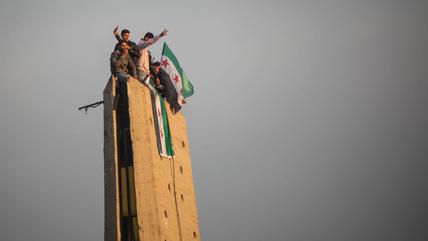
Assad's long shadow
In Syria, "minority protection" has long been used as a pretext for pitting religious and ethnic groups against each other. We Syrians must refuse the weaponisation of our identities, because the new government is counting on division too.
We need a new social contract that respects the needs of all Syrians. And a strong civil society that monitors the political process. In the past, people thought that the state would regulate everything. But in a new state with limited resources, everyone must get involved.
The Syrian government has issued an arrest warrant for Assad. Meanwhile, he is enjoying a luxurious life in Russian exile. Do you think he will ever be held accountable?
That is a political question. Al-Sharaa recently spoke with Russian President Putin about the possibility of extraditing Assad. If the Russians are given guarantees that their interests in Syria will be protected, I think it's possible. It would be important for Syrians to see Assad in a Syrian court. But perhaps he will be killed before this happens. We can't rule that out.
This text is an edited translation of the German original. Translation by the author.
© Qantara.de