Humanism and humour
Topics
Vahid, a car mechanic, believes he recognises his former torturer, Eqbal, when the man shows up at his garage with a broken-down car. Eqbal's voice and limping gait are all too familiar to the ex-prisoner.
Without hesitating, Vahid abducts Eqbal in his van. At first, he considers burying him alive in a wasteland near Tehran. But he's caught in two minds and decides to seek out his fellow ex-prisoners to discuss how to deal with their tormentor.
This is the gripping premise of Jafar Panahi's film "It Was Just an Accident", for which the Iranian director received the Palme d'Or at Cannes in May and which is now being released in cinemas. In the course of the film, Vahid's search for fellow torture victims becomes a vivid snapshot of Tehran society.
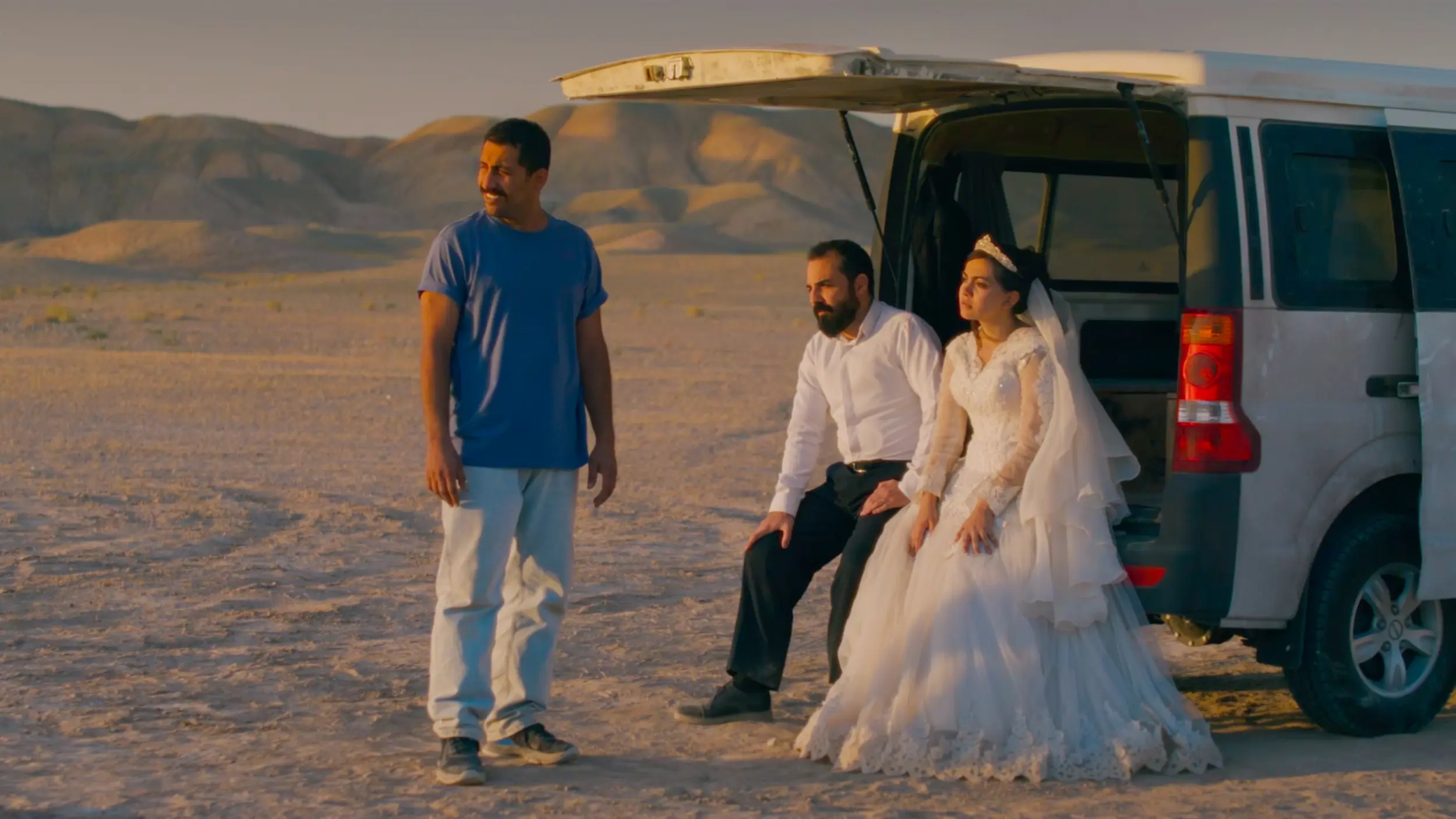
With the drugged Eqbal stowed in the back of the van, they travel through a variety of social milieus—from a car repair show to a bookshop and then straight to a wedding shoot, where Shiva, another ex-prisoner, works as a photographer. The temperamental bride, Goli, also a fellow inmate, comes along with her groom.
The audience at the film's Cannes premiere was particularly moved because it was the first time since 2010 that Panahi had been able to attend a cinema screening of one of his own films alongside the starring actors. The 65-year-old had been invited to Western festivals several times, but in vain. At the 2011 Berlinale, a seat was left empty to symbolise the director's ban from leaving Iran.
Since then, despite professional bans, house arrest and threats of imprisonment, Panahi has been undeterred. He has made six films, all of which have won awards. Hailing from the northern Iranian border province of Azerbaijan, Panahi's work is grounded in his own experience and fate, as well as the broader situation for cultural workers in Iran and their struggle for freedom of opinion.
"This is not a Film" (2011) was, in its very title, an ironic subversion of Panahi's filmmaking ban. In it, a depressed Panahi, isolated under house arrest, considers how to make a film with only minimal resources. In "Closed Curtain" (2013), the protagonist, this time a dissident writer, barricades himself in a villa behind drawn curtains.
Panahi was awarded the Golden Bear at the Berlinale in 2015 for "Taxi Tehran". In it, he played himself as a cheerful taxi driver who chats with passengers about their personal lives and politics. Sometimes, all it takes is a camera mounted in a car to provide a cross-section of an entire society. "Taxi Tehran" was followed by the road movie "3 Faces" (2018) and "No Bears" (2022).
Society through a car window
Panahi's "small" films share an expansive theme. They highlight the destructive effects of dictatorship while retaining a sympathetic, often ironic view of the people and their living conditions.
The director shares this humanism with his mentor Abbas Kiarostami, who also used the technique of filming from a car window to create smooth transitions between milieus and locations, while creating a surveillance-free social bubble inside the car. In terms of political engagement, however, Panahi surpasses his enigmatic mentor.
In 2022, Panahi was imprisoned—again—but released after six months because his 2010 verdict was no longer legally valid. He immediately began work, again without permission, on what is probably his most critical work, "It Was Just an Accident".
This film, too, is shot in such a way that the crew could have packed up at a moment's notice. Panahi's pared-back dramatic arrangement could just as easily be staged as a play. Each of the ex-prisoners Vahid consults has their own view on how to deal with the accused, who stubbornly denies everything.
Some want to make short work of him, others want to beat a confession out of him. If he were to be let go, they fear revenge, but if he were to be killed, they would be no better than him and his ilk. At the same time, Eqbal, the alleged torturer, is also portrayed as a human being and a devoted family man.
Strong female characters in Iranian cinema
The multi-award-winning "The Seed of the Sacred Fig" by Mohammad Rasoulof, who was convicted alongside Panahi in 2010, deals with a similar perpetrator figure. In both films, the representatives of a brutal patriarchy collapse under the pressure of women who fight back.
The story of an Oscar nomination
Shot and set in Iran, "The Seed of the Sacred Fig" is this year's Oscar nomination from Germany. The film deftly portrays political and intergenerational conflicts in Iranian society but ignores the Kurdish origins of the "Women, Life, Freedom" movement.
The sight of a woman without a headscarf, featured often in Panahi's films, has become normal in Tehran since the "Woman, Life, Freedom" protests and no longer has scandalous potential. Goli, the bride in "It Was Just an Accident", physically lashes out at other characters at points in the film and generally makes her presence felt, loudly. Shiva, the photographer, physically confronts the kidnapper, giving the film its decisive twist. Iranian cinema has always had strong female characters.
What could be more problematic is the way that Panahi approaches the practice of torture in Iran, shows its consequences, and yet chooses to formulate a social utopia. The characters in his film do not take revenge, but come together in a democratic process to discuss how to deal with their alleged tormentor. Central to Panahi, a humanist, is the question of whether survivors can refrain from retaliation for the sake of their shared future.
These moral questions and considerations make "It Was Just an Accident" reminiscent of the classics of morally conscious US cinema, like courtroom drama "Twelve Angry Men" or even a handful of Westerns. Panahi, nevertheless, leaves room for everyday banalities and situational comedy despite the serious setting.
There are, for example, the numerous cases of colourful profanity and passages of dialogue littered with crude wordplay. In one scene, two law enforcement officers approach the car but, in exchange for a satisfactory fee, refrain from checking the interior as the group, who had been on the verge of a brawl, pretend to be a cheerful wedding party, complete with bride and photographer.
The fact that Panahi repeatedly makes the audience laugh is perhaps the greatest weapon of his rebellious cinema. During an international promotional tour for the Foreign Language Oscar, which the film could win next March, he was sentenced to one year in prison and a two-year travel ban for "propaganda against the system", as was reported in early December. Iran begrudges its filmmakers their success.
This is an edited translation of the German original. Translated by Max Graef Lakin.
© Qantara.de