"International law is not a suggestion"
Topics
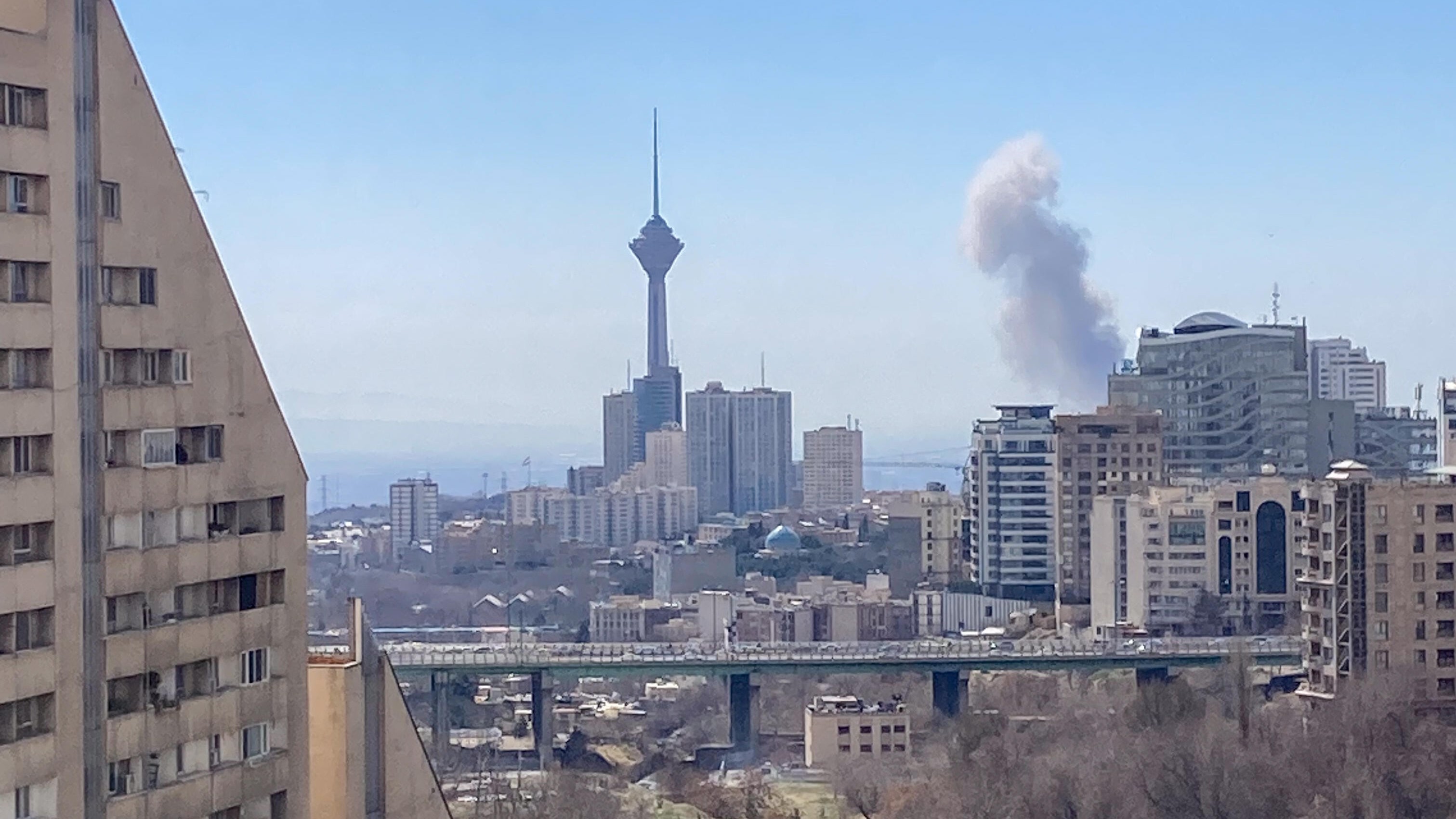
Mr. Ambos, the US and Israel have been attacking Iran since Saturday. Is this legal under international law?
Kai Ambos: No. There are only two exceptions to the prohibition of violence: if the UN Security Council approves military action, or if a state is defending itself against an armed attack. Neither of these applies to the attack by the US and Israel.
Israeli Prime Minister Netanyahu claims that this war is a preventive strike against Iran's nuclear programme. US President Trump refers to Iranian long-range missiles that could threaten the US. Do these justifications have any legal relevance?
After the Twelve-Day War in 2025, the US government stated that Iran's nuclear programme had been completely destroyed or severely compromised. In this respect, these justifications are puzzling. Even if we assume that the Iranian nuclear programme poses a residual threat, this does not justify war. According to Article 51 of the UN Charter, which formulates the right to self-defence, an armed attack must have taken place. As was the case with Russia's invasion of Ukraine in 2022.

Iran has been threatening to destroy Israel for a long time. Does that not play a role?
Firstly, the preventive or even pre-emptive use of force is highly controversial under international law. International law is not a wish list drawn up by professors, but rather law made by states. The states of the Global South, which we tend to overlook, are particularly opposed to a broad expansion of the right to self-defence.
Secondly, even if we accept such an expansion, Iran's general, abstract threat to destroy Israel is not sufficient. For preventive military action, an attack by Iran would have to be imminent and concrete, and a military strike would have to be the last resort to prevent it. There is no indication of this. The US was in negotiations with Iran until Saturday.
So this war is illegal. Are there any experts in international law who would disagree, or are you expressing an international consensus?
As far as I can see, there is a broad consensus, not only in Germany, that this war is contrary to international law. Some speak of a manifest violation of the UN Charter, others even of a war of aggression, because they believe that this attack—according to the definition of a war of aggression—constitutes a clear violation of the UN Charter in terms of its nature, severity and scope.
Iran has responded with missiles targeting US bases in the Gulf and various targets in Israel. Is this covered by the right to self-defence?
Iran has the right to defend itself against attacks by the US and Israel, which violate international law.
And is it therefore permitted to fire on US bases in other countries?
Only when these have been used to launch US attacks. If not, which seems to be the case for the Gulf states, these counterstrikes are not covered by the right to self-defence. Even less legally justifiable are attacks on civilian targets like residential buildings or the civilian population as such. Self-defence must also be proportionate.
France, Great Britain and Germany have threatened "defensive military" measures against Iran. Are they allowed to do that?
Yes and no. It's complicated. If Gulf states that are attacked by Iran ask European states for help, this is permissible under international law as collective self-defence. Of course, these states can also defend themselves against Iranian attacks. But no state may support the attack by the US and Israel on Iran, which contravenes international law. A strict distinction must be made here.
The perils of a power vacuum in Iran
The US believes removing Tehran's rulers will neutralise the nuclear threat. Yet destroying the Iranian state would not eliminate the danger of proliferation; it would decentralise it, making it elusive and impossible to monitor.
The issue at stake is the use of the British base Diego Garcia by the US, which the British government now wants to allow after all…
Exactly. This is permissible when it comes to defensive actions within the framework of the aforementioned collective self-defence against Iranian attacks, but not to support attacks on Iran.
The US is using Ramstein Air Base in Germany for the logistics side of the war. Is this legally questionable?
Like any other state, Germany is not permitted to provide any support for actions that violate international law. If Ramstein is involved in the current war, Germany must at least protest against it. This is also stipulated by the Basic Law [Germany's constitution], which makes international law part of national law. According to Article 26, a war of aggression is explicitly prohibited. If the war in Iran is defined as a war of aggression, this would constitute a serious violation of the German constitution.
Let us assume that the Iranian regime collapses and Iran transforms into a functioning democracy. Would that legally justify the war of aggression waged by the US and Israel?
From a utilitarian point of view, one could come to that conclusion. However, such consequence-oriented considerations do not undo the original breach of law. If I steal money from you, invest it at a profit and return it to you with that profit, you do gain an advantage. But the original theft—the violation of your property—remains. That said, it could be argued that the positive consequences of a breach of law could reduce the offender's legal liability, i.e. their punishment.
It is not only through this war that the US seems to be tearing down the multilateral world order. It is withdrawing from the climate accords, withdrawing from financing the UN and imposing sanctions on the International Criminal Court. What use is international law if the central player in world politics no longer abides by anything?
International law is not just about peacekeeping. Climate protection, migration control, economic agreements and consular assistance abroad—these are all matters of international law. In a textbook on international law of several hundred pages, perhaps ten percent is devoted to the subject of peacekeeping. We cannot resolve global crises without intergovernmental cooperation and thus international law.
Moreover, even this US administration is not completely withdrawing from international law and its institutions. Last Saturday, the US representative at the UN Security Council tried to justify the attack on Iran. There is no "empty chair" policy.
Meaning?
The Soviet Union boycotted the UN Security Council during the Korean War in 1950. We are not yet at that point. Russia and the US are currently violating international law on a massive scale. But that is not true of the other 190 states.
Let us recall the Davos speech by Canadian Prime Minister Mark Carney. For middle powers and the Global South, international law remains crucial. The African Union and the Arab states criticise Iran's counterattacks as contrary to international law. The European Council has also committed itself to international law, albeit in very general terms.
Smaller countries depend on a rules-based order governed by international law. The alternative is a chaotic world in which the US and China, as the only superpowers, act as they see fit. In such a world, small and medium-sized powers would be crushed.
German Chancellor Merz speaks vaguely of a dilemma, framing it as a conflict between upholding international law and the goal of replacing the Iranian regime. Is this a credible position?
I don't think so.
The man pulling Iran's strings
Ali Khamenei is one of the most powerful figures in world politics, with influence extending far beyond Iran. Who is the man who, since 1989, has steered the Islamic Republic with an iron grip? A new biography by Ali Sadrzadeh sheds some light on the mystery.
Why not?
We cannot credibly condemn Russia's war of aggression if we do not clearly denounce violations of international law in Gaza, Venezuela or the Iran war. Credibility is a currency in international relations. Germany cannot preach a rules-based order and then capitulate out of fear of Trump. This is not only a question of principles, but also of our interests. After all, the rules-based order and international law also protect us as a middle power. Empty phrases and excuses will not help.
Which empty phrases do you mean?
When Foreign Minister Wadephul says that the Iran war cannot be assessed under international law and must first be examined in detail, this is an evasion. The situation under international law is clear. The first statement by the E3…
...by Great Britain, France and Germany…
…gives the surreal impression that it was Iran that started this war last Saturday. Why not state the facts? I have long wished for the Iranian people to overthrow the inhumane mullah regime. But that does not mean I can deny who started this war. This position does not preclude realpolitik pragmatism, but pragmatism also means acknowledging the real destructive consequences of this war on Iran, on the region and on the global economy.
Nevertheless, what use is international law to us at present if it is being ignored?
International law is not, as the AfD [German far-right party] would have us believe, a kind of suggestion that one can choose to follow or ignore. It is a binding law and, in Germany, is even enshrined in the constitution. Anyone who ignores international legal assessments is, in fact, ignoring the constitution. No German politician should do that. And conversely, one should ask: what is the alternative to international law?
And?
A politics of lawlessness, as embodied by leaders such as Trump and Putin. Domestically, Trump is fighting the judiciary and the separation of powers; internationally, he is fighting international law. Ultimately, this is a return to the absolutist monarchy of a figure like Louis XIV, who famously declared, "I am the state", and accepted no legal restrictions whatsoever. International law, like any law, is nothing more than a limitation of power. Without international law, Trump and Putin, the new absolutist monarchs of the 21st century, will act without rules or rights. That will not serve us well.
Originally published on Taz.de. Edited and translated from German by Max Graef Lakin.
© taz. die tageszeitung