The road to a new Syria
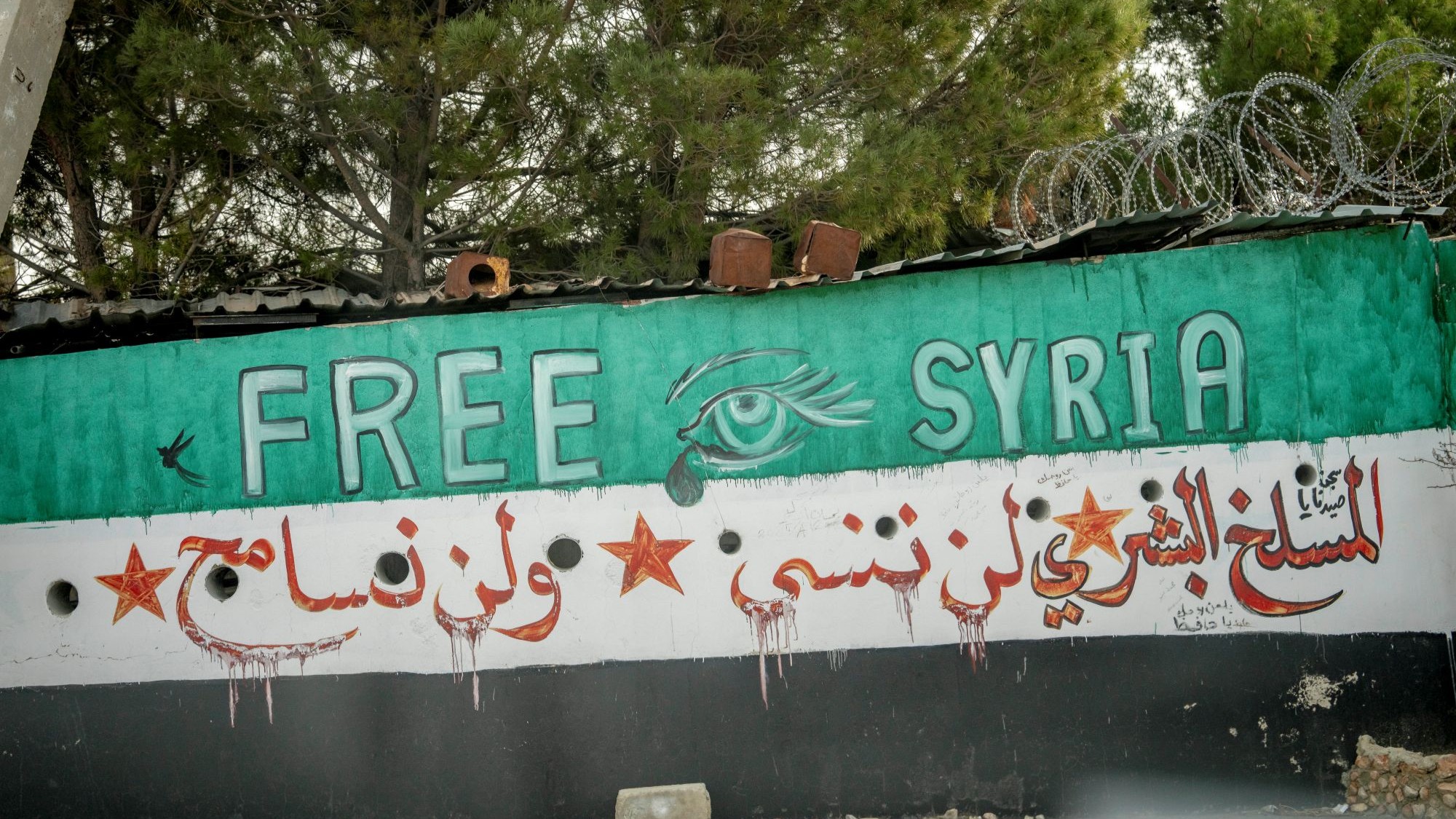
After more than 13 years of war, a rebel alliance led by Hayat Tahrir al-Sham (HTS) brought down Syria's long-time ruler, Bashar al-Assad, in the early hours of 8 December. His family had ruled the country with an iron fist since 1970.
More than a million Syrians have since returned to their homeland. But hopes for a new beginning are being overshadowed by new outbreaks of violence. The transition remains fragile, and the conduct of the new rulers in Damascus raises doubts as to whether they are actually prepared to engage in inclusive governance.
How is Syria's political transition progressing?
The HTS elite has been shaping Syria's transition since Assad's overthrow. At the end of January, Ahmed al-Sharaa was appointed interim president. The Parliament and the Ba'ath Party were dissolved, the 2012 constitution was annulled and the dismantling of militias (see below) as well as the integration of their fighters into the new army was announced. Al-Sharaa promised an inclusive transitional process and measures for transitional justice.
In fact, several milestones have been reached: a national dialogue took place in February, a constitutional declaration followed in mid-March and a transitional government was installed at the end of March. In May, a National Commission for Transitional Justice and another for the Missing and Forcibly Disappeared were established. In October, (indirect) elections for the transitional parliament were held.
However, the concentration of power in the president's hands remains central. The constitutional declaration, which provides for a five-year transitional period, does mention democratic principles but does not designate the people as sovereign. It grants the president extensive powers; the parliament and the judiciary have only limited oversight roles.
Even though eleven of the 23 ministers in the transitional government come from civil society or are considered technocrats, and three had already served as ministers before 2011, the key positions (foreign affairs, interior, justice and defence) are controlled by HTS politicians.
In March, the Ministry of Foreign Affairs set up a General Secretariat for Political Affairs, tasked with overseeing political activities and events within Syria. This new body partly assumes functions once carried out by the Ba'ath Party and—symbolically significant—operates from the Party's former offices.
Ultimately, the promised national dialogue and an investigation of war crimes and human rights violations are not priorities for the new rulers. The National Dialogue Conference in February, for example, was concluded within two days. Participants were invited at such short notice that many in the diaspora were unable to travel. Representatives of the Autonomous Administration of North and East Syria (AANES) were excluded.
The mandate of the Commission for Transitional Justice is limited to crimes committed by the Assad regime. Yet a comprehensive reckoning with past crimes and an inclusive national dialogue would be central to societal reconciliation and to curbing vigilantism.
Has the government integrated the militias into the army?
The integration of armed groups into the new state apparatus remains partial, fragile and highly uneven. Despite the announcement of full unification under the Ministry of Defence in January 2025, the reality is a patchwork of 20 newly branded "divisions" built primarily around victorious rebel factions.
Command positions are allocated through factional bargaining, networks of local strongmen and external sponsorship (for example, Turkey-backed groups) rather than institutional criteria. Many units retain their original loyalties, command structures and security ideologies. This has produced a force that is nominally unified but functionally hybrid.
Key military institutions such as military intelligence, training academies and personnel administration have been rebuilt with cadres from former HTS security structures, while whole regions remain dominated by autonomous commanders who hold real authority on the ground.
Severe constraints such as destroyed infrastructure, the absence of a cohesive doctrine, deep ideological fragmentation and competition over resources continue to impede the emergence of a professional national army. As a result, integration has produced structure without centralisation, titles without institutionalisation and unity without cohesion, limiting its ability to support long-term stability.
Does the new government control all of Syria?

The transitional government nominally controls two-thirds of the country. The remaining territory is either under military occupation—by Turkey in the north and Israel in the south-west—or controlled by the Kurdish-dominated SDF in the north-east and Druze forces in the south.
In the short term, the issue of integrating the SDF-controlled areas must be addressed. Negotiations with the government were supposed to be concluded by the end of 2025, but currently, there is no agreement in sight. The specifics of integrating SDF fighters into the army and the rights to use natural resources such as oil and Euphrates water remain controversial. The Kurds' position has been weakened, as their role as US allies against the Islamic State (IS) is now being taken on by President al-Sharaa himself. Pessimistic observers expect fighting to break out rather than an agreement to be reached.
In the southern region of Suwayda, the situation remains complicated following the widespread violence of July 2025. The government lost control of the area in the short term, and negotiations are virtually nonexistent. Suwayda is controlled by the forces of Druze leader Hikmat al-Hijri, and the population is in dire need of supplies. Specific humanitarian measures should be taken to build trust between the government and the Druze leadership in order to enter a preliminary phase of negotiations.
The south-west is partly occupied by Israeli ground troops. In addition, Netanyahu has declared the south a "demilitarised zone" and controls the airspace. No rapid changes in territorial control are to be expected here or in the areas occupied by Turkey in the north.
What does Syria's new leadership mean for the rights of women?
The ruling faction's practical handling of women's issues goes no further than the minimal representation of women in parliament, government and decision-making positions. There is a constant effort to push women out of the public sphere, and for the past year, women have faced daily violations—killings, kidnappings and abuse—especially targeting Alawite and Druze minorities, who have suffered sectarian massacres that claimed the lives of many women and children.
This extends to the degrading way women are presented in official media. Kidnapping cases are dismissed, denied and the victims' accounts are distorted. An investigative report by the Ministry of Interior questioned the "morality" of kidnapped Alawite women and described most of them as "running away with their lovers". This reflects a humiliating and degrading attitude toward women that exploits women's bodies to punish their communities. It also sent a message of impunity to those who commit such crimes.
The ruling group follows a systematic policy of exclusion and eradication against women and any voice that opposes it. This policy takes different forms, rooted in a worldview that treats women as commodities or "owned" objects—tools for male pleasure and use, not human beings with rights and dignity.
What women need today is resistance. Women, feminist activists and organisations dedicated to women's issues must unite their efforts to stop the ongoing pattern of violations. Silence today will lead all of us into a darker future—for ourselves, our daughters and our sons. Any feminist body—whether an organisation, association or individual activist—that supports this government, seeks to justify it, or refrains from speaking out against ongoing abuses to protect its interests becomes complicit in the crimes committed against women.
Feminist struggle today is no longer merely a form of civil or human rights work but an act of resistance—neither a luxury nor a choice, but a necessity for survival. Similarly, engaging with the international community and with international human rights and feminist organisations has become essential, since Syria's rulers suppress any civil, political or rights-based work that does not serve their interests.
What are the prospects for economic recovery?
The path towards economic recovery in Syria remains beset with challenges. Syria’s needs are dire: the cost of reconstruction is estimated to range between $140 billion and $345 billion, according to the World Bank. Around 16.5 million people require humanitarian aid.
Al-Sharaa has worked to consolidate the country's new geopolitical alliance with the US and its regional partners. This realignment has opened the door to much-needed foreign investment, primarily from Western states, the Gulf monarchies and Turkey.
However, the economic policies pursued by the interim government do not provide the necessary pillars for Syria's reconstruction and a sustainable economic recovery. In its bid to attract foreign investment, the government has embraced a neoliberal model of economic liberalisation, harsh austerity and a shrinking public sector.
These measures have not challenged the dynamics of wealth concentration, and the vast majority of Syrians continue to live in poverty. Austerity measures, such as the recent decision to significantly reduce electricity subsidies, risk further impoverishing large swathes of the population, while the country's negative balance of trade has only deepened, exacerbating underdevelopment in sectors like agriculture and manufacturing.
The new leadership has enacted measures that concentrate economic power in their hands, including the allocation of state contracts to private companies linked to HTS-affiliated figures, as well as the integration of private firms within state institutions. Patterns of corruption and lack of transparency reminiscent of the former Assad regime have persisted, now adapted to benefit the new ruling elites.
What role do political parties, NGOs and informal networks play?
The new authorities have promised a transition toward pluralistic politics following the dissolution of the ruling Ba’ath Party and other affiliated parties. However, no new party law has been introduced to date, leaving political life in Syria effectively frozen.
The parliament, which is expected to be established in the near future, is officially designed to be non-party-based. Under these circumstances, many activists operate primarily through informal networks, local associations and professional unions. Decision-making continues to be shaped by security and political networks, family and societal ties, armed factions and local NGOs with foreign connections.
Critics of the transitional leadership, including Islamists, proponents of leftist ideology, or individuals expressing sympathy for the former regime, may sometimes face harassment, short-term detention, or intimidation by security forces and affiliated armed groups. Street protests may be met with coercive responses, despite the fact that protests are not officially banned.
The situation is similar for civil society groups. These organisations may conduct training programs, document human-rights abuses, or advocate for detainees, but they must navigate restrictive registration requirements and operational rules. Most operate informally. Increasingly, activists use exile networks and online platforms to coordinate campaigns, lobby foreign governments and preserve a degree of organisational freedom away from domestic or potential repression.
How is Damascus repositioning itself internationally?
The new government is trying to reconnect with its environment in a more realistic and flexible way. After years of isolation, it shows signs of pragmatism and awareness of changing regional and international dynamics. Damascus understands that the future of the country depends on rebuilding relations with Arab states and engaging with global actors in a more balanced manner.
UN-Security Council Resolution No. 2799 in November removed al-Sharaa and his Minister of Interior, Anas Khattab, from the ISIL and al-Qaida Sanctions List, part of the UN's counter-terrorism framework. Major EU, US and UK sanctions have been lifted, although targeted sanctions are still in place. There are still major asset freezes on individuals linked to the Assad regime.
Al-Sharaa aims to reintroduce Syria as a regional player without depending fully on any single power. Breaking from Syria's past dependence on Tehran and Moscow, he is opening new channels with partners such as Saudi Arabia, the UAE and even the US. With Turkey, he is engaging cautiously, taking into account Ankara's evolving position toward Syrian territory and northern border dynamics involving Kurdish actors.
As for Israel, Syria's diplomatic position remains defined by longstanding hostility and contemporary concerns over security operations near the Israeli-occupied Golan Heights, including recent tensions involving Druze communities. Yet al-Sharaa seems willing to surprise observers with his pragmatism, and he may be open to a deal with Israel if the circumstances allow.
Al-Sharaa's leadership style suggests that he is prioritising rebuilding the economy, attracting investment and regaining political legitimacy through dialogue instead of confrontation. The key question is how sustainable his domestic and foreign policy plans can be, given the volatile political and economic conditions in Syria, and the challenges he may face from Islamist factions that fought alongside him to oust Assad and could now resist his more pragmatic approach.
© Qantara.de