Did the Saudis want this war?
Topics
Most analysts agree that the US-Israeli war against Iran is a nightmare scenario for the Gulf monarchies. In recent years, they have invested heavily in presenting their countries as havens of stability and security by expanding international aviation hubs, promoting tourism and attracting international business. Now the conflict has reached their own doorstep: missiles and drones are flying toward Doha, Dubai and Riyadh, forcing temporary suspensions of air traffic.
Saudi Arabia in particular has made major efforts in recent years under its Vision 2030 programme to reduce its dependence on oil and position itself as a global economic and investment hub linking Europe, Asia and Africa: less religion, more business; less geopolitical tension, more mega-projects. The rapprochement with Iran—brokered by China in 2023—also fit neatly into this narrative.
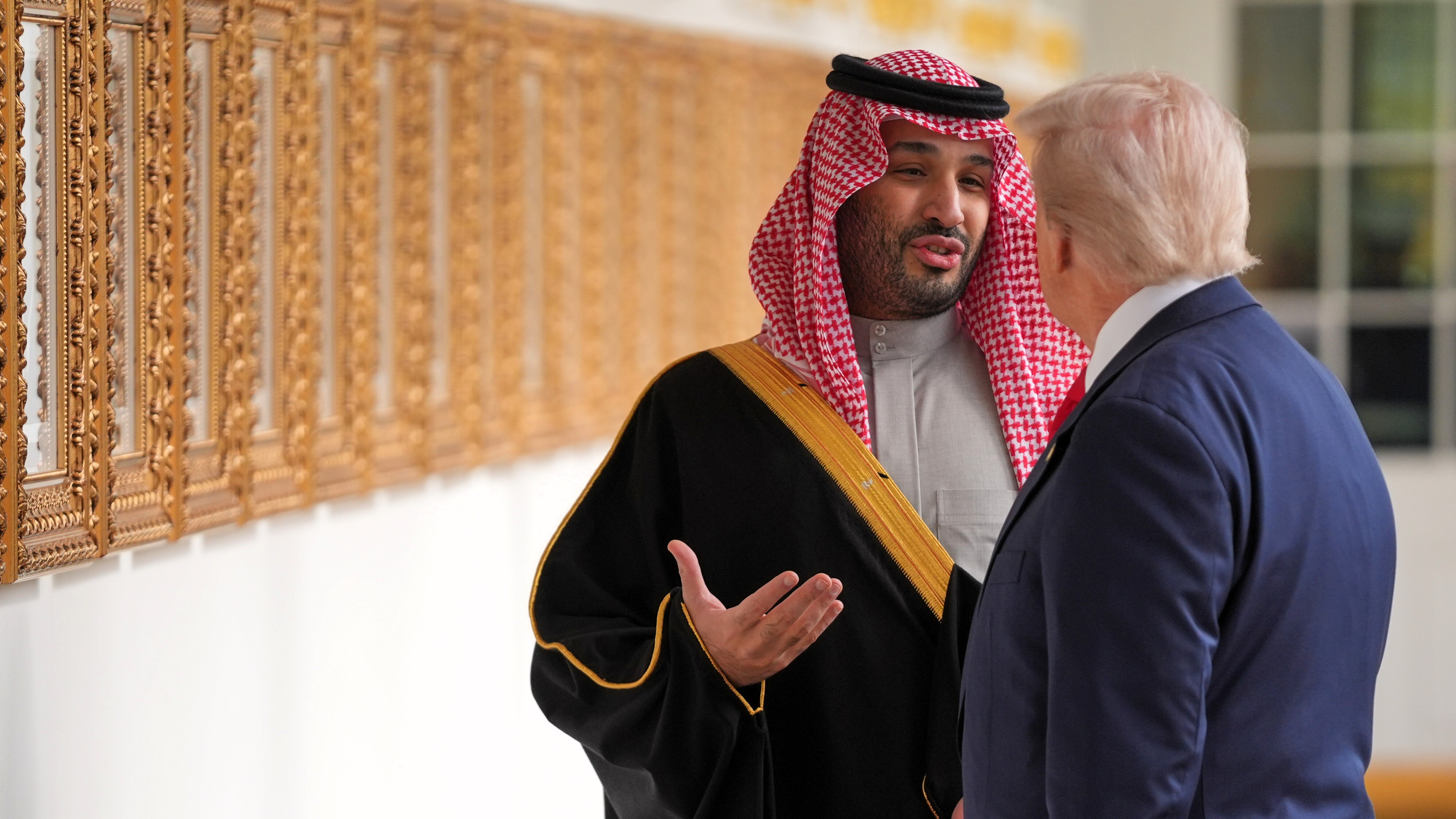
All the more explosive, then, is a Washington Post report that claims Crown Prince Mohammed bin Salman privately urged Donald Trump in a series of calls to launch military strikes against Iran. His brother, Saudi defence minister Khalid bin Salman, is said to have held closed-door meetings with U.S. officials on the issue. Riyadh rejects this account.
Regardless, a more fundamental question arises: how plausible is it that Donald Trump would deliberately act against one of his most important political and economic partners? The Saudi leadership and the US president’s family and inner circle have been closely intertwined through business ties for years.
Against this backdrop, the widespread assumption that war with Iran presents only disadvantages for Saudi Arabia deserves closer scrutiny. In fact, there are at least three reasons why such a conflict could make perfect sense from Riyadh's perspective.
The Houthis in Yemen
First, Riyadh is more focused than other Gulf monarchies on its southern neighbour, Yemen. Since the beginning of the year, the kingdom has significantly expanded its involvement there. Since Saudi Arabia pushed back the United Arab Emirates (UAE) militarily in southern Yemen and forced its troops to withdraw, Riyadh has been attempting to assert greater control over anti-Houthi factions itself.
The Houthi movement remains, however, the most important obstacle to Saudi ambitions in Yemen. Although they are not a direct proxy of Tehran, the Houthis maintain close political and military ties with the Iranian regime. Weakening Iran could therefore present Riyadh with an opportunity to deal a severe blow to the Houthis' military capabilities and supply lines—thereby improving security along its southern border and consolidating Saudi Arabia's position in Yemen.
Rivals in the Gulf
Second, it could well be in Saudi Arabia's interest to use the current geopolitical constellation to weaken its regional rival, Iran, significantly. Even if regional stability is a high priority for Riyadh in implementing Vision 2030, the modernisation project is inherently a long-term undertaking. If the leadership in Riyadh perceives Iran as a permanent strategic threat, short-term costs could therefore appear acceptable—especially since the main military burden of such a confrontation currently lies with the United States and Israel.
Added to this is intense competition within the Gulf: Saudi Arabia and the other monarchies are competing to position themselves as regional hubs for finance, aviation, logistics, tourism and global corporations. Although a regional war would damage the entire region's image of stability, it would not affect all economic models equally. The UAE in particular—especially Dubai—whose business model relies heavily on global transit and its role as a hub, is particularly sensitive to such shocks.
Put cynically, when the region is in turmoil, some business models come under greater pressure than others. The fact that relations between Riyadh and Abu Dhabi have deteriorated significantly since the beginning of the year is likely to further reduce Saudi Arabia's willingness to give particular consideration to the interests of its smaller neighbour.
Oil prices
Thirdly, Saudi Arabia could be banking on the war to push the price of oil higher over time. In the short term, however, there is a serious problem: the Strait of Hormuz—through which most of Saudi Arabia's oil exports are normally shipped—is effectively closed to civilian traffic as a result of the conflict. Tankers are avoiding the route, and shipping has largely come to a standstill.
The kingdom does, however, possess an alternative export route in the form of the East–West Pipeline ("Petroline"), which transports crude oil from oil fields in the Persian Gulf to the Red Sea, from where it can be exported via the port of Yanbu. According to reports, Saudi Aramco is already attempting to reroute part of its crude exports through this pipeline and the Red Sea terminal. However, this option faces practical constraints: historically, the export capacity of the Yanbu terminal has been significantly lower than the pipeline's capacity.
"International law is not a suggestion"
The attack on Iran by the US and Israel violates the UN Charter, says Kai Ambos. He argues that European powers cannot preach a rules-based order while failing to denounce clear violations, and warns of a slide towards global lawlessness.
The Saudi calculation could be that market turmoil resulting from the war between the United States and Iran will be temporary, while heightened geopolitical tensions could keep oil prices elevated for longer. According to estimates, Saudi Arabia requires an oil price of more than $90 per barrel to balance its national budget. In recent months, however, prices have mostly remained below $70 per barrel, well short of this threshold.
At the same time, Washington has a strong interest in reopening the Strait of Hormuz to international shipping as quickly as possible, given its importance for the global economy. In the medium term, higher oil prices could therefore generate considerable additional revenue for the kingdom—especially if the potential loss of Iranian exports further tightens global supply.
Whether or not the Saudi royal family actually lobbied behind the scenes for a military strike against Tehran will likely only become clear in historical retrospect, if at all. In any case, there are good reasons to treat the official statements from Saudi Arabia with caution. In a region where security concerns, economic interests, and geopolitical rivalries are closely intertwined, the strategic calculations of the Saudi leadership may be more complex than public rhetoric suggests. What many observers perceive primarily as a risk could well be seen in Riyadh as an opportunity.
Translated from German by the author.
© Qantara.de