"Hezbollah has never protected Lebanon from Israel"
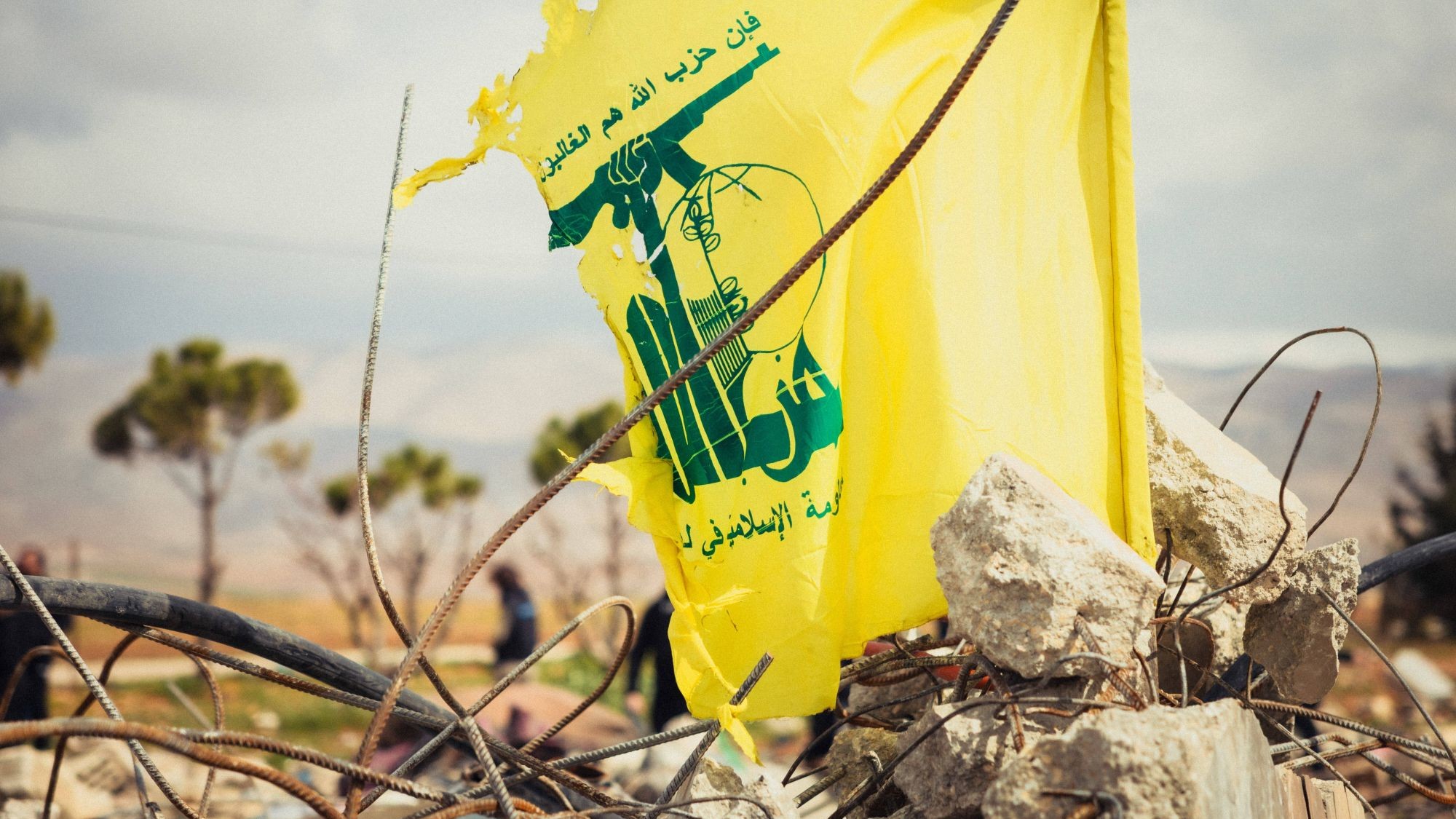
Topics
Qantara: A new war has broken out in Lebanon between Israel and Hezbollah. How is the Lebanese experience different this time?
Hazem Saghieh: Firstly, there is a disparity between different regions of the country. Those closest to Israel in the south are most affected by the war and bear the greatest cost. This disparity often intersects with sectarian and regional divisions. The war also affects social classes differently: the wealthy can rent houses in other areas, stay in hotels or travel abroad, whereas the poorest people live on the streets with no hope or shelter.
Areas not directly targeted are also affected, especially by the waves of displacement. How is the atmosphere there? And do the residents show any kind of solidarity with the displaced?
Unfortunately, the level of solidarity is weak, even lower than in the previous war. There are many reasons for this, the most important being the level of hatred that the population has for the Hezbollah party, which is responsible once again for the country's destruction. There is also a fear of Israeli retaliation due to past experiences. The Israeli army has targeted communities that have hosted displaced people as soon as they suspected one of them has ties to Hezbollah. Contrary to the prevailing discourse, which is often folkloric and simplistic—suggesting that all Lebanese love and support each other—this war has revealed significant contradictions among the population rather than demonstrating unity.

More than one million people have been displaced from the south since the escalation began, according to the International Organisation for Migration. Where have they gone? And how are they living today?
They were scattered across most regions, but I estimate that the largest groups are concentrated in Beirut, Sidon, the Chouf region and the mountain region. Others fled to northern Lebanon. The state's capacity to provide shelter is limited due to financial constraints and the sudden influx of displaced people. I believe official facilities, such as schools and public institutions, as well as NGOs, have only accommodated a quarter of those displaced, while the rest are living on the streets or with relatives or friends. Some people have chosen to stay on the streets, believing they will soon return home, though perhaps that hope has now faded.
This means there is currently no functioning education system?
Of course not. It's another year in which young Lebanese are being deprived of education. The long-term consequences of that will be deeply disturbing and harmful.
The war is between Hezbollah and Israel, but of course it concerns the entire Lebanese state. What is the government's position?
The Lebanese government is hoping for a political solution: for Hezbollah to stop firing rockets, and for Israel to withdraw its troops from Lebanon, enabling displaced people to return to their homes. Unfortunately that seems highly unlikely at present, as Israel insists on disarming Hezbollah prior to any talks. Meanwhile, the Lebanese state appears too weak to carry out this task—or at least that's what it claims. Recently, President Joseph Aoun and Prime Minister Nawaf Salam expressed their willingness to enter into direct negotiations with Israel, but the Israelis have signaled that there will be no negotiations before Hezbollah's weapons are elimanated. This is a major obstacle to any real solution.
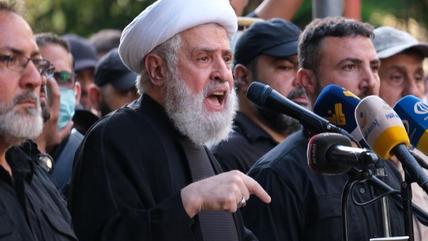
Stepping out of Nasrallah's shadow
Naim Qassem is a veteran of Hezbollah in Lebanon. A member since its foundation, he could never escape the shadow of Nasrallah. Now, he's the boss, and a man the Israeli government says is living with a death sentence.
But didn’t the Lebanese state start the process of disarming Hezbollah around six months before the war?
The renewed fighting made it clear how limited the results of the Lebanese state's actions had been, with Hezbollah demonstrating military strength that many had thought was already neutralised or dismantled. There are differing assessments regarding the tendency of the authorities in Lebanon—or parts of them—to turn a blind eye to Hezbollah's weapons. Some justify this policy as a way of preserving civil peace, while others point out that the Lebanese army is not strong enough to carry out such a task and requires external support.
There are many justifications. Some of these may be valid. But ultimately, with Israel insisting on disarmament, we find ourselves confronted with bitter and difficult choices. If Israel carries out a direct intervention to disarm Hezbollah, it will likely lead to a new occupation. Indeed, according to media reports, an Israeli ground offensive into southern Lebanon has already begun.
Hezbollah has fought multiple wars with Israel, in 2006, 2023, and now in 2026. Can Israel completely eliminate the party's weapons?
It's hard to say for certain, but one thing is clear: something in Lebanon has to give.
What do you mean?
It is often said that every occupation is met with resistance. But in Lebanon, we have reversed this pattern: resistance emerged first, then occupation followed. The occupation withdrew, but the resistance remained. Palestinian resistance began in Lebanon in the 1960s and 70s, followed by the Israeli occupation in 1978 and again in 1982. Later, Hezbollah emerged as a force for resistance, and then the Israeli occupation returned. After Israel withdrew in 2000, that resistance persisted. The pattern has shifted and now we are facing a situation where resistance brings about occupation. The only solution is a state capable of asserting sovereignty over its borders and controlling decisions of war and peace.
But according to the pattern of resistance and occupation, doesn't that mean that even if Hezbollah is disarmed, a new resistance might emerge? Some believe that eliminating resistance by force is impossible because it runs deeper than mere weaponry, and that violence always breeds more violence.
If Hezbollah's weapons are eliminated this time, I believe this cycle may stop. The Lebanese have realised how costly this path is. Traditionally, in Lebanon, any group that felt oppressed—or wanted to pursue a regional agenda—would take up arms under the slogan of fighting Israel and liberating Palestine. This goal was often used as a pretext for establishing resistance. Hezbollah is the most recent Lebanese group to play this role. If its weapons could be eliminated, I cannot imagine any group repeating this after the bitter experience we have been through. However, I cannot say for certain.
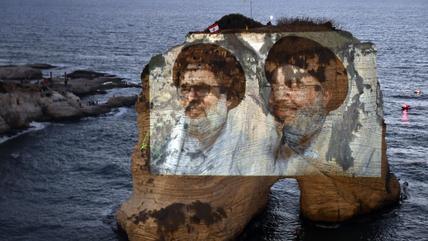
Nasrallah on the Pigeon Rocks
When the Lebanese government moved to disarm Hezbollah, the influential militia responded with a symbolic show of force in the heart of Beirut. Is it projecting strength, or masking political weakness?
Most of the war's victims are Shia, largely because Hezbollah is associated with this sect, and because the Shia community is concentrated in the south. Is the war affecting the group's popularity among Shia?
There are differing views. Some believe that changes take time but will eventually emerge. So far, there is no significant shift from the party within the Shia community, but rather a little mild criticism or protest. Currently, there is no strong movement within the community willing to confront the group. The group has spent years building its ideology, providing services, and fostering the belief that it empowered Shia, granted them identity and strength, and made others take them seriously.
Given the weakness of the Lebanese army, as you mentioned, Hezbollah presents itself as a deterrent force that protects Lebanon from Israel. How do Lebanese people, outside of Hezbollah supporters, see the idea of disarming?
Actually, Hezbollah has never protected Lebanon from Israel. But, as I mentioned earlier, it has caused Israeli occupations. Currently, after 7 October in Gaza, and under the current reckless Israeli government led by Netanyahu and the religious parties, with their ambiguous expansionist intentions , there are serious questions: are Israel's demands reasonable and achievable for Lebanon, or is the goal simply to destroy Hezbollah, leading to an open-ended cycle of violence without a political solution?
Furthermore, Western countries are no longer able to pressure Israel as they once did. When it comes to Trump specifically, he is not incapable; he simply doesn't want to exert pressure. Apparently, he has left the Lebanese issue for Israel to resolve as it sees fit.
This text is an edited automatic translation of the Arabic original.
© Qantara.de