New revelations from Israel's archives
Topics
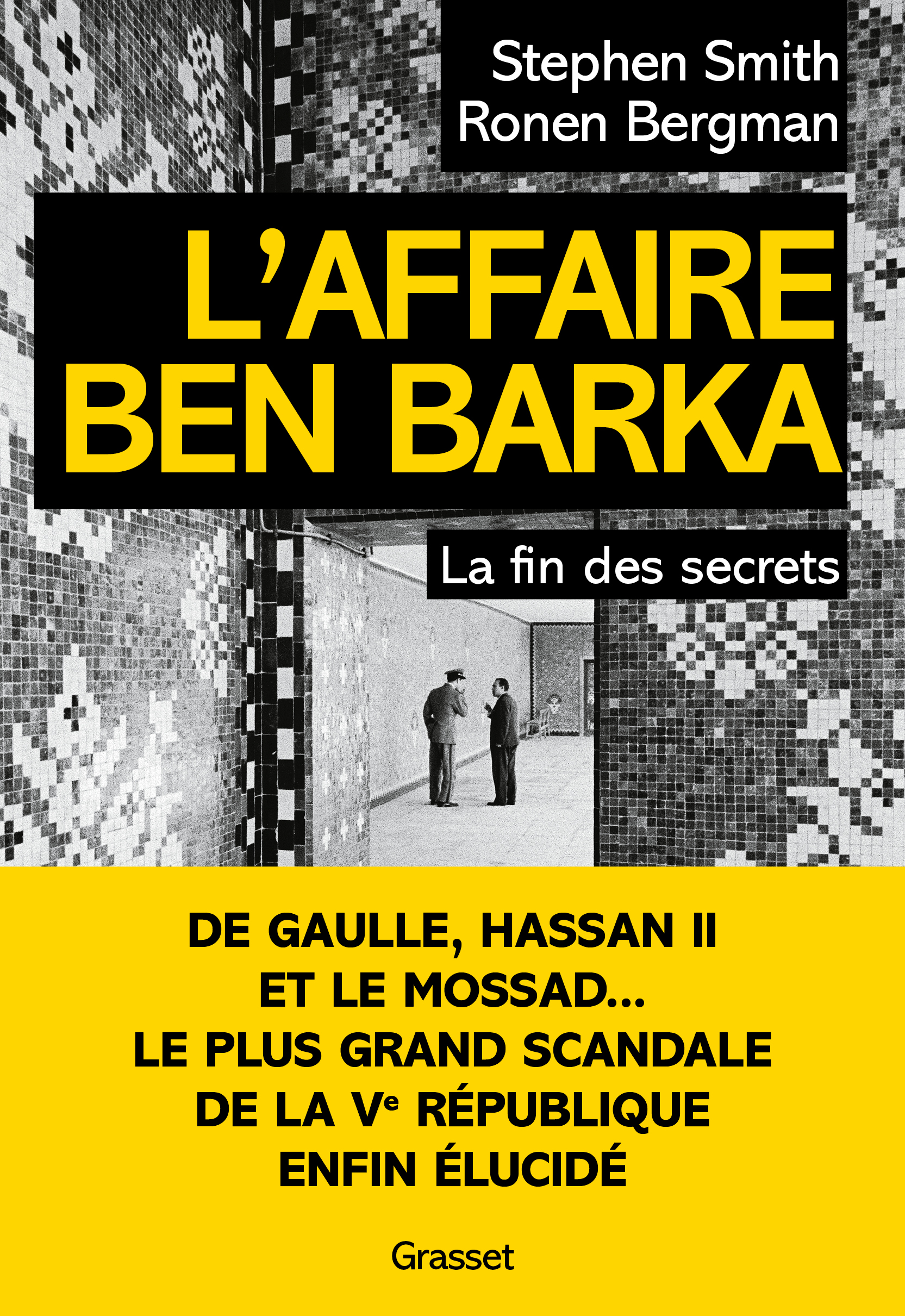
"The fate of Ben Barka has been explained, and the case can be closed," French-American author Stephen Smith and Israeli author Ronen Bergman write in their book "L'Affaire Ben Barka" ("The Ben Barka Affair"). They claim to have solved the mystery surrounding the Moroccan revolutionary and opposition politician Mehdi Ben Barka, who was killed in Paris in 1965.
Their 576-page book, published in French by Grasset in October, bears the subtitle "The End of Secrets". This is an exaggeration, presumably for marketing purposes. In fact, the authors do not provide precise answers to some of the case's most central questions.
Where, for example, was Ben Barka's body buried? How much did French security forces know, and were they complicit? Did Moroccan King Hassan II (who reigned 1961-1999) order the assassination, or did he merely want Ben Barka to be forcibly returned from exile?
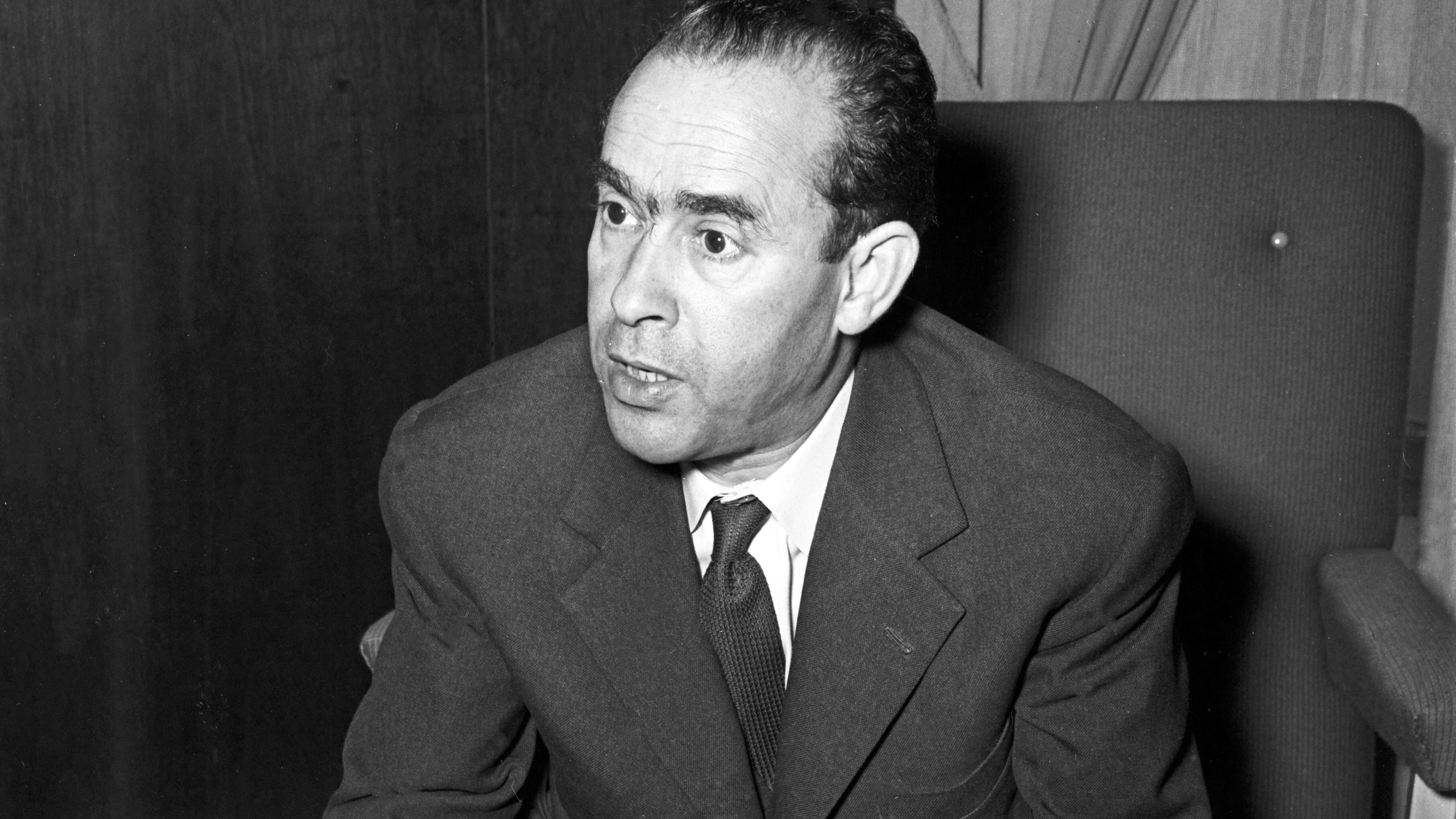
Ben Barka (1920-1965) was one of the most prominent leaders of the Moroccan national movement and the left-wing scene that later emerged from it. After independence in 1956, he played a central role in Moroccan politics, taking an increasingly critical stance towards Hassan II, then crown prince.
He finally left the country in 1960 and continued his political opposition from abroad. In 2021, the Guardian also revealed that Ben Barka worked as a spy for the Czechoslovak secret service from 1960.
While some questions remain unsolved by the book, the authors' enthusiasm is understandable—they have indeed landed a journalistic scoop. Drawing from previously secret Israeli documents, they can prove the central role played by the Israeli secret service (Mossad) in Ben Barka's assassination. Until now, this had only been alluded to in isolated press reports, without any hard evidence.
This treasure, as the book puts it, was locked away in Israel's Ministry of Justice for over half a century. From 1966 onwards, Israel's former Prime Minister Levi Eshkol (in office 1963-1969) hid the Mossad correspondence as well as his own detailed statement on the affair.
Inside Israel, the book reveals, participation in the operation was previously the subject of a fierce internal dispute. Meir Amit, head of the Mossad during the Ben Barka operation, accused Eshkol of shirking responsibility for what he had approved. Ezer Harel, Amit's predecessor, described what had happened as a "political, diplomatic and moral disaster".
"You are great at disposing of corpses"
Israel's active involvement in the Ben Barka affair began with a telegram sent by Mossad's office in Rabat on 30 March 1965. According to the book, it stated that a Mossad agent named "Cheri" had been contacted by an "Albert" for assistance in locating Ben Barka. "Albert" was the pseudonym of Moroccan General Ahmed Dlimi, one of the most important security chiefs in the king's entourage.
This marked the start of Operation Eterna, in which Mossad initially had only one task: to determine Ben Barka's whereabouts. Under pressure from Morocco, the mission quickly expanded. A few days later, another telegram arrived from Rabat, reporting that Dlimi had requested untraceable weapons and poisons.
Three weeks before the assassination, Amit summarised Morocco's request to the Israeli Prime Minister as follows: "They came to us and basically said, 'You are great at disposing of corpses. You don't have to carry out the operation; we just need your help.'"
Mossad discovered that Ben Barka was living in Cairo with his family under the protection of Egyptian leader Gamal Abdel Nasser. However, according to an Israeli telegram, Moroccan military intelligence officer Dlimi proposed to assassinate Ben Barka during a visit to Paris.
Secret recordings used as leverage
The book paints a clear picture of Dlimi's central role in the collaboration with Mossad. It shows how Dlimi initially informed the Israelis about his surveillance of Ben Barka, and how his demands then expanded. What was supposed to start as logistical support ended with an Israeli team on the ground in Paris, with passports, disguises, an escape plan and a safe room for the period after the assassination.
Crucially, Dlimi had an ace up his sleeve in his negotiations with the Israelis. His men had recorded the Arab League summit in September 1965 using equipment provided to them by Mossad. These recordings were of great intelligence value to Mossad, but Dlimi only handed them over after he got what he wanted: direct Israeli involvement in the operation.
A report by Israeli military intelligence demonstrates the significance of the recordings: "On a military level, we learned how unprepared they were for war (in reference to the Six-Day War of 1967, ed.). The Israeli army high command was strengthened in its conviction that Israel would win a war against Egypt. We became certain of our strength." But this certainty came at a high price: Mossad was on the verge of carrying out an assassination outside Israel's borders.
Drowned in a bathtub
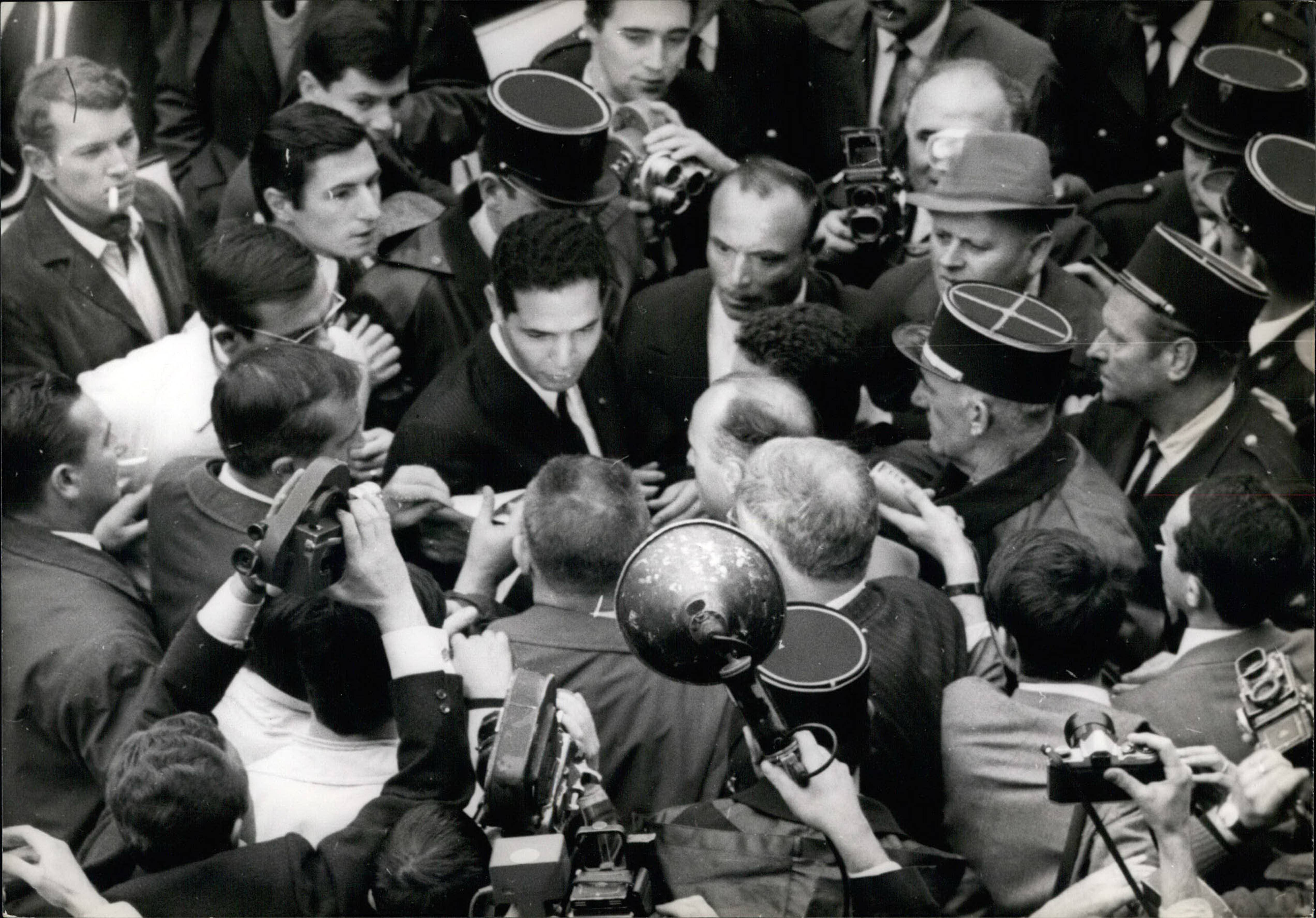
At the end of October 1965, Ben Barka was lured into an ambush and kidnapped by a French police officer who had been recruited by Morocco's secret service. He was initially held at a location run by a corrupt French gang before he was drugged and taken to the house of a French agent who was collaborating with Dlimi. There he was guarded by French and Moroccan agents.
When Dlimi arrived in Paris on 2 November, preparations had already been finalised with the help of Mossad. He was given five passports, a 24-hour hotline and a key to a locker at the Gare du Nord where a bottle of poison had been stashed, originally intended to be used for Ben Barka's assassination.
Ultimately, however, Ben Barka was drowned, as Dlimi reports during a subsequent meeting with Mossad agents in a café on the Champs-Élysées. One of the Mossad agents wrote in a telegram to Tel Aviv:
"After filling the bathtub with water, they not only submerged Ben Barka's head, but held it under water for three minutes. (...) Dlimi stretched his arm towards the ground and leaned forward to reenact the scene. They drowned Ben Barka in the bathtub."
Dlimi is quoted as saying, "I took a photo of him so that people in Morocco would believe it was over."
According to Smith and Bergman, the entire operation was a Moroccan-Israeli joint venture. Dlimi is said to have requested tools for burying the body and chemicals for dissolving it, which were provided by a Mossad agent in Paris. The documents used in the book reveal a series of bilateral coordination meetings both before and after the operation.
"The solution requires political courage"
Tensions between Morocco and Algeria are fuelling a frantic arms race. Moroccan researcher Hicham Mouatadid traces the roots of the rivalry and calls for a solution that goes beyond the Western Sahara conflict to address regional security as a whole.
Concerns for Mossad
After the operation, Mossad was concerned that the Moroccans might have acted unprofessionally and left traces that would place the Israeli secret service at the centre of the case. After French President Charles de Gaulle, angered by the murder in the heart of France, launched an investigation into the failure of the security services, Meir Amit gave his men the order: "Destroy all documents related to the operation."
Israeli concerns were heightened by the fact that they knew neither the location Ben Barka was held nor where his body was buried. Dlimi told Mossad agent David Shomron in Rabat simply, "The body will never be found."
Months after the Moroccan dissident had been disposed of, the case developed into a power struggle within the Israeli authorities. An initial committee of inquiry cleared Mossad chief Amit of the charge of failing to inform the political leadership in good time about the extent of Mossad's involvement in Operation Eterna.
A second internal committee, however, found Amit guilty. But Prime Minister Eshkol stood by Amit until the end of his term in office. Eshkol concluded his classified statement with the words: "Amit deserves to be dismissed, but he cannot be removed. This would reveal the Mossad's involvement in this crime, just as France is preparing to open the Ben Barka case. The general interest of the state makes this impossible."
In their book, the two authors have succeeded in shedding light on the Israeli cover-up surrounding the assassination. The rest of the book, however, merely repeats what has been circulating for decades in court statements by the main actors and other parties, in books, and in interviews, about the involvement of Moroccans and French gangs in the murder.
This is an edited translation of the Arabic original. Translated from German by Max Graef Lakin.
© Qantara.de