"Theology is opening up and engaging with society"
Topics
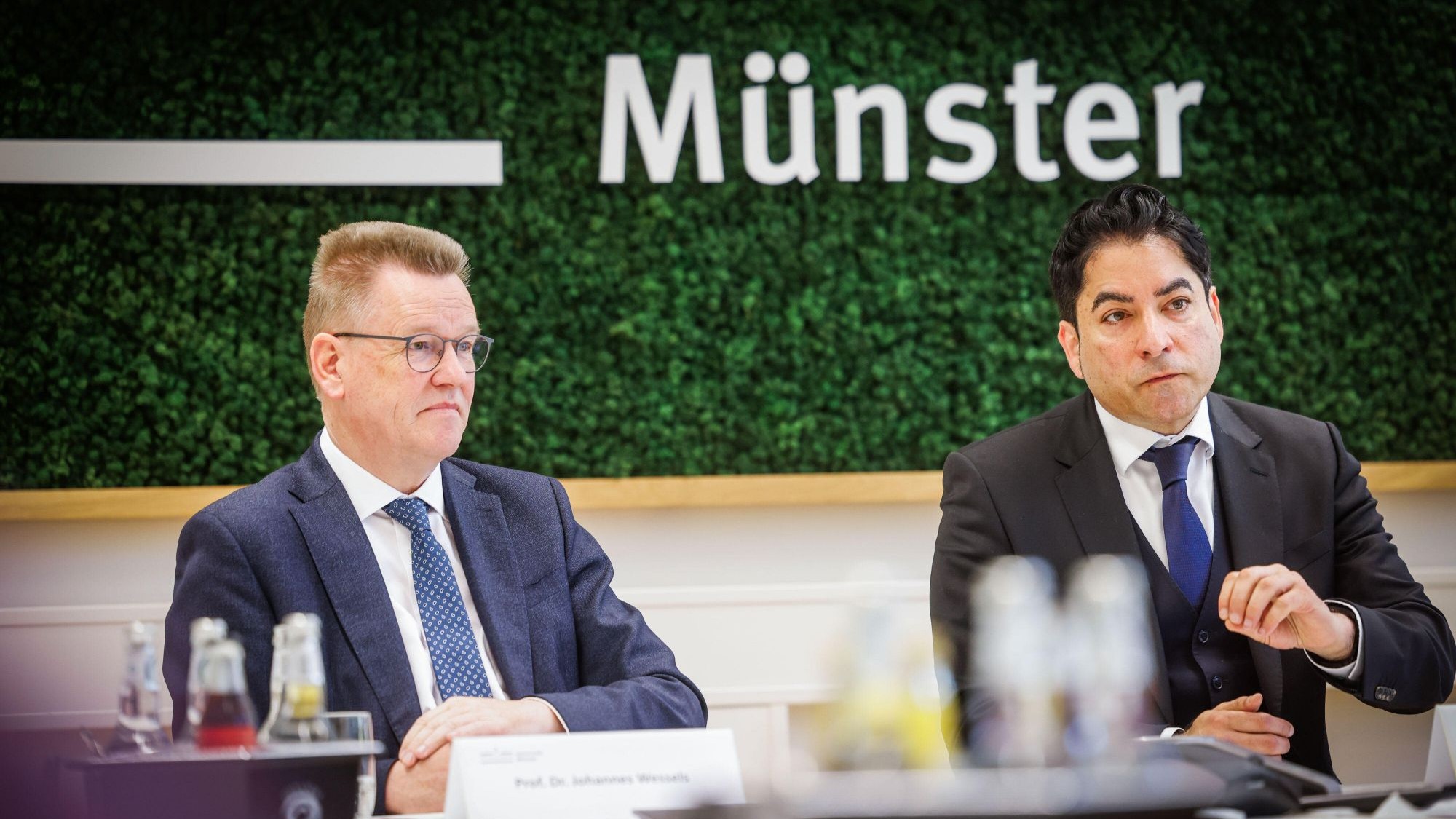
Qantara: The University of Münster is establishing the first Faculty of Islamic Theology at a state university in the whole of Europe. It has evolved from the former Centre for Islamic Theology. What will change?
Mouhanad Khorchide: With the establishment of the faculty, we are now on an equal footing with the Faculties of Protestant Theology and Catholic Theology. We now have our own doctoral regulations, habilitation regulations, our own governing bodies and our own departmental council. We can now make our own decisions.
What opportunities are opening up for students?
In addition to our existing degree programmes, we are introducing a new Master's degree: Islam in Social Work. It is aimed at students who come into contact with Muslim communities in the social sector. However, students do not need to be Muslim. This programme is very practice-oriented. It concerns care for the elderly, care homes, hospitals, prisons and youth work. Many people working in social work lack knowledge of what needs to be taken into account when working with Muslims. We have identified a gap in this area.
How will the Faculty of Islamic Theology set itself apart?
We will have our own department, which we are calling "Public Theology". This will address socially relevant topics like environmental ethics, gender justice, critical masculinity studies, Islam and democracy, radicalisation and deradicalisation. This is highly innovative: theology is not merely reacting to society, but is opening up and engaging with it.
What opportunities does the new faculty offer to researchers?
In the field of research, we will have more opportunities, particularly for larger collaborative projects or specialised research areas. We therefore also plan investigate phenomena that are significant for society, for politics and for the global community. We are focusing on topics such as peace, war, violence, democracy and coexistence. Global issues such as environmental protection and climate change are also included.
In Germany, far-right extremists are making inroads into governments at both state and federal levels. The AfD has plans for "remigration", and its co-chair considers Islam to be "incompatible with the Constitution". What role can Islamic public theology play in this context?
There are empirical studies showing that the majority of the German population associates Islam with things such as terrorism, violence or the discrimination against women. I see it as our faculty's mission to raise the profile of a cosmopolitan Islam of compassion, an Islam of love.
I also see it as our duty to take this negative image of Islam in German society seriously—without becoming judgemental or emotional. We cannot simply dismiss the arguments being put forward, but must listen carefully. What images of Islam do people on the far right have in their minds? Instead of condemning them, we should say, "I take your fears seriously", and then we can ask: is this religion really so negative? Or is it the people—the terrorists—who act in the name of Islam who frighten us all, including me as a Muslim?
What significance does the new faculty have for German society as a whole?
It was already an important sign that we introduced Islamic religious education in schools [in the early 2000s]. Today, we are no longer discussing whether, but how, we should provide this education. Furthermore, during Ramadan, Germany's President invites people to break their fast, and we now have eight centres for Islamic theology in Germany.
The fact that we now have a faculty of our own, and that Germany is the first European country to do this, is a further sign of the recognition of Muslims in Germany and throughout Europe. Islam is increasingly becoming an integral part of our European reality.
Under constant scrutiny
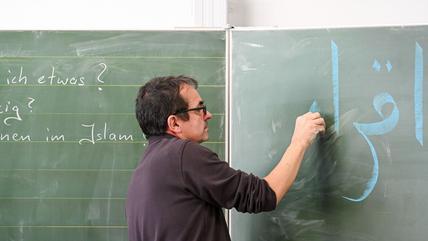
Islamic religious education is neither a threat to democracy nor a cure-all. What dedicated teachers really need is recognition of their role.
How does this all fit together? Islam is becoming an integral part of Europe, yet at the same time, Islamophobic parties are gaining ground in many countries.
As in Germany, there are similar positive developments in Austria, Switzerland and Belgium. At the same time, however, fear of Islam has increased. For some Muslims, this leads them to withdraw from society.
Despite these conflicting trends, I believe that Islam is becoming an ever more integral part of Europe. I can see that our labour market, our healthcare system and our care services rely on the many migrants. And these migrants and Muslims, too, depend on life in a free, pluralistic and democratic society.
In Münster, we are striving to establish a cosmopolitan form of Islam that is in harmony with democratic values and human rights, and which will hopefully also serve as a beacon for the Islamic world.
Could this idea, that an understanding of Islam supported by the German state could have an impact on the wider Muslim world, be perceived there as a form of Western arrogance?
I can understand these concerns. However, at the opening of our centre in 2012, a close associate of the Grand Imam of Al-Azhar University in Cairo was present. In his opening address, he said that the Islamic world expects a great deal from us because we enjoy greater freedoms within the Western, European context. They expect us to re-examine Islam and are hoping for innovation. This opens up new possibilities for us. It is less a question of us understanding Islam better. Rather, we face different challenges to those faced by Muslim-majority societies.
In 2016, the Grand Sheikh of Al-Azhar University also visited you in person and advocated an understanding of Islam centred on compassion. How is your theology viewed in Cairo today?
At Al-Azhar, there is a general openness towards what we do—though not on every issue, of course. There are certain positions with which Al-Azhar would not agree. On the issue of female imams, for example, this would be out of the question. With regard to gender equality, there are differences between our positions and those of Al-Azhar.
This an edited translation of the German original. Translated by Max Graef Lakin with the support of AI-assisted translation tools.
© Qantara.de