What next for Iraq after U.S. forces leave?
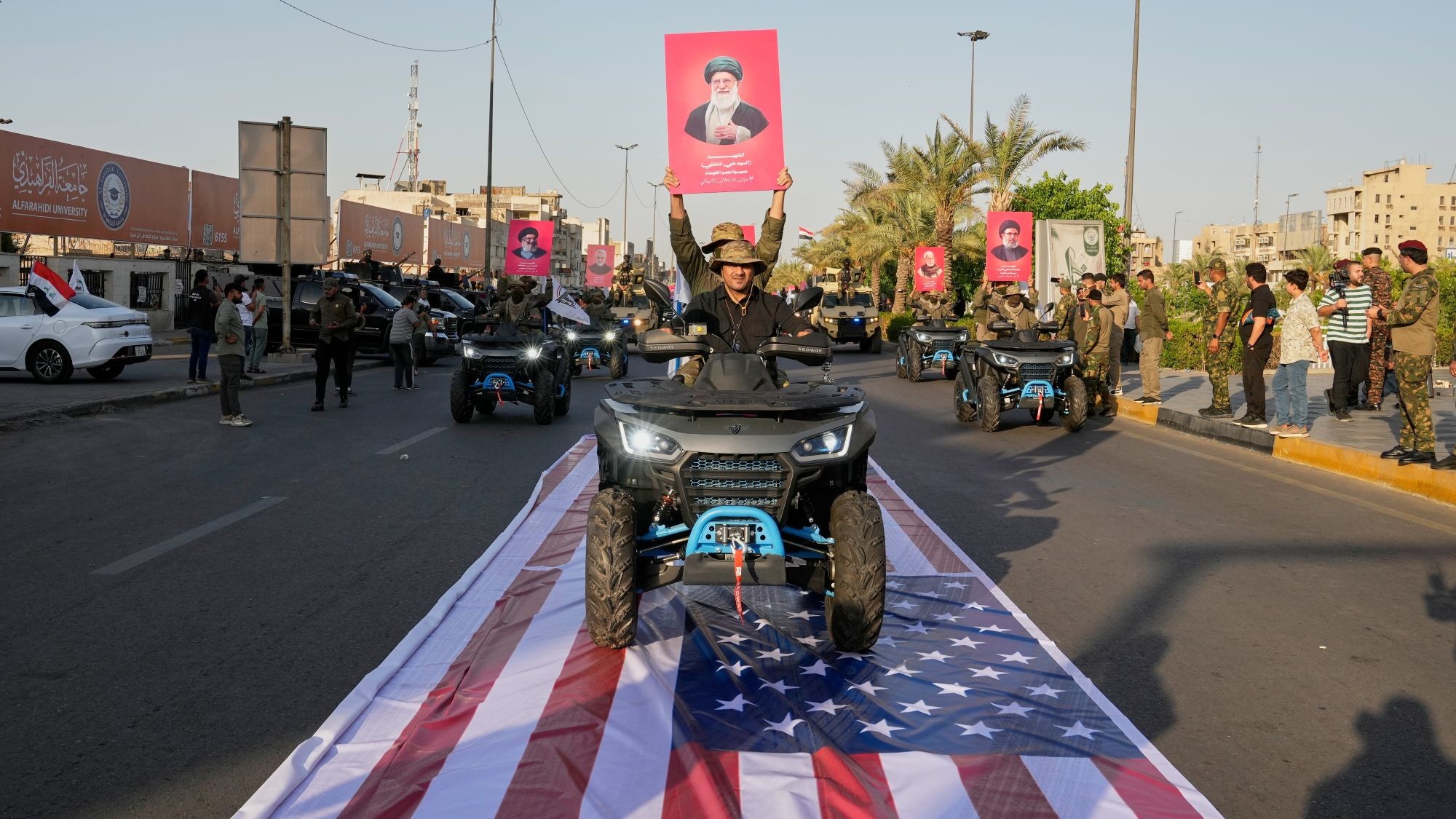
Editorial update: The U.S. Central Command (CENTCOM) completed the withdrawal of U.S. forces and equipment from its last base in Iraq, Erbil Air Base, on 30 September, marking the end of its military mission under Operation Inherent Resolve against ISIS in the country.
This article is republished from International Group Crisis on 29 September. Read the original article.
On 30 September, the U.S.-led coalition formed to fight the Islamic State (ISIS) is due to end its military mission in Iraq. While some had expected that the withdrawal of personnel and removal of materiel might slip beyond the scheduled date, it now appears that they will be completed on time. The largest remaining contingent is from the United States, which has maintained the biggest troop presence throughout. Several other coalition countries already have pulled out their smaller garrisons, including Poland, which completed its drawdown in March, and Germany, whose soldiers left in August.
The departure closes a chapter that began in 2014, when ISIS seized large parts of the country and U.S.-led forces – which had previously invaded and occupied Iraq in 2003 and then withdrawn in 2011 – returned at Baghdad's invitation. A number of Iraqi armed groups that first formed to combat ISIS came to cast the coalition as a threat. Aligned with Iran, these groups long invoked the coalition’s presence as a justification for keeping weapons and command structures outside the Iraqi state.
With coalition forces on their way out, Iraqi Prime Minister Ali al-Zaidi has declared that these groups must now disarm. But the coalition is leaving amid a Middle East war sparked by U.S.-Israeli strikes on Iran, in which Tehran and some of its aligned groups based in Iraq have launched attacks on U.S. targets in Gulf Arab countries, Jordan and Iraq's own Kurdistan region.
The question is whether Baghdad can and will use the end of this foreign military mission to gain greater control of armed actors who – whatever justification they may offer – have reasons for fighting that extend well beyond opposition to the coalition's presence.
The end of a mission
The U.S.-led Global Coalition to Defeat the Islamic State in Iraq and Syria – dubbed Operation Inherent Resolve by the U.S. military – is ending its mission twelve years after its establishment. At that time, in 2014, a marauding ISIS had capitalised on the instability that gripped much of the Arab world following the 2011 uprisings, helped by the acquisition of conventional weapons from Iraqi and Syrian forces that quickly retreated from major cities such as Mosul and Raqqa in the face of the group’s onslaught.
It exploited growing sectarian tensions in Iraq and perceptions of political exclusion among its Sunni Arab population to seize much of the country’s Sunni Arab heartland.
In June 2014, ISIS declared a caliphate in Iraq and Syria and at its height, in May 2015, controlled as much as a third of Iraqi territory. Having terminated the U.S. occupation of Iraq only three years earlier, then-U.S. President Barack Obama decided to send troops back to prevent ISIS from expanding further and reverse its gains in both countries.
In the ensuing years, the U.S. and dozens of coalition partners supported military operations against the group in both Iraq and Syria at the same time as they sought to help rebuild and train the Iraqi army, which had collapsed in a matter of days after the ISIS offensive.
The strategists of terror
At present, IS is the most dangerous terrorist militia in the world. It controls a territory that stretches from north-eastern Syria to western Iraq, including almost all Syrian oil and gas fields. Igal Avidan spoke to Christoph Reuter (correspondent for the German weekly news magazine "Der Spiegel") about the ascent of IS
While the Iraqi government declared victory over ISIS as early as December 2017, having retaken Mosul and other key cities from ISIS control and secured its border with Syria, the coalition endured. It remained in the country even after March 2019, when the final ISIS stronghold in Baghouz, Syria fell; that loss marked the end of the group's control of the last bit of the territory it had grabbed since beginning its 2014 offensive. The coalition – which included sizeable contingents from France, the UK and Türkiye in addition to the U.S. – stayed on for several reasons. First, it continued to support Iraqi armed forces suppressing residual ISIS cells for years after the recapture of Baghouz.
The Iraqi army and Kurdish region's armed forces (Peshmerga) continued to suffer occasional hit-and-run attacks in the so-called disputed territories, an area claimed by both the federal and regional governments, whose rugged terrain offered ISIS fighters plenty of hideouts. As late as August 2024, U.S. troops operating alongside Iraqi forces sustained injuries during a raid on an ISIS cell in Anbar province.
Secondly, the coalition used Iraq as a base from which to conduct operations against the group and others across the border in Syria, where a civil war raged for years, and where the U.S. partnered with the Kurdish-led Syrian Democratic Forces (SDF) until April.
The ISIS danger appears to have significantly receded. Despite occasional attacks by its remnants, the group has lost its ideological traction. Though some people in both Iraq and Syria continue to harbour the grievances that ISIS played upon to galvanise support, few want to relive the era of the so-called caliphate, which triggered years of conflict and destroyed many of the communities the group ostensibly sought to protect. Moreover, the security gaps that ISIS exploited in 2014 have also narrowed in both countries.
Syria's new authorities have yet to establish full control of the country's provinces and borders, but the process of integrating the previously autonomous SDF in the north east under the central government’s command is helping secure areas that remain vulnerable to ISIS. In Iraq, state forces are better prepared to repel any domestic or external threat the group might pose.
Though the coalition and the Iraqi government share the assessment that Iraqi forces can counter ISIS on their own, the withdrawal is also politically expedient for both Baghdad and Washington. For years, despite its cooperation with coalition forces, Baghdad viewed their presence as a liability, not least because Iran-aligned armed groups seized on it to claim that the U.S. occupation was continuing.
Those groups also accused the U.S. of using its foothold in Iraq to monitor Iran and the "axis of resistance" – its partners in the region. This latter charge became a justification for the Iraqi groups to retain their arms and command structures independent from the Iraqi state forces.
Domestic political dynamics on the U.S. side may not have been as clear-cut, but they nevertheless militated for withdrawal. Trump was never the pure non-interventionist that he seemed to tout himself as being, but he has long sounded off against the Iraq war (a key theme of his 2016 campaign) and had already considered withdrawing from Syria during his first term. Despite his growing penchant for military intervention in his second term, Trump has continued to inveigh against endless U.S. wars, notably in the Middle East.
Departing from Iraq is thus consistent both with the president's longstanding rhetoric and also the views of significant parts of his political base. To the extent that Washington had contended that the coalition remained in Iraq at its government’s request, Baghdad’s desire for a troop withdrawal has for some time been a complication. Lastly, as a U.S. official noted to Crisis Group, amid the war with Iran, withdrawal would have the added benefit of reducing readily accessible U.S. targets for Tehran.
In theory, the withdrawal should mark a milestone in Iraq's relationship with the U.S. and its long road to normalcy following the chaos and violence that have plagued the country since the 2003 U.S. invasion. A series of Iraqi governments have desired to forge bilateral security cooperation agreements on Iraq’s own terms and with countries of its choosing. Baghdad can now strike these deals, not only with the U.S., but also with other former coalition partners such as the UK and France.
But however politically necessary it may have deemed the withdrawal, Baghdad will hardly be able to sell the coalition's departure as a celebratory moment, given that it coincides with the U.S.-Israeli war with Iran, which has turned Iraq into a battleground. Instead, the withdrawal’s timing will focus further attention on that conflict’s spillover effects.
Unlike during the 2011 U.S. withdrawal, Iraqis need not anticipate the next war; it is already affecting the country. The fears of many Iraqis are therefore presently not centred around the risk of a resurgent ISIS but rather around Iran-aligned domestic groups that, in solidarity with their "axis of resistance" partners, and notwithstanding the U.S. withdrawal, may take action in defiance of the government's policy of neutrality in the U.S.-Iran war, and thereby provoke military retaliation by outside actors.
Some of the complications that the withdrawal could present for the Iraqi-U.S. relationship would have been difficult to anticipate when the drawdown timeline was conceived. That happened at another tense moment, following the outbreak of the Gaza war, when U.S. backing for Israel’s brutal military response to Hamas’s 7 October 2023 attacks undermined public support for bilateral close ties.
In September 2024, when Zaidi's predecessor Mohammed Shia’ al-Sudani was prime minister and Joe Biden was U.S. president, Baghdad and Washington agreed on a phased end to the coalition’s military mission. It would start with the coalition’s withdrawal from bases in federal Iraq by September 2025, to be followed by the final withdrawal from the Kurdistan region by the next 30 September.
Now, with the U.S.-Iran war as backdrop, the withdrawal may well attract less attention as an indicator of the country's recovery from ISIS than as a test of whether its government can repair Iraq's battered sovereignty and protect its internal security at a moment of regional crisis.
Reining in armed groups
Zaidi has declared that the end of the coalition mission should mark the beginning of disarmament for groups that operate independently of the state. He has set June 2027 as the deadline for its completion. His political argument is straightforward: once the coalition troops are gone, the armed factions should no longer be able to invoke their presence as grounds for maintaining separate military structures.
As he announces the mission’s conclusion on 30 September, he is expecting some of the factions to welcome a development that meets their longstanding demand and to reciprocate with their own commitment to cease hostilities.
But not all of the armed groups will do so, given the variations among them and the dynamics created by the U.S.-Israeli war with Iran. The Popular Mobilisation Forces, or Hashd al-Shaabi, emerged as a collection of Shiite armed groups assembled to fight ISIS and were subsequently nominally incorporated into Iraq’s formal security apparatus, with many retaining independent chains of command. They do not form a single faction and have very different relationships with Tehran. Not all have engaged in attacks outside Iraq’s borders.
Some groups, such as Asaib Ahl al-Haq, appear willing to negotiate their future relationship with the state. Others, including factions associated with the self-described Islamic Resistance in Iraq, such as Kata’ib Hizbollah and Harakat al-Nujaba, are tied ideologically and operationally to Iran’s regional network. Their opposition to the U.S. extends well beyond the presence of coalition troops in Iraq, and they have served as a valuable vector for Iranian power projection.
It is these latter factions that have participated in the Middle East war, striking U.S.-linked targets and energy infrastructure in neighbouring countries, including Jordan, Kuwait and Saudi Arabia. Their actions have strained Baghdad’s relations with Gulf states and, as noted, exposed Iraq to military retaliation by both the U.S. and Saudi Arabia.
Zaidi thus has good reasons of his own to want to curb them, as his government cannot credibly reassure its neighbours, attract investment or pursue a foreign policy of neutrality while armed actors make decisions on war and peace independently of its will.
Negotiations under way with individual groups offer a possible, albeit incremental, pathway to bringing personnel and capabilities under state command.
Negotiations under way with individual groups offer a possible, albeit incremental, pathway to bringing personnel and capabilities under state command. They also are almost certain to take far longer than Zaidi’s deadline allows. If the talks stall, Zaidi could face U.S. pressure to use force against groups that earlier prime ministers were reluctant to confront militarily, fearing an intra-Shiite conflict and friction with Iran.
In a mid-September interview, Zaidi said groups continuing to function as separate militias would be considered outlaws. He has yet to specify what action the government would take to corral those that defy him.
As long as Tehran relies on close Iraqi partners in its war with the U.S., these groups have reason to preserve their military autonomy and may seek to prolong negotiations without relinquishing their arms. Even after the coalition’s withdrawal, they will likely point to other foreign security relationships, including Türkiye’s garrison in northern Iraq, to defend their stance.
Some have also argued that any disarmament plan must simultaneously address the status of the Kurdish region’s peshmerga, although the parallel is inapt: peshmerga forces are governed by a specific law under the Iraqi constitution regarding federal regions’ responsibility to organise their own internal and border security.
The government therefore ought to distinguish between forces operating under recognised state or regional authority, and factions conducting attacks without any such justification.
The Kurdish region's vulnerabilities
The coalition’s departure has particular significance in the Kurdistan region, where its forces have supported the peshmerga and where U.S. troops remained even after leaving other bases in Iraq in September 2025. Erbil is not happy to see them depart. Regional Prime Minister Masrour Barzani described withdrawal at this moment as “shameful”, no doubt because he is concerned about how to manage the threat posed by Iran and Iran-aligned groups, which have systematically targeted the region since the war began in February.
Some of the strikes appear to have been motivated by the presence of U.S. forces, in line with attacks on other nearby countries hosting U.S. bases. But the near-daily strikes also have often hit Iraqi-based Iranian Kurdish opposition groups and were described by a Kurdish official to Crisis Group as a warning to Kurdistan to keep those groups out of the current conflict.
Certainly, the coalition’s withdrawal will exacerbate vulnerabilities. Coalition forces based in Erbil provided the region with some level of air defence. Their impending departure will mean the loss of those capabilities, further exposing the region to missile and drone attack. The Kurdish official noted to Crisis Group that worries about the withdrawal were “not just about security and protection, but the message this sends to our adversaries”, reflecting fears that Iran and others will see the U.S. drawdown as an indication that they would no longer take a significant interest in the region’s future.
Still, U.S. support will not necessarily dry up entirely, even if the basis for it will change. To date, U.S. support for the peshmerga has been governed by a memorandum of understanding between the Pentagon and the Kurdistan Regional Government’s Ministry of Peshmerga Affairs, first signed in 2016 and last renewed in 2022.
But though the U.S. does not wish to extend the agreement, Kurdish authorities will continue to press Washington and other coalition partners for aid in the form of strikes, intelligence sharing, training and equipment – none of which necessarily requires a troop presence inside Iraq – as well as broader reassurance of assistance in facing the military threat from Iran and the groups that it backs.
It may help that the regional government announced in September its completion of a peshmerga reorganisation sought by the U.S. and agreed to in the lapsing memorandum.
But future cooperation will require further work to define the terms on which Baghdad, Erbil and foreign partners will operate. Erbil and Baghdad, whose relationship has traditionally been fraught, will surely have to work together more closely. That said, at least for now, Kurdish officials say they are impressed with Zaidi and believe he is sincere in his stated intention of trying to tackle the militia problem.
Looking ahead
When Trump returned to the White House for his second term, much of his base hoped and believed that his administration would avoid military adventurism and seek to extract the country from strategic quagmires. Some of his personnel decisions, particularly at the Pentagon, seemed to lend credence to such speculation, as did the foreign policy views of his vice president, JD Vance.
Officials who sought to pursue a more restraint-oriented foreign policy or to concentrate on competition with China by downsizing other overseas commitments were not a dominant force within the new administration but nevertheless held key positions. Both of these groups favoured reassessing U.S. force posture in the Middle East, particularly the legacy missions in both Iraq and Syria.
Whatever influence these camps have, their perspectives have not guided key foreign policy decisions in Trump’s latest year in office, which has been characterised by aggressive unilateralism and reliance on military force as a tool of statecraft. But the trajectory of U.S. policy on Iraq and Syria is an exception to that trend. Administration sources tell Crisis Group that, buoyed by the unexpected ouster of President Bashar al-Assad in Syria, key U.S. officials, particularly at the Pentagon, pushed to reassess the U.S. troop presence there and prevailed in a series of internal policy debates on the matter.
Those efforts were boosted when it became clear how vulnerable U.S. troops in the region had become as a result of the conflict with Iran. U.S. officials also have positive views of Zaidi, who visited Washington in July and was received warmly by Trump. They are particularly pleased by Zaidi's pledges on armed group disarmament. Even those who are sceptical of how those efforts will fare appreciate the Iraqi prime minister’s tone and confidence.
What comes next for U.S.-Iraq relations will likely depend on the uncertain trajectory of the U.S. war with Iran.
What comes next for U.S.-Iraq relations will likely depend on the uncertain trajectory of the U.S. war with Iran. A prolonged conflict is likely to lead Iran to enlist its partners in Iraq to use the country as a staging ground for significant attacks on the interests of the U.S. and its regional partners.
That in turn would inevitably undermine the bilateral relationship and could trigger retaliatory U.S. moves at a time when Washington still enjoys outsized influence, including because it controls a significant portion of Iraq’s oil proceeds, which are deposited in the Federal Reserve Bank of New York. The Trump administration has already twice used the leverage the oil revenue affords the U.S. in pressing Iraq to take more proactive measures to dilute Iran’s influence.
For now, Zaidi’s ascension has eased strains, and the U.S. withdrawal gives him an argument for reining in armed groups. That may be enough for him to make progress with some of the groups, but doubters are right to question how far he will be able to go. Indeed, it would be entirely unrealistic to expect that Baghdad can compel the surrender of weapons or severing of ties with Iran forged through years of regional conflict.
The symbolism of 30 September is significant, but in the end Iraq’s stability will depend more on whether the U.S. gives it the time and space required to bring armed groups under its central authority, and whether Baghdad and Washington work together to protect Iraq from the worst effects of the U.S.-Iranian confrontation in the meantime.