Mediating family conflicts in wartime Gaza
"Hello, who's speaking?" The voice on the other end hesitates, then the words come tumbling out, a barrage of complaints and concerns. Faten Harb listens in silence, interrupting only with brief questions as she tries to understand what has brought the couple, caught up in yet another argument, to the brink of separation.
It began with a heated exchange between the woman on the line and her mother-in-law over the pressures of displacement and the overcrowding in the family's tent. Her husband then intervened, eventually raising his voice at his wife. She left the tent and went to stay with her family, refusing to return unless they could have a tent of their own.
"There will be a solution," Harb reassures the wife. "Every household has its disagreements. The important thing is not to let those disagreements fester until reconciliation becomes difficult." Here, her task begins: she must search for a resolution that satisfies both spouses. "Reconciliation starts when every side feels listened to."
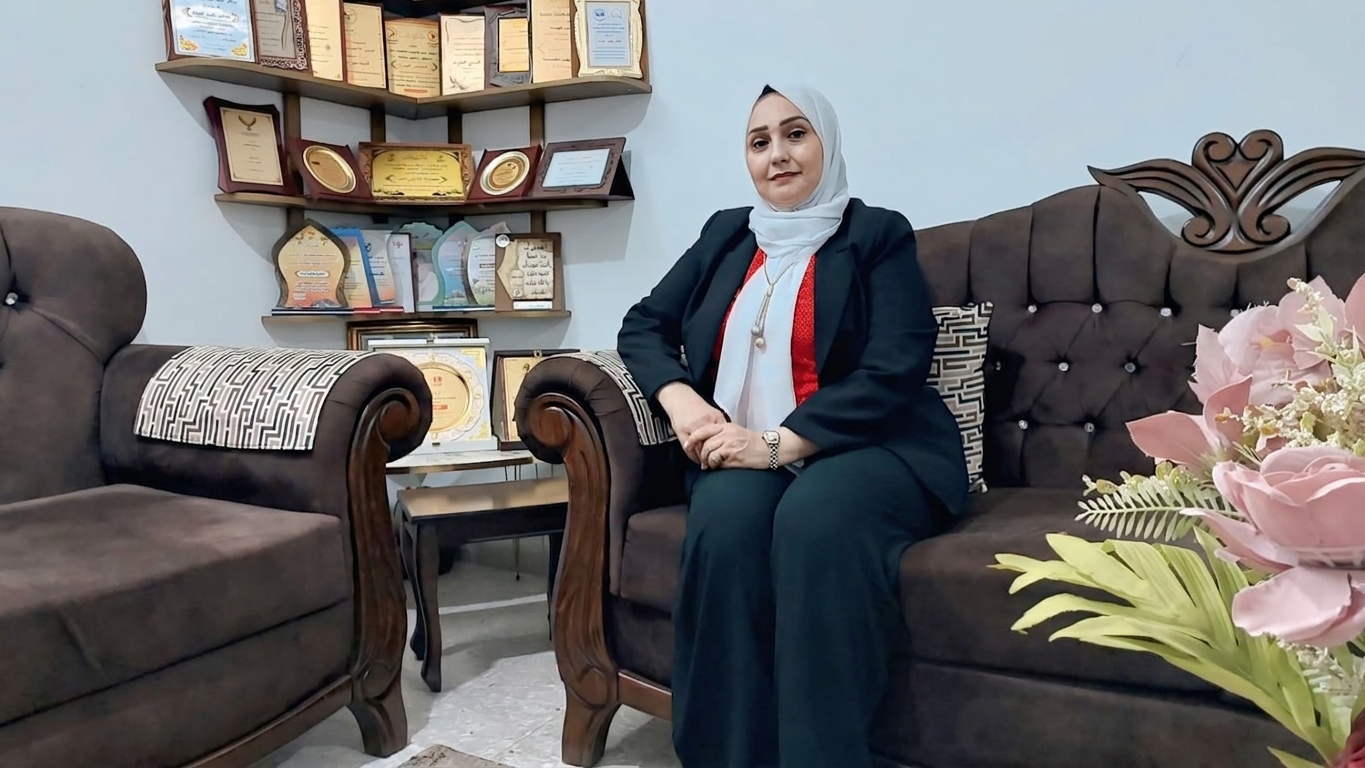
Most of 54-year-old Harb's days begin the same way, in the guest room of her home in Deir al-Balah, in the central Gaza Strip. She sits on a sofa in front of shelves lined with the plaques and certificates of appreciation she has received for her work in community reconciliation across the Strip. The room is not a formal office, but it has become a place where families come seeking a mediator to help resolve their disputes. She is one of the first women in Gaza to hold the title of mukhtara—a role that for decades was reserved for men.
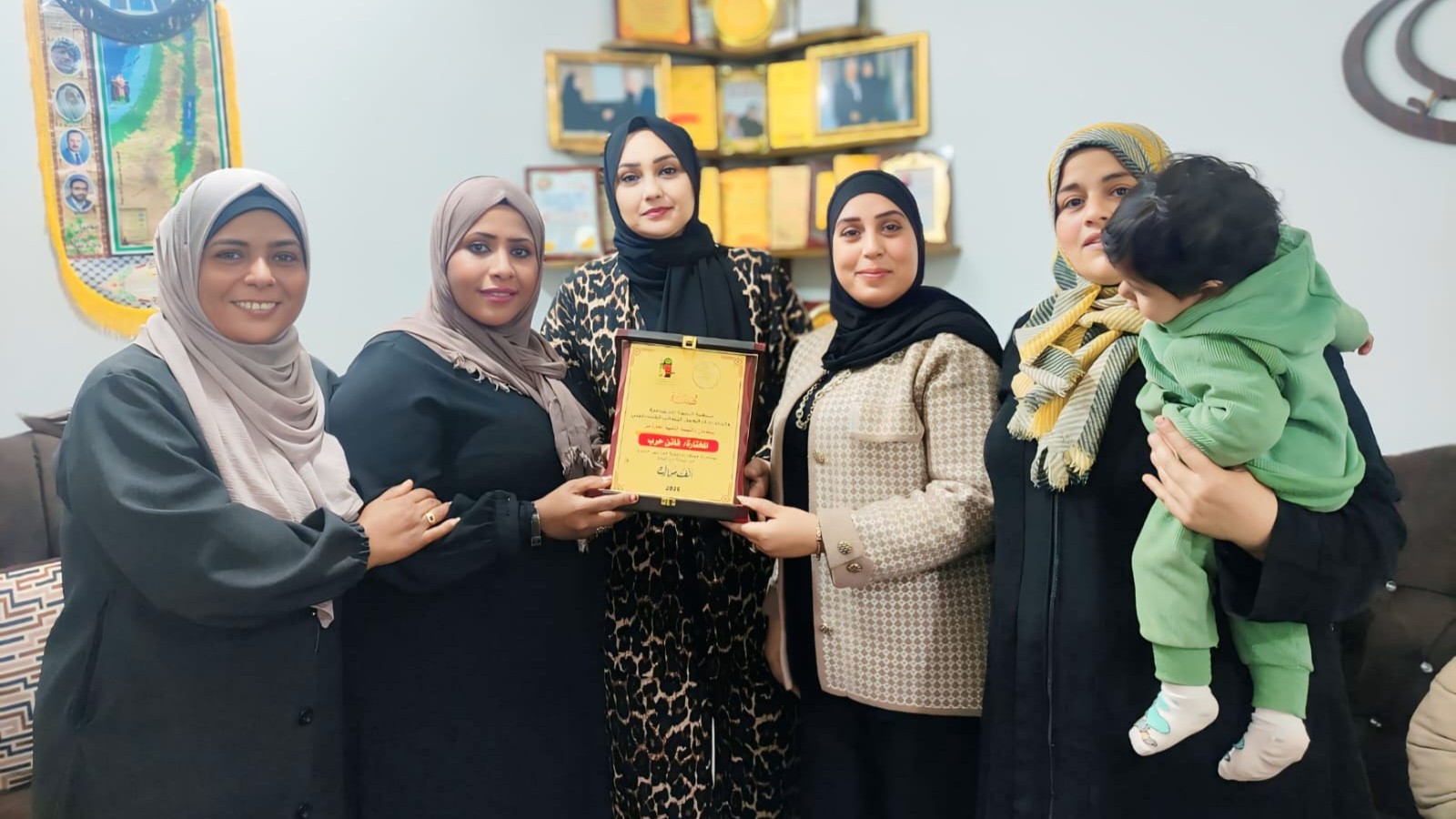
Gaza's tribal social structure is organised in part around large families and clans, each of which may have one or more legally recognised mukhtars. They typically convene clan-based reconciliation councils, resolve family disputes and serve as a link between citizens and government agencies. During the war, they have also played a prominent role in organising and distributing aid.
Harb's path has not been easy. She married at sixteen, but marriage and motherhood did not deter her from pursuing her education. She returned to her studies, completing her secondary school certificate at the age of 30 before earning a bachelor's degree in education from Al-Quds Open University in 2010. She graduated among the top students in her class.
After graduating, she found herself increasingly drawn to conflict resolution, listening to people and helping them resolve their disputes. She developed her skills in leadership, communication and mediation before entering the field of community reconciliation in 2015. Today, she is a mother of five and grandmother of six, while continuing to pursue a master's degree in leadership and management. Yet the presence of a woman mukhtara continues to provoke surprise and resistance in a conservative society like Gaza’s.
Harb sips her coffee as she recalls those early days, which she describes as "like carving through rock". She faced criticism and bullying, even from within her own family. "I used to hear people say, 'Are there no men left that a woman has to become a mukhtara?' Many people focused on the fact that I was a woman, overlooking the nature of the work itself."
Changing disputes
Before Israel's war on Gaza began, most of the cases Harb handled involved family and social disputes, from marital conflicts to inheritance and child custody matters. Today, the cases that come to her reflect the consequences of a war that has torn families apart and upended their lives.
Women no longer seek her help only with marital problems. They also turn to her over issues brought on by the new reality: loss of income, community violence, extortion, and the search for safety amid displacement and poverty. She has also dealt with families whose entire structure has been transformed by the killing or maiming of one or more of their members.
Living between sewage and rubble
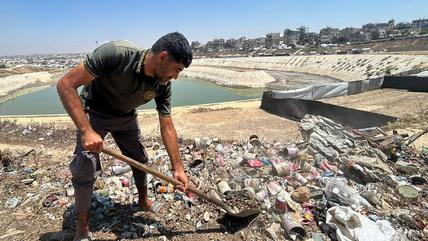
Israel’s war on Gaza has displaced hundreds of thousands and destroyed the territory’s sanitation system. Mohamed Solaimane reports from Khan Younis on how harsh conditions in displacement camps are fuelling disease, especially among children.
With much of the judicial and police apparatus no longer functioning, people have come to rely on clan elders and customary reconciliation committees to resolve their daily disputes. Despite the importance of these traditional mechanisms, Harb insists that they cannot replace the judiciary or state institutions. Rather, they can serve to reduce tension and preserve the social fabric until official institutions can resume their duties.
However, some practices of customary reconciliation have drawn debate and criticism from women’s and civil society organisations, particularly in cases of homicide, and especially in so-called "honour crimes": the killing of women by family members under the pretext of defending family "honour". Such cases are often settled through clan reconciliation processes, sometimes resulting in the acquittal of the accused or reduced sentences. Harb criticises these practices and insists that criminal cases must remain within the jurisdiction of the judiciary. She emphasises that the rule of law is not achieved through social settlement but through justice and accountability.
Among the dozens of cases she has mediated, one homicide case involving two families remains the most vivid in her memory. She was asked to meet with the mother of the young man who had been killed to gauge her willingness to de-escalate the situation. There, she learned that her son had been murdered on his birthday. The news hit her hard—not only as a mukhtara, but as a woman and a mother.
The mother insisted on holding the perpetrator legally accountable and refused to let her son's killing become the spark for a blood vendetta between the families. For Harb, that moment was "a lesson that justice can coexist with a rejection of revenge, and that some wounds remain too deep for any mediator to heal." Her years of reconciliation work have revealed to her that most conflicts, however different their details, spring from similar human emotions: fear, injustice, and the loss of security.
Elected to the council in Deir al-Balah
In April 2026, Harb took part in local elections in Deir al-Balah for the first time since 2005, winning a seat on the city's municipal council. The city had largely avoided the worst of the military operations during the genocidal war, becoming a hub for displaced people.
As a member of the council, Harb found herself facing extraordinary wartime challenges. The city's population had multiplied, while resources and capacity remained limited. The municipality faced mounting pressure to provide water, manage waste, maintain what remained of the infrastructure and meet escalating humanitarian needs. She insists that "the displaced are not a burden separate from the community, but part and parcel of it."
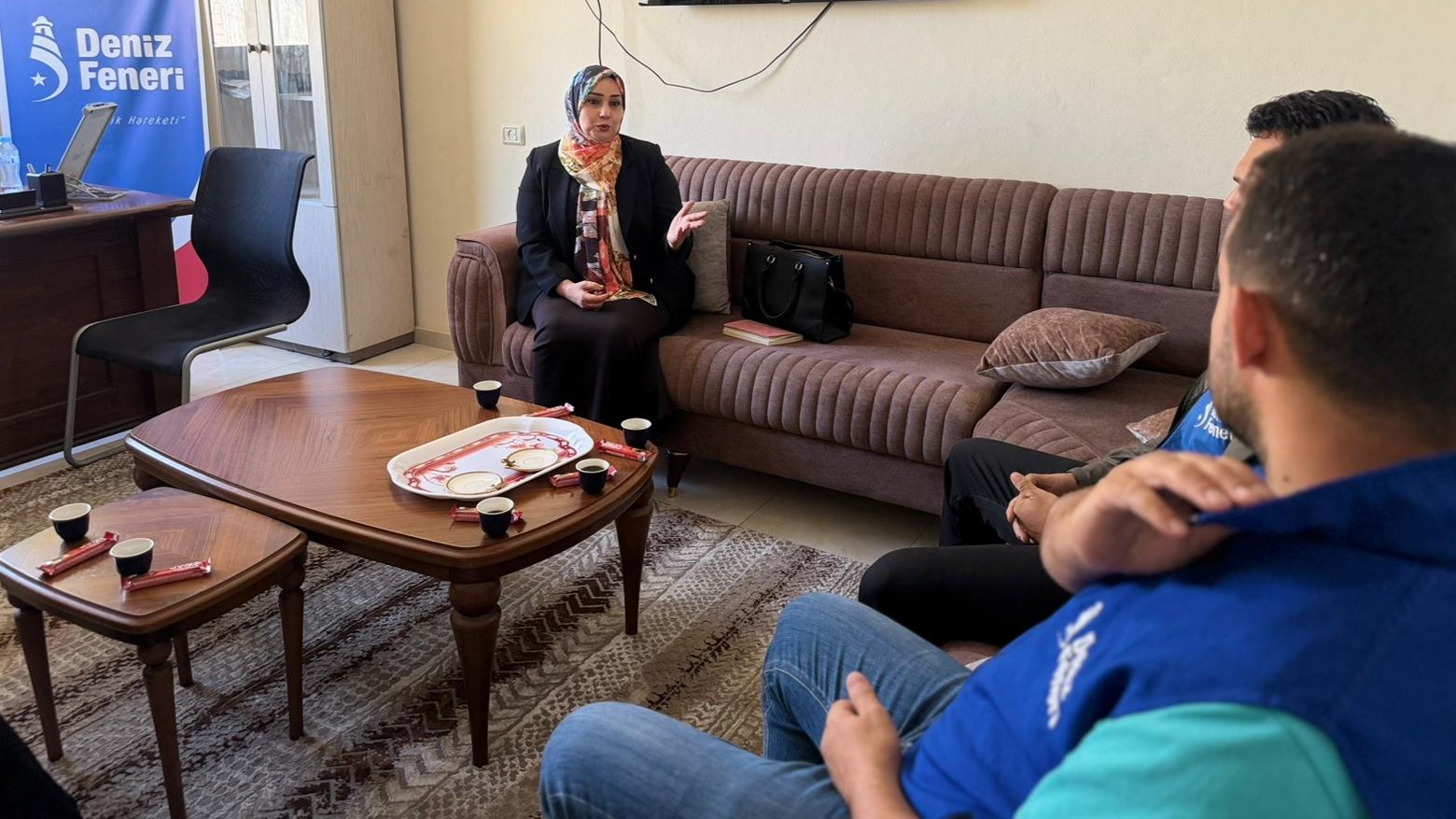
She emphasises that "municipal work in times of war is not about finding perfect solutions, but about trying to ease people's suffering with whatever means are available." She stresses that municipalities need genuine support to fulfill their role as the level of government closest to citizens.
Harb’s guest room still fills with people seeking mediation, and she continues to balance her membership of the municipal council with her role as mukhtara. The essence of her mission has not changed: listening to people and understanding their problems remains, in her view, the surest way to preserve whatever remains of the community's cohesion.
This is an edited translation of the Arabic original. Translated by Basyma Saad.
© Qantara.de