"The Holocaust reshaped knowledge production about Islam"
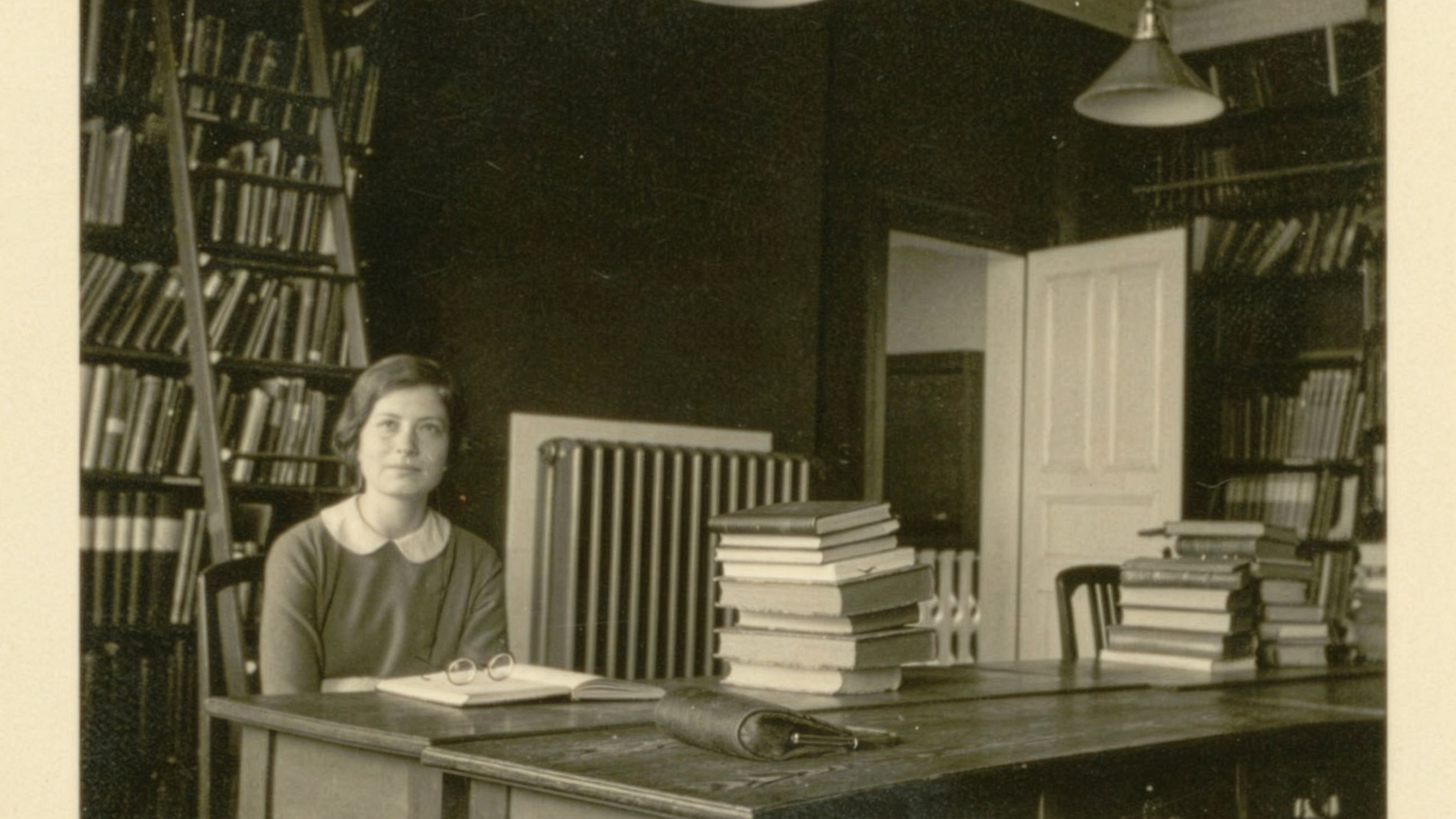
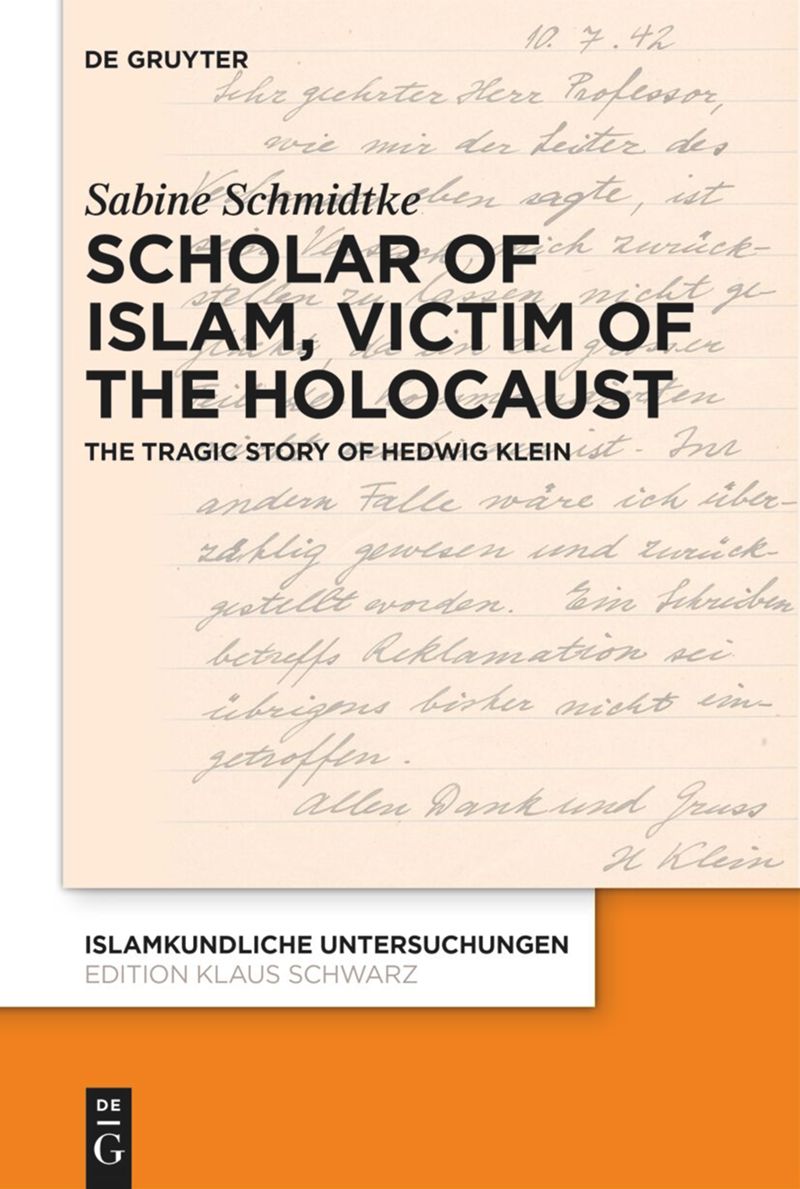
Qantara: Prof Schmidtke, your most recent book, "Scholar of Islam, Victim of the Holocaust: The Tragic Story of Hedwig Klein", will be published in July. Who was Hedwig Klein and what got you to write this book?
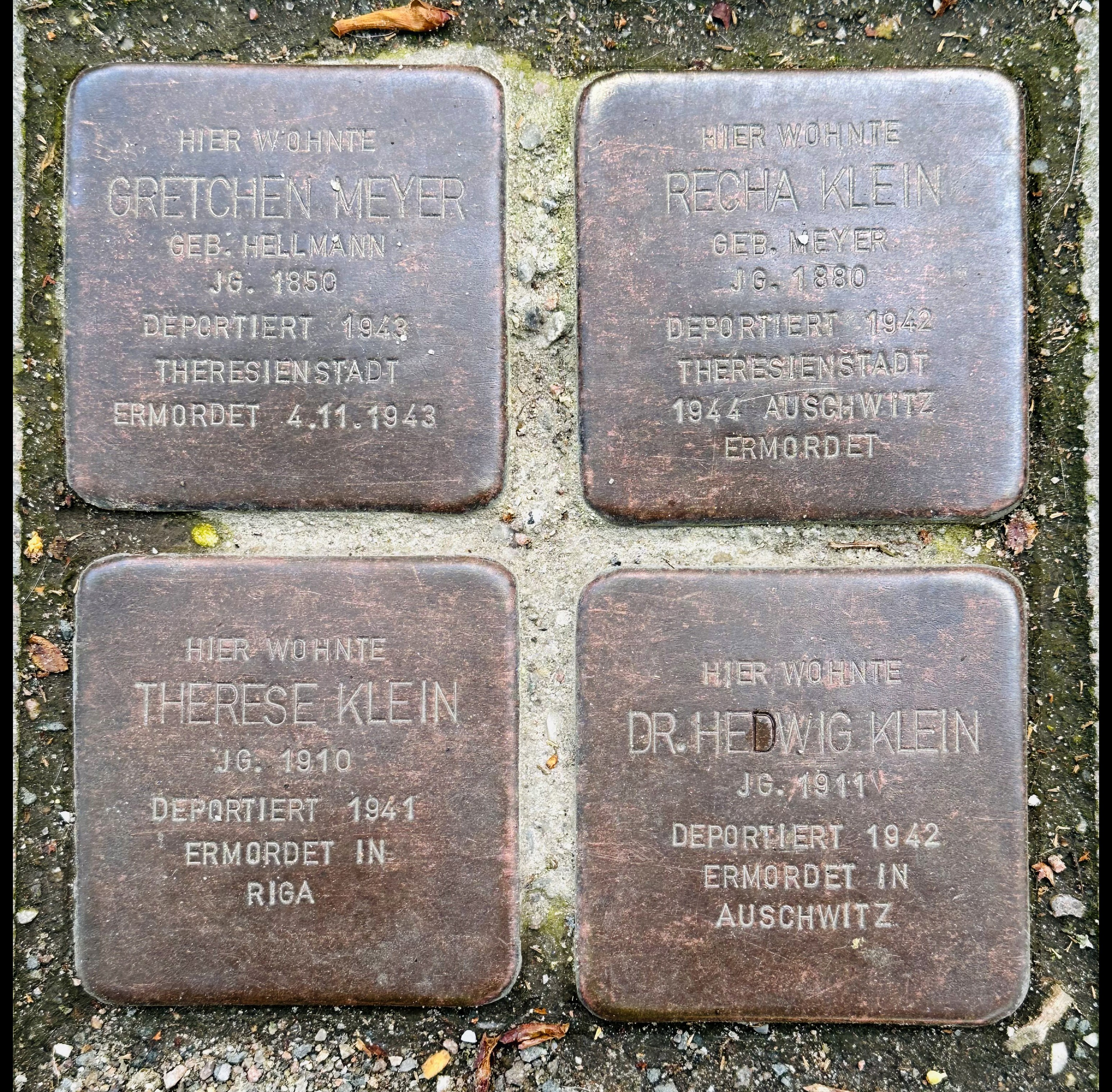
Sabine Schmidtke: Hedwig Klein was born on 19 February 1911, in Antwerp, the second daughter of Abraham Wolf Klein and Recha Klein (née Meyer). She grew up in Hamburg in an orthodox Jewish household, living with her mother, her older sister Therese and her maternal grandmother Gretchen at Parkallee 26 in the Eimsbüttel district. Her father had been reported missing on the Eastern Front during World War I and was officially declared dead in 1926.
She was a brilliant young scholar of Islam—an Arabist and philologist who studied at Hamburg University, where she majored in Islamic studies with minors in Semitic studies and English philology. She passed her doctoral exams on 18 December 1937, earning the highest possible grade in both her dissertation and oral examinations. But because she was Jewish, she was ultimately denied her doctoral degree under the Nazi race laws. On 11 July 1942, she was deported to Auschwitz, where she was murdered. She was just thirty-one years old.
What initially drew me to Hedwig Klein was the controversy surrounding her involvement with Hans Wehr's famous Arabic dictionary and the dictionary's supposed connection to an Arabic translation of Hitler's "Mein Kampf".
Can you talk a bit about the political and intellectual scene at Hamburg University in the early 1930s when Klein was there?
When Hedwig Klein enrolled at Hamburg University in the summer semester of 1931, the Weimar Republic was still in place. Despite the negative consequences of the global economic crisis, the swelling political conflicts and the rise of anti-Semitism, the environment still allowed her to focus on her studies. Things changed dramatically in early 1933, when she was halfway through her university studies.
Hamburg University is actually notorious for having implemented the Nazi racial ideology faster and more smoothly than most other German universities. About 20 percent of the faculty in the Faculty of Philosophy were forced out.
But Klein was somewhat shielded initially. The Seminar für Geschichte und Kultur des Vorderen Orients (Seminar on the History and Culture of the Near East) kept its distance from the Nazis. The robust presence of Middle Eastern students and lecturers at the department may also have helped counter the influence of German politics on daily scholarly routines.
So, there was this strange bubble within the university where genuine scholarly collegiality persisted even as the world outside was becoming increasingly hostile and dangerous for Jews.
What is the nature of the controversy surrounding Klein's contribution to the famous German philologist Hans Wehr's Arabic dictionary? What position does your book offer on this matter?
Since 2014, several blogs and online essays have focused on Klein's involvement with what became Hans Wehr's "Arabisches Wörterbuch für die Schriftsprache der Gegenwart" (Arabic Dictionary of Contemporary Written Language) and have claimed that the dictionary project was connected to efforts to produce an authorised Arabic translation of Hitler's "Mein Kampf". This narrative has generated considerable attention and an outpouring of shorter essays and blog posts.
My book demonstrates that there is, in fact, no connection between the two projects. The claim is based on a misreading of a 1938 letter by Werner Otto von Hentig, the head of the German Foreign Office's Orient desk. What von Hentig actually did in that letter was ask the Foreign Office library to procure the dictionaries he listed—he was simply requesting that existing reference works be added to the library's collection.
However, later interpreters read this letter as von Hentig lamenting the lack of an Arabic-German dictionary. This misreading is the principal reason why the two projects—the dictionary and the "Mein Kampf" translation—became conflated in the eyes of the essayists who have written about this. In reality, the dictionary project was a legitimate scholarly undertaking with a long prehistory in Western Arabic lexicography, whereas the "Mein Kampf" translation effort was a propaganda project. The two had nothing to do with each other.
The unknown Arabist
During the Nazi period, Hedwig Klein worked on a dictionary intended to help with the translation of Hitler's diatribe "Mein Kampf" into Arabic. But it didn't help the Arabist: she was murdered in Auschwitz in 1942. The dictionary, however, remains a bestseller – with no mention of Klein’s fate. By Stefan Buchen
I also need to correct the record about the extent of Klein's contribution. Klein was definitely involved in the preparatory phase of the dictionary—that is not in question. What matters is the scale of her actual contribution and the nature of the role she played. The often-repeated claim is that she, in fact, did the dictionary, whereas Wehr simply published it as his own. Through my research, I was able to reconstruct the early history of the dictionary, analyse in detail who was involved and trace each participant's contributions.
It turns out that Klein worked on the project only from approximately September 1941 until the spring or early summer of 1942, and that another ten to twelve people were extracting material from published sources just as she did. While the quality of her contribution was superb—as was everything she touched—in terms of quantity, it cannot have been much.
My correction to this dominant narrative is not meant to downplay the difficulties Klein faced in her work on the dictionary, nor to endorse wholesale the way she was treated in the process. And let me be clear: I have no stake in defending Hans Wehr's reputation, though the evidence shows that the charge of Nazi sympathies levelled against him is in fact unfounded. Rather, my intention is to set the historical record straight and counter the misleading narratives that, above all, are unfair to Klein's legacy.
The true story—of a young Jewish scholar of extraordinary gifts who kept doing rigorous scholarly work even as her world was collapsing around her—is far more compelling than any distorted version could ever be.
What would you like readers to take away from this book, especially regarding the impact of the Holocaust on the academic study of Islam?
I hope readers will understand that Klein's tragic life story illuminates something much larger than one individual's fate. It is a window into how the Holocaust fundamentally reshaped the production of knowledge about Islam—not just in Germany but globally.
The seizure of power in 1933 shattered the field's institutional foundations. The Holocaust erased an entire generation of Jewish scholars—people who were actively contributing to the study of Islam, Semitic languages and the cultures of the Middle East. Some perished in the camps. Others were driven into exile across the globe, and many never found a way back to academic life.
The collective loss of their knowledge, their expertise, their ongoing research projects and the scholarly networks they had built is incalculable. German dominance of the discipline came to an abrupt end, German ceased to be the lingua franca of scholarship and the field was transformed beyond recognition.
Klein's story makes this abstract history concrete and human. Here was a woman of extraordinary talent and dedication, and she was murdered at thirty-one because she was Jewish.
Fleeing the Nazis and thriving in Cairo
Many Jewish musicians fled Nazi Germany in the 1930s and 1940s. Composer Brigitte Schiffer was one of the few who put down roots in Egypt. In this interview, the German music professor Matthias Pasdzierny charts her unusual story.
I also hope this book serves as a corrective to the sensationalism that has surrounded Klein's story in recent years. She deserves to be remembered for who she actually was—a gifted scholar, a dedicated philologist, a woman of remarkable intellectual courage—not as a prop in a sensationalised narrative, but as the extraordinary person and scholar she was in her own right.
And finally, I hope the book honours the many people who tried to help her—Rudolf Strothmann, Arthur Schaade, Rudolph Said-Ruete, Carl Rathjens and many others—even when their efforts ultimately failed. Their humanity in the face of an inhuman system is part of this story too.
As Margot Friedländer, the Holocaust survivor whose words I chose as the epigraph for this book, has said: "Seid Menschen!"—"Be human!" That is perhaps the most important thing any reader can take away.
A longer version of this interview has been published by the Institute for Advanced Studies, Princeton NJ, USA.
© Qantara.de