"Most of us feel betrayed"
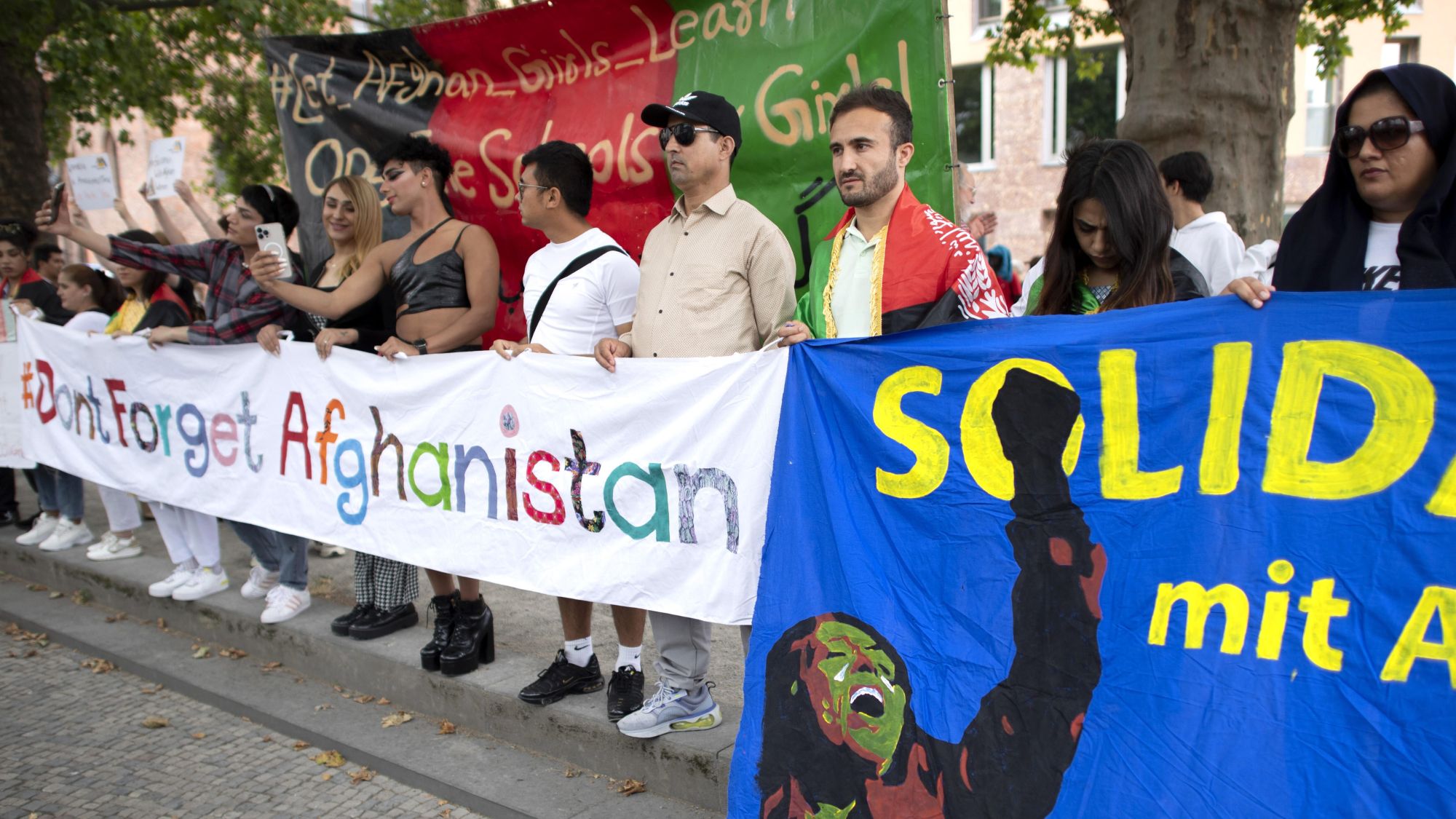
Qantara: Ms Hashemi, as the anniversary of the Taliban takeover approaches, what are the particular concerns of the more than 400,000 Afghans in Germany?
Mitra Hashemi: The Afghan community is very diverse. People differ widely, with regard to ethnic background, religion, even the time they arrived in Germany or left Afghanistan.
Now, five years on from the fall of Kabul in 2021, the old emotions are resurfacing for many Afghans. Most are simply depressed and feel betrayed and powerless. At first, many still thought it would be a brief interlude—that the Taliban wouldn't remain in power for long—but today, the exact opposite is the case. The Taliban are stronger than ever.

Recently, political change in Germany has been rapid: "technical cooperation" with the Taliban, deportation of convicted criminals, and at the end of July the precedent-setting deportation of a person who has not been charged with any crime. What signals is German policy sending to the Afghan community?
Shortly after the fall of Kabul, we had the feeling that our country was being acknowledged and that our fate mattered. It quickly became clear that this was just a fleeting emotional reaction. Anti-Afghan racism openly resurfaced. It has been around for a long time; I remember how then Interior Minister Seehofer rejoiced in 2018 that 69 Afghans had been deported on his 69th birthday.
At the political level, the Taliban are using cooperation with foreign governments—such as Germany's—to buy domestic legitimacy. This is being hailed as a major success. But this cooperation elicits a sense of powerlessness, especially among women—including here in Germany. It sends a clear signal that even countries that had shown solidarity with Afghan women—at least rhetorically—are no longer interested in us.
Do you believe that women could also be at risk of deportation in future?
Indirectly, at least. Here’s an example: women who came to Germany after 2021 through the federal admission programme were, in some cases, allowed to enter the country with their families. Some are now applying for asylum because, given the political climate in Germany, they fear that their residence status under Section 22, sentence 2 will be revoked. I know of several cases where women have been granted protection status, but their husbands were only granted a suspension of deportation.
From conversations with those affected, I know that, were their partners to be deported, these women would go with them rather than see their families torn apart. What was promised in 2021 under the banner of "feminist foreign policy" was nothing but a show from the start.
Do you feel a lack of respect from mainstream German society and politicians?
Whenever I see "Afghanistan" mentioned in the newspaper, it’s either about deportations or the crimes of the Taliban—with whom Germany cooperates regardless. There are never any reports about our successes or achievements.
Since the fall of Kabul, in particular, many highly educated Afghans live in Germany. Our association runs a programme to support academics and over 300 have registered.
Then there is the experience of Afghans who faced extreme poverty, both when Afghanistan was a republic and under Taliban rule. They had very few opportunities to get an education yet many have managed to build a life for themselves here in Germany and to learn a trade. There are also many Afghans working in the low-wage sector, doing jobs that nobody else wants.
But while these are all things worthy of our respect, it is also important to state that the argument for taking in Afghans is not about skilled labour migration. It is about the humanitarian duty to take in people who are in danger.
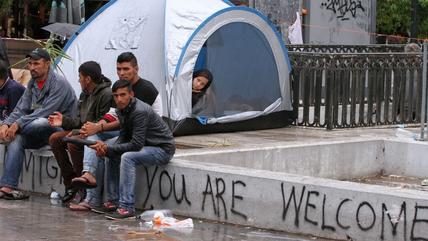
"Fight the causes of flight, not the people forced to leave"
Afghan-Greek political activist Nasim Lomani is dedicated to supporting refugees. He argues that as long as the EU continues to overlook the realities on the ground, the number of people fleeing Afghanistan will only rise.
In 2025, the German government suspended family reunification for beneficiaries of subsidiary protection. How are those affected faring?
Families were often torn apart when fleeing. Many, mostly women and children, have been waiting for years to be able to join their families in Germany. If the children come of age in Afghanistan during that time, their entitlement to family reunification expires. That means the suspension of family reunification is a dramatic blow for many.
Even for those who theoretically still have the right to join their families under Paragraph 22, the process doesn't work in practice. An embassy appointment is needed, for example in Islamabad, yet these are fully booked for years. That means that even if all the necessary documents are in order, entry is rendered impossible on the German side. For the families, that's an enormous psychological strain and, in some cases, a permanent threat to their very survival in Afghanistan.
What role do remittances play for people back in Afghanistan?
We Afghans have always financially supported our relatives. Since the Taliban took power, the need has intensified because the economic situation is so dire. In the past, young people would work locally and could contribute to the family income. That's no longer the case.
People want to work, but there are simply no jobs. I know people who have been standing by the roadside, offering themselves as day labourers, every morning for months, just to be able to buy a piece of bread. Families would starve if it weren’t for the remittances from abroad.
The situation has been further exacerbated by mass deportations from Iran and Pakistan in recent years. On one hand, Afghanistan’s limited resources must now stretch to support even more people; on the other, many Afghans lost their possessions and their livelihoods in those countries due to the deportations.
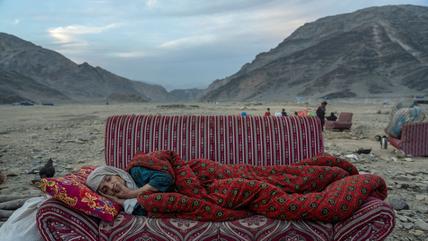
Ruthless displacement
Pakistan's border with Afghanistan is the site of one of the largest mass displacements in modern times. Since 2023, more than a million Afghans—many of whom lived in Pakistan for decades—have been forced to return to a country where they face few prospects.
What does it mean for Afghans in Germany that Taliban representatives are now based at the embassy in Berlin and the consulate in Bonn?
The presence of the Taliban at the embassy – we know of seven of them – means that their regime has access to the data of all Afghans who need to use consular services. Since many procedures such as naturalisation, marriage or passport renewal require documents and stamps from the embassy, this affects almost all of us.
This is particularly drastic for those who have fled the Taliban. We are not only putting ourselves at risk, but also our relatives in Afghanistan.
In what way is the safety of family back in Afghanistan affected by visits to the embassy in Germany?
Many of the Afghans living in Germany previously took action against the Taliban, politically or through the legal system. One woman I'm supporting went to the embassy and the Taliban said, "We know who you are." Two weeks after that appointment, members of her family in Kabul were threatened. When people come to the embassy here, it is used by the Taliban as a pretext to check who else from the family is still in Afghanistan. The motivation behind this is usually revenge.
Incidents such as these show that the Taliban are here in Germany to demonstrate their power and influence, internally but also towards their foreign partners, particularly the German federal government.
So you are saying that the Taliban’s presence also influences German politics?
Of course. Recently, the Taliban halted the preparations for a deportation flight to press for further Taliban representatives to be brought to Germany. The German government is making itself vulnerable to blackmail. To a certain extent, the Taliban are shaping domestic and foreign policy regarding Afghanistan.
Yet everyone knows that the Taliban are a terrorist organisation. It makes no sense. How can we combat Islamism in Germany if we are cooperating with Islamists?
This text is an edited translation from the German original by Louise East.
© Qantara.de