Between nomadic past and digital present
Topics
The "vibrant plurality" of contemporary Saudi poetry hasn't yet found its place in English translation. So says Saudi academic and translator Moneera al-Ghadeer. While teaching in the US, al-Ghadeer says she was struck by the lack of new Saudi literature available to English-language readers.
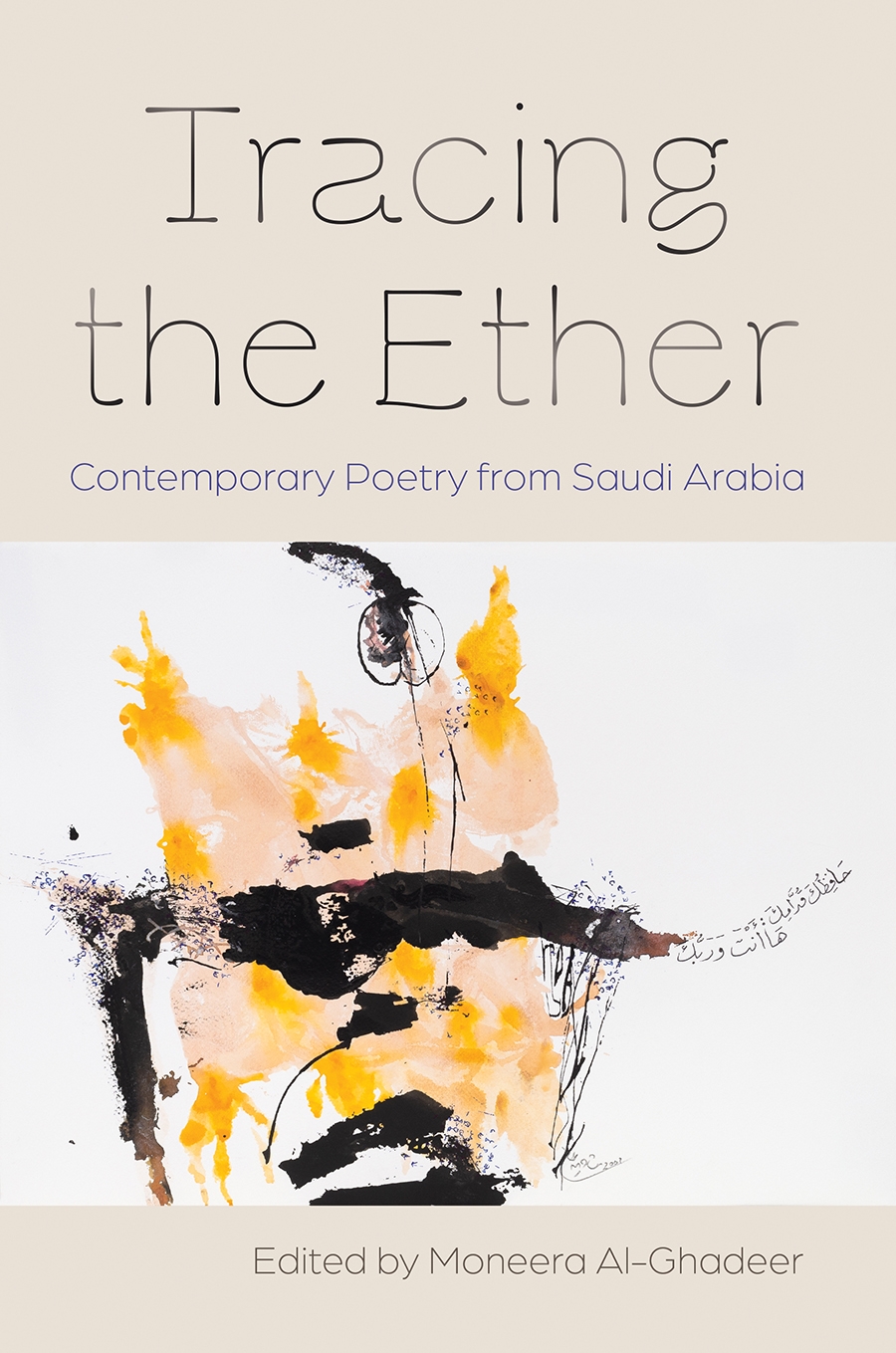
While the last twenty years have seen a boom in Arabic literature in translation, few translators have focused on Saudi Arabia. It has been left to Saudi translators like al-Ghadeer to fill that gap, which she does with the anthology "Tracing the Ether: Contemporary Poetry from Saudi Arabia".
The collection, published in a bilingual edition by Syracuse University Press, includes work by 26 contemporary Saudi poets. Each poet is represented by two or three short poems—except for the iconic Fawziyya Abu Khalid, who gets four—giving the reader a tasting menu of 21st-century Saudi poetry.
"Collapsing centuries into a single moment"
What, then, are the concerns of contemporary Saudi poets? Many of the poems in "Tracing the Ether" explore the Arabian Peninsula's rapidly changing landscape and the changes wrought both by oil and by digital technologies. These concerns are further entangled in a history of nomadism, pre-Islamic poetry and a persistent threat of loss.
Several poems in the collection look back on the poetic history of the Arabian Peninsula. Ibrahem Zooli's "Halt, Let Us Weep", translated by Wail S. Hassan, explicitly evokes the most well-known poem by the great Imru' al-Qais (501-544), which opens "Stop, oh my friends, let us pause to weep over the remembrance of my beloved ones." The resonances between the two poems—one from the sixth century and the other from the twenty-first—lay different eras one on top of each other, spurring the reader to reimagine time.
Zooli's brief poem echoes not just al-Qais's classic poem about grief, but also references Abu al-Ala al-Ma'arri's radical eleventh-century novel "Luzumiyat" and twentieth-century Egyptian poet Amal Dunqul’s fierce "Do Not Reconcile", a poem that transforms lament into fury. Al-Ghadeer says the effect is like "collapsing centuries into a single moment of recognition."
Moving from grief, to rage, to rallying cry, Zooli's poem opens mournfully:
"Why does the night take me far away / the roads robbing me of my shadow".
Here, it is not only the narrator who is leaving his life behind: refugee children are seen "dragging sad / folk songs behind their backs". By the end, the poem has transformed both grief and rage into a command:
"Halt, let us weep! / Halt, let us weep!"
The digital age in Saudi literature
Just as Zooli collapses present and past, the collection’s title, "Tracing the Ether", merges different connotations of the word "ether": from the "ethereal" echoes of human history to the invisible "ether" of contemporary technology. This ether is both "the digital and the atmospheric", Al-Ghadeer says, where poets "perform a modern ritual of retrieval, finding the enduring script of the human experience within the uncertain, invisible currents of the technological age."
"Poetry in its true fullness"
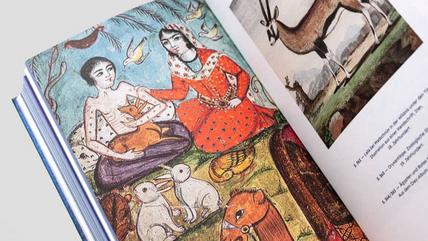
Stefan Weidner has gathered pre-Islamic poems and translated them into German. His new book "The Arabic Divan" revisits these centuries-old works and explores how their verses serve as a vibrant predecessor to today's social media.
In Mohamed Kheder’s "Picture of an Old Home", translated by Al-Ghadeer, the narrator searches "for our old home through Google Earth." The narrator sees a familiar spot on the digital horizon, now "small like a scar on a beehive".
Poems like Kheder's are concerned with how the Saudi landscape has changed—"the farm has become a large supermarket"—but also with how these changes are mediated through technology—mobile phones, Google Maps and social media.
Here, the past is seen "by zooming in on the screen with the thumb and index finger". When the narrator spots a kite he used to fly, he imagines he can "fly it again with two fingers / and run, staring at the sky".
In some instances, technology is an intruder, as in Ahmed Alali’s "The Way to Our Home", translated by Nashwa Nasreldin. This poem opens by telling us that "Google Maps lies". Here, technology is at war with memory, and the narrator pushes back by giving the family home a bodily form:
"walls like cheeks that flush when we fall in love / that bulge when we're angry."
The diversity of Saudi poetry
Digital technologies aren't an entirely foreign element. In fact, they can resonate deeply with the peninsula's culture of nomadism.
Fowziya Abu Khalid's "Mobile Phone", translated by Al-Ghadeer, ties the restlessness of the present to the movement of nomads, to the "gypsies whose honour is fixed to never / not traveling". The phone itself takes us "to the moth of time / and elusiveness of space".
"Tracing the Ether", Al-Ghadeer says, captures only one side of contemporary Saudi poetry. Like this anthology, Saudi poetry today bridges a long history—from nomadic traditions to the digital present.
The poems in this collection are taken from printed books and the literary pages of national newspapers. But, Al-Ghadeer explains, there is another, parallel tradition: the popular, vernacular Nabati poetry, descended from an oral tradition, that circulates widely through "high-stakes televised competitions" and YouTube channels.
Both of these forms, Al-Ghadeer says, ensure that the poet "remains a visible, public figure" in Saudi Arabia today. Yet little of this breadth has so far been reflected in translation.
Al-Ghadeer says that "Tracing the Ether" is only an "opening chapter" in the translation of Saudi poetry. She plans to produce a second volume "that will encompass these additional voices", with the ultimate goal of providing a comprehensive overview of the diverse Saudi poetic scene.
Tracing the Ether. Contemporary Poetry from Saudi Arabia
Edited by Moneera Al-Ghadeer
Syracuse University Press
November 2025
© Qantara.de