Power consolidated, society reshaped
Topics
When Roya thinks about her future, all she sees are shattered dreams. The young woman wanted to become a dentist, but the Taliban takeover in August 2021 brought her plans to an abrupt end—along with those of millions of other women in Afghanistan.
Roya is a pseudonym; for her own protection, her real name will not be mentioned in this text. "I see my friends abroad getting on with their lives, whilst I'm not allowed to finish my degree," she says. "My life has been at a standstill for five years."
Five years. That is how much time has now passed since the Taliban regained power in Afghanistan. With the withdrawal of Western troops, the government they had supported—a government riddled with corruption—collapsed like a house of cards. What remained was a traumatised and war-weary population.
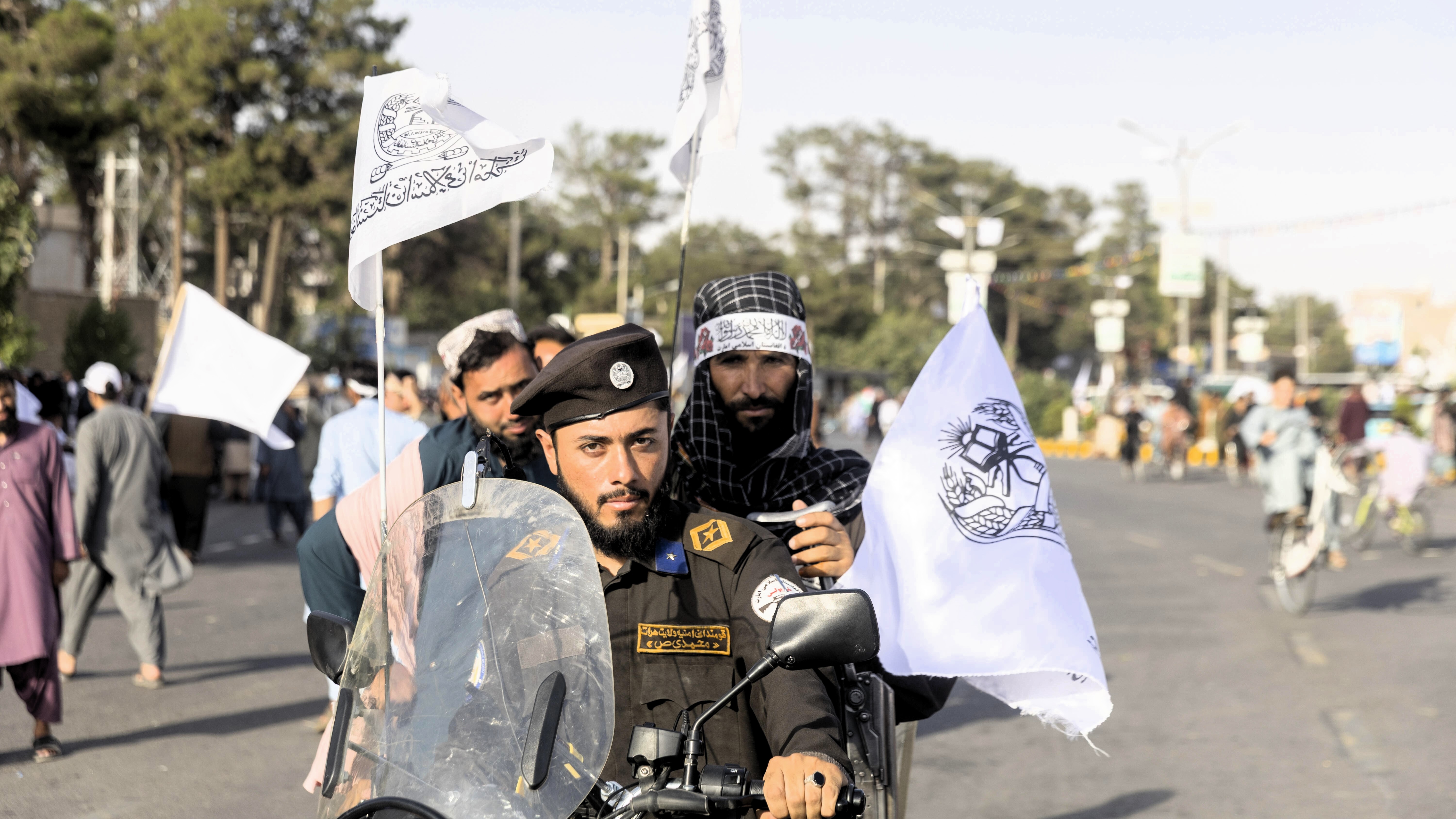
Today, the Taliban appear to have consolidated their power: unlike during their first period in power (1996–2001), they now rule over the entire country. Opposition movements and rival groups such as Islamic State are being systematically suppressed.
The number of armed conflicts in the country has fallen significantly since their return. This also means that humanitarian aid is now reaching many remote regions that were previously almost inaccessible.
At the same time, the Taliban's rule has become highly centralised. Decisions now rest with the movement's leader: Haibatullah Achundsada. Any potential disagreements, such as on the issue of girls' education, are not played out in public. This united front sets the Taliban apart from Afghan opposition movements, which remain highly fragmented, even in exile.
Just as dissent within their own ranks is not tolerated, the Taliban do not tolerate dissent from the general population either. Critical voices are silenced, activists risk imprisonment and torture, and journalists work under extreme self-censorship. Independent reporting is no longer possible for media in the country.
Patriarchal control within families
The situation is particularly bleak for women. They are denied access to universities and secondary schools. According to UNESCO, 2.4 million girls are now excluded from higher education.
Numerous professions are no longer open to them. Women need a male companion to travel; even parks and beauty salons are off-limits to them. According to a so-called Virtue Law enacted in 2024, women must cover themselves completely in public, whilst men are required to wear a beard.
Men are also drawn into the repression of women: for instance, male family members are often punished when women are alleged to have broken the rules. This is a strategy through which the Taliban aim to consolidate patriarchal control within families.
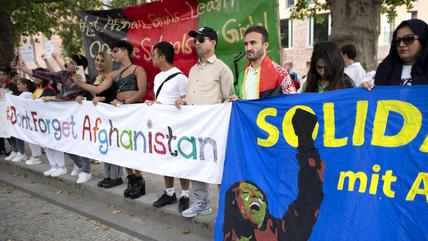
The examples cited make it clear: the Taliban's decrees represent more than just legislation. They are an attempt to shape society according to their own ideals. By legally placing responsibility for women's actions in the hands of men, the Taliban are already starting to exert their influence within families. Such measures carry a significant risk that patriarchal structures will become entrenched and further reinforced, as was already the case, for example, during the civil war in the 1990s.
Afghan women are starting businesses
The Taliban's ideology is rooted in the Sunni-Hanafi Deobandi movement, founded in the late 19th century, which has its origins not in the Hindu Kush but in what was then British India. Many of the Taliban's current rules are reminiscent of the Taliban's reign of terror in the 1990s. At their core, the new (old) rulers do not appear to have changed ideologically, even if some differences are evident in practice.
Anyone walking through the streets of Kabul, Mazar-i-Sharif or Herat, for example, will notice a visible discrepancy between the strict set of rules currently in force in Kandahar, the seat of the Taliban leadership, and how they are implemented in other parts of the country.
For instance, women can still be seen showing their uncovered faces in the street, contrary to official orders. Furthermore, private schools offering higher education to girls are tacitly tolerated by some local Taliban leaders.
The number of female entrepreneurs in the country has risen significantly: according to the think tank International Crisis Group, the number of women holding business licences has quadrupled. The main reason for this is a lack of other options for women.
However, the disastrous consequences of many of the Taliban's restrictions are likely to become apparent in the years to come. For example, there are already no more trained women entering essential sectors such as healthcare.
Only Russia recognises the Taliban
Meanwhile, there are no signs of a more moderate course. A look back over the past five years shows, rather, that the Taliban have continued to intensify their repression with a steady stream of new decrees.
Meanwhile, massive human rights violations remain a major obstacle to the Taliban's international relations. Five years after their return to power, they are not recognised by any country in the world apart from Russia.
For a long time, Pakistan was regarded as a close ally of the Taliban; the Pakistani intelligence service provided them with financial and military support. However, since the fall of Kabul in 2021, relations with the neighbouring country have cooled significantly, as the Taliban's Pakistani offshoot, the TTP, has intensified its campaign against the government in Islamabad since the Taliban's return.
Some regional powers adopt a pragmatic approach towards the Taliban. Many neighbouring states prefer Taliban rule to an unstable Afghanistan, as they fear that, under different circumstances, the Islamic State might gain strength and spread into their own countries.
Trade relations, alongside mining projects targeting Afghanistan’s abundant natural resources, are an important source of income for those in power in Kabul. Opium cultivation, which was once a major source of revenue for the Taliban, has, however, declined sharply.
Opposition remains limited
In addition to the numerous restrictions that affect women and girls in particular, the population is suffering from a severe economic crisis. An independent economy was scarcely established during the years of Western presence (2001–2021); instead, a large proportion of the state's revenue came from aid funds.
With the withdrawal of Western troops, this aid was largely cut off, sending the Afghan economy into freefall. At the same time, the country was hit with sanctions and cut off from the international financial system. Contrary to many expectations, however, the economy has since stabilised somewhat.
The humanitarian situation, however, remains precarious: according to UN figures, almost half the population is dependent on aid. Millions of Afghan returnees, who were forced out of neighbouring Iran and Pakistan by large-scale deportation campaigns, are placing an additional strain on limited resources.
Despite everything, five years after their return to power, the Taliban remain firmly in control. In mid-July, a district centre in the northern Afghan province of Badakhshan fell to an opposition movement for the first time. So far, however, these movements have been confined to local areas.
However, there is a risk of a growing rift between the Taliban and the population. Increasing repression and the precarious economic situation could fuel growing discontent amongst the population. In June, protests broke out in the western Afghan city of Herat after dozens of women were arrested for allegedly failing to comply with the dress code. The Taliban used violence to quell the demonstrations.
Women like Roya, who has now been waiting in vain for years to be able to continue her studies, are no longer waiting for concessions from the Taliban. At first, she had still held out hope that those in power would once again allow women to pursue higher education. But she no longer believes there will be a change of course any time soon. "I'd love to go abroad to study," she says. "Afterwards, I'd like to return to help my country."
This is an edited translation of the German original. Translated by Max Graef Lakin.
© Qantara.de