Gaza's silent children
Topics
As she stood in the kitchen of her home in the Zaytun neighbourhood, Gaza City, helping her mother prepare food, nine-year-old Asal al-Ladawi had no idea that this would be the last moment they would spend together.
A violent explosion rocked the house. An Israeli shell shattered the roof. Asal found herself under the rubble, next to her dead mother. The girl tried to scream, but her voice stuck in her throat.
"I pulled my daughter out of the rubble, trembling and mute, and then I found my dead wife," says Asal's father, 42-year-old Basel al-Ladawi, describing the explosion which took place last September.
Asal suffered head injuries from shrapnel that day, but in the days that followed, it became clear that this was not the only damage. She was also unable to utter a word.
According to doctors, she was suffering from traumatic mutism. Asal is one of many children who lost the ability to speak during Israel's war on Gaza after the Hamas attacks of 7 October 2023.
Silence as a survival mechanism
Traumatic mutism can occur in the wake of severe trauma, such as witnessing bloodshed, massacres, displacement or an accident. According to psychologist Hala Sukkar of the aid organisation National Society for Rehabilitation in Gaza, the phenomenon is ultimately a survival mechanism.
It differs from so-called neurogenic mutism, which is caused by direct damage to the nervous system, in particular the brain or the nerves responsible for language and speech. Traumatic mutism does not involve physical damage.
Just how many children in Gaza are affected by traumatic mutism is unknown. In November, the UN Children's Fund UNICEF stated that after two years of violence and displacement, all of the approximately one million children in Gaza urgently needed some form of psychological and psychosocial support.
Sukkar emphasises that post-traumatic stress disorders such as anxiety, depression, withdrawal, aggression and a loss of security are widespread in Gaza, but a psychological diagnosis can only be made after physical causes such as hearing loss or brain injury have been ruled out.
For Sukkar, the sudden loss of speech is a "silent cry" which signals an urgent need for professional psychological support. But due to the blockade and widespread destruction in the Gaza Strip, that support is lacking.
Asal's father says a large part of his daughter died with her mother; "She is afraid of every noise, wakes up from nightmares in terror, and when someone tries to talk to her, she cries or runs away."
Virtual reality in therapy
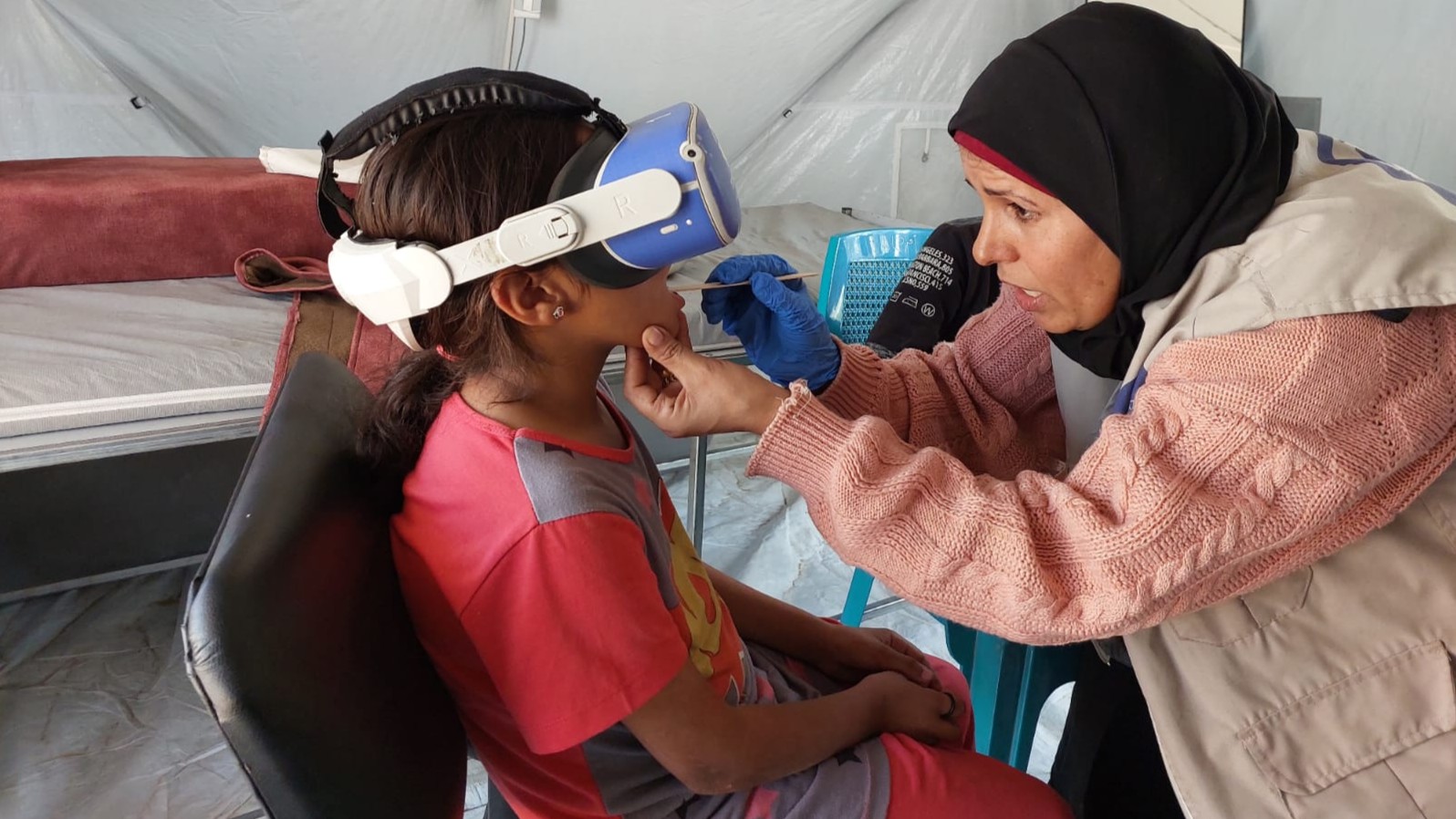
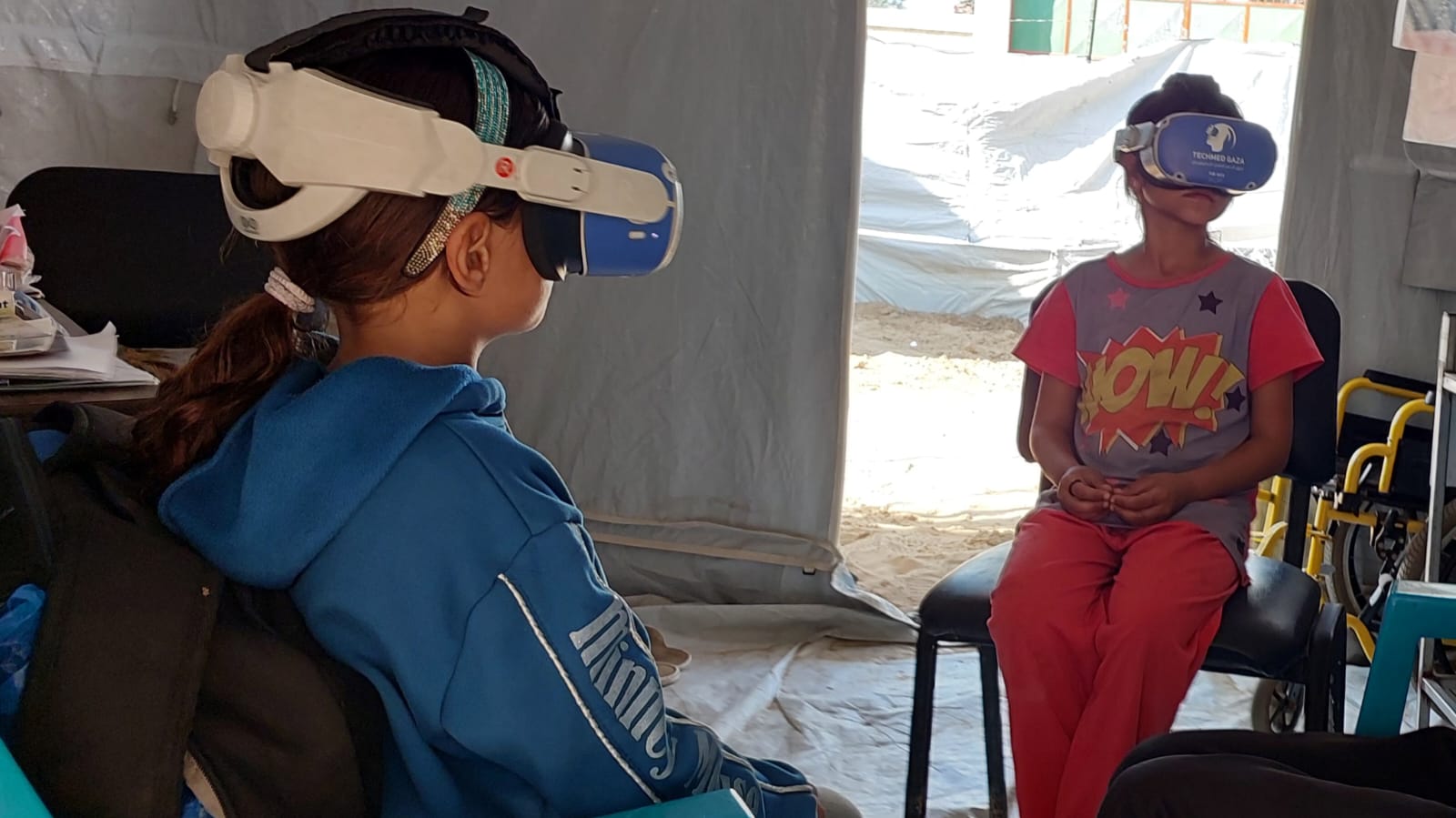
Along with other traumatised children in Gaza, Asal is now receiving psychological treatment involving virtual reality (VR) technology to help her regain her ability to speak.
The team at the organisation "Tech Med Gaza" uses VR in psychotherapy specifically for children suffering from mutism. The initiative operates in southern and central Gaza, particularly Deir al-Balah and the Nuseirat and Zawayda refugee camps. Northern Gaza is heavily damaged and as yet has no specialised psychotherapy centres for traumatised children.
"The sessions were developed specifically for children affected by war," says Abdullah Abu Shamla, Tech Med's mental health specialist. "The goal is to restore a positive perception of the world and to help children cope with their trauma through a combination of behavioural therapy and interactive technologies."
The approach combines clinical expertise with technology by programming virtual games for therapeutic and developmental purposes. The games transport children to safe environments, such as the seaside or other natural settings. According to Abu Shamla, VR can accelerate the healing process and reduce the number of required sessions from 10-12 to just 5-7.
VR glasses are being used to rebuild initial communication bridges. While the results are encouraging and there are enough specialists available, there is a lack of equipment, which limits the availability of the service.
Colours instead of words
In the Zawayda camp in central Gaza, 15-year-old Salah Abu Rakba sits in front of a white sheet of paper and tries to paint, a form of behavioural therapy. He, too, is unable to express himself verbally due to trauma. Colours have become his language, paper his window to a world he is trying to understand all over again.
Karama Abu Rakba, 40, remembers the day her son was injured: "On July 26, 2025, he went with a friend to east Jabalia to collect wood. I said, 'Don't go too far, it's a dangerous place.' He replied, 'I'll be back soon, Mom'."
Shortly afterwards, she heard gunshots. "We were told an Israeli drone shot at them," she says. "His friend was killed instantly, and Salah suffered severe head injuries. When I saw him in the hospital, he couldn't speak. He just looked at me and cried."
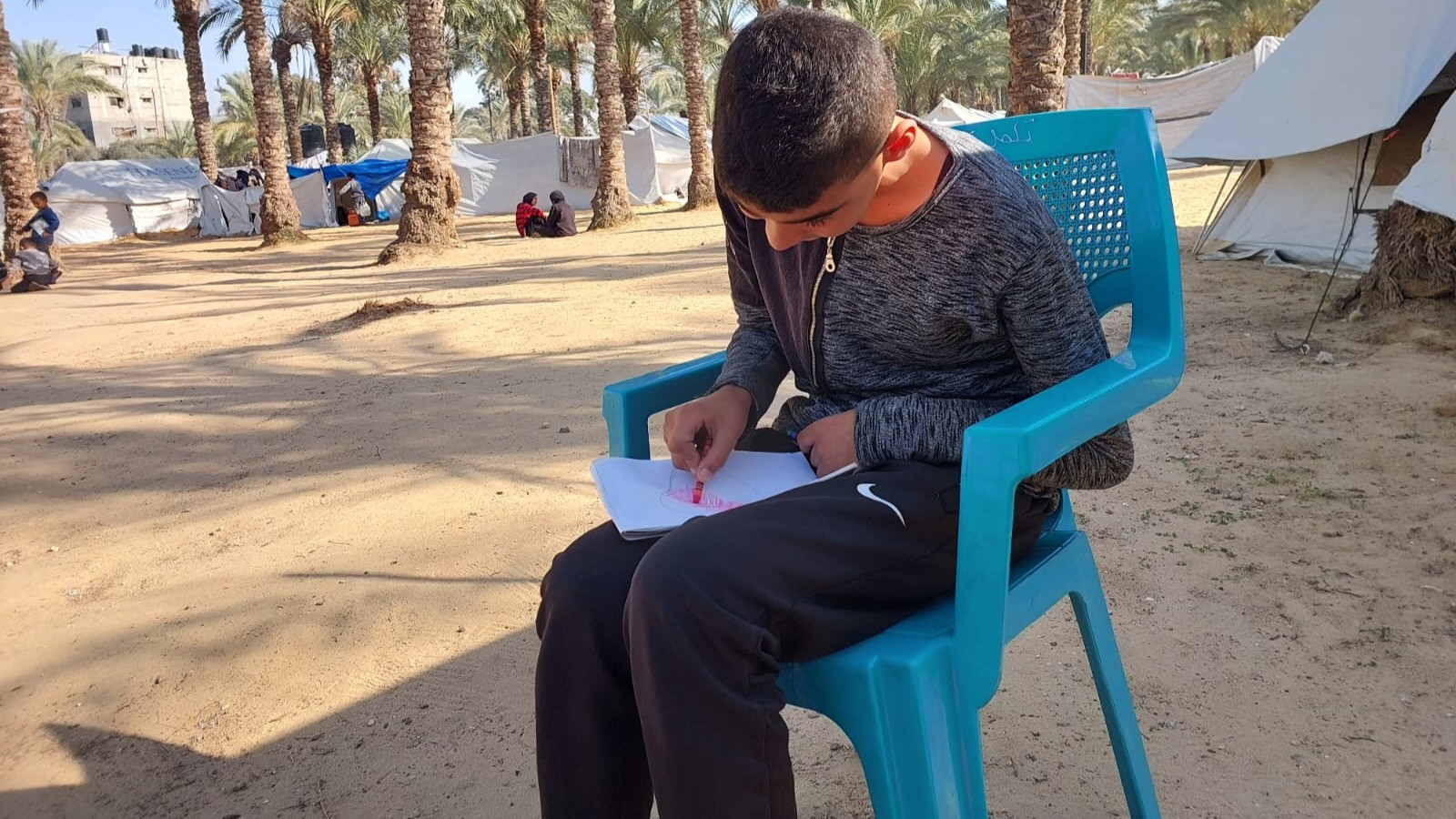
For Salah, his physical injury was not the attack's worst consequence. The shock was so severe that it affected his brain and mental health, and his mother says he is not responding well to psychological treatment.
Iman al-Khatib, a speech therapist at Tech Med, notes that while consistent therapy typically leads to progress, long-term success relies on close collaboration with families. Psychologists maintain regular contact to monitor the child's mental health, but the threat of further attacks remains a constant risk to recovery.
He points out that while some children can make progress on their own, the process is long and complicated, particularly in Gaza's harsh conditions. Parents sometimes think the problem is a temporary one, but al-Khatib views it as a serious warning sign, one which could lead to a permanent loss of speech if left untreated.
Regaining confidence
Nine-year-old Asal is one of the most difficult cases al-Khatib has ever dealt with. At first, the girl remained completely silent during the sessions. Only gradually did she begin to respond to the immersive worlds offered by the VR glasses—ocean waves, green trees, circling birds—images that allowed her to detach from her memories of the destroyed kitchen.
"When a child is threatened by the world, they don't speak," explains al-Khatib, who tries during therapy to rebuild a sense of security. "The trauma closes all doors to communication."
In each session, Asal showed a new reaction. First, she was able to raise her hand, then to point at things, and finally, with her speech therapist's help, to move her lips slightly. After a series of intensive sessions of cognitive-behavioural therapy and speech therapy, she finally spoke again for the first time.
Salah, the boy from the Zawayda refugee camp, has also begun to move his lips again with the help of psychotherapy. His mother hopes that he, too, will be able to speak again soon: "He has a strong will."
This is an edited translation of the Arabic original. Translated from German by Louise East.
© Qantara.de