Qantara Startseite Englisch
-
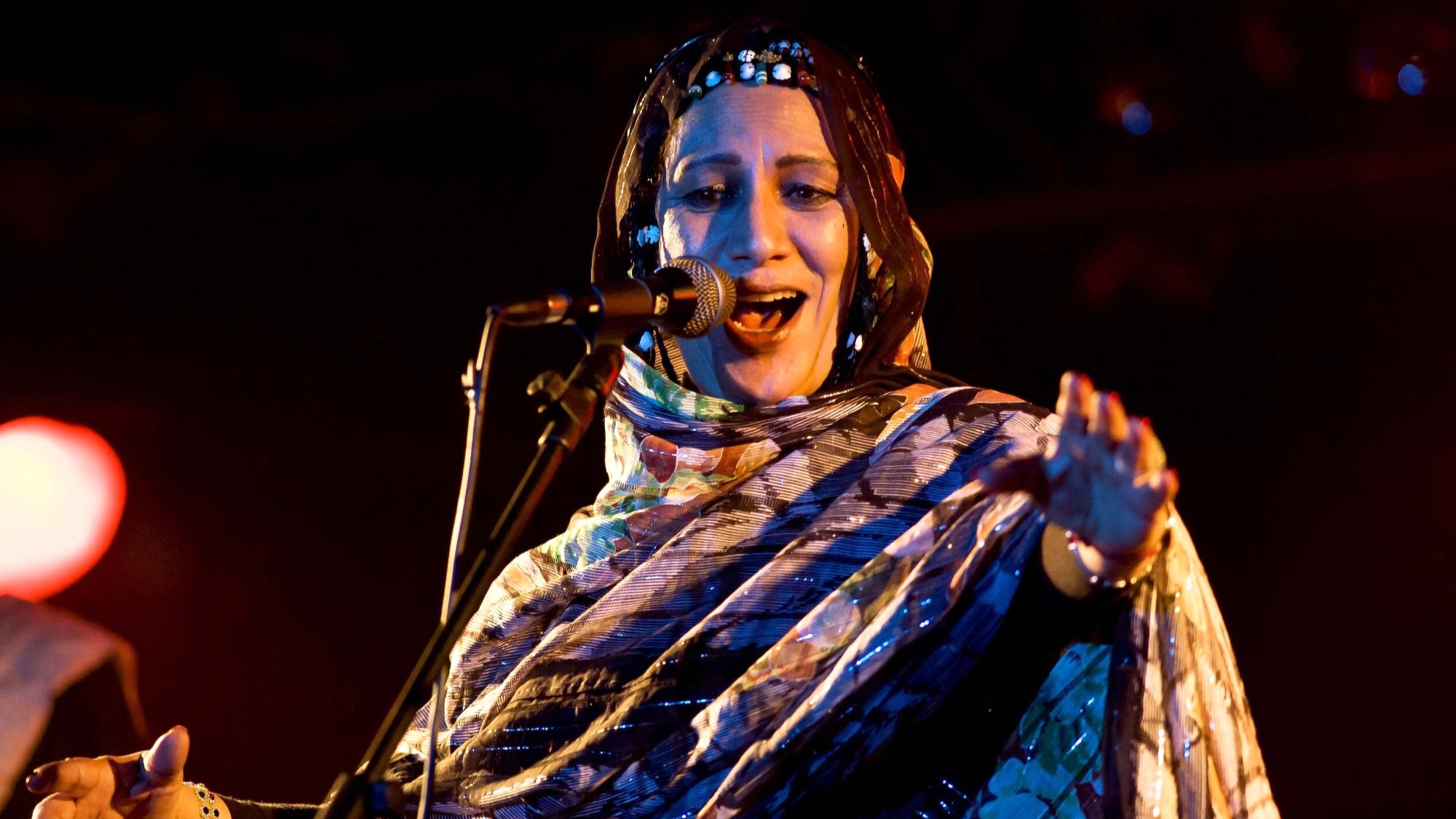 Sahrawi singer Mariem Hassan
The singing revolutionary
Mariem Hassan sang for the liberation of Western Sahara. Her songs form an archive of decades of struggle and displacement. The documentary "Haiyu" follows her life and tells the conflict's story through her music.
-
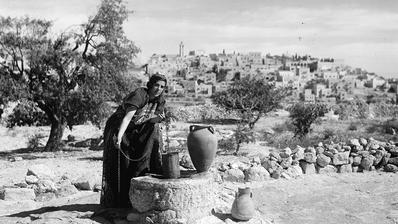 Palestinian photographer Karimeh Abbud
A long-forgotten visual legacy
Karimeh Abbud was one of the first women in Palestine to work as a professional photographer. Her work in the 1920s and 1930s represents a unique record of a society in transition. Now, a new book and exhibition bring her images and story back into view.
-
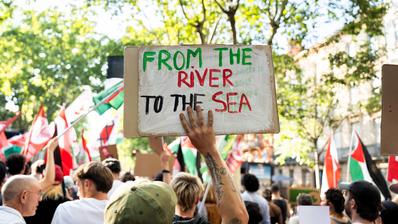 Q&A
Is "From the River to the Sea" illegal in Germany?
Does the slogan "From the River to the Sea, Palestine will be free" breach German law? The legal situation is complex and remains uncertain. German legal experts now consider the debate outdated.
-
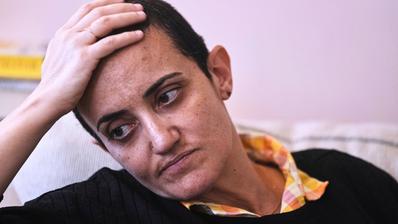 Mada Masr co-founder Lina Attalah
"People will always find a way to access independent media"
A pillar of independent Egyptian journalism, Mada Masr has operated for years despite online blocks and state pressure. Now, a court has ordered it to be shut down, and chief editor Lina Attalah is on trial. She explains why she won't back down.
Politics
More about Politics-
 Arab party Ra'am ahead of Israel's election
"We want to be a party for all citizens"
Mansour Abbas wants his Arab-Islamic party Ra'am to help topple Netanyahu. In this interview, he discusses cooperation with Jewish Israelis, rising crime in Arab communities and why his party wants to govern rather than stay in opposition.
-
 War in the Persian Gulf
When data centres become targets
Backed by the US, Gulf states have invested heavily in AI infrastructure, giving Iran a strategic target: a single strike could disrupt banking, healthcare and public services. But there are ways to protect civilian computing infrastructure from attack.
-
 Civil war in Syria
First Assad, then "Islamic State"
If the self-styled "Islamic State" is to be successfully combatted, the Syrian conflict has to be resolved. And for this, one thing is necessary above all: an alternative to the Assad regime. This alternative can only be created in safe zones, writes Kristin Helberg
-
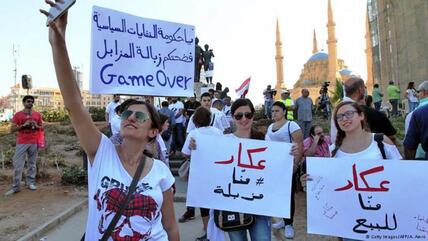 Lebanon's "You Stink" protest movement
Rubbish knows no religion
Triggered by a waste disposal crisis, a new movement has formed in Lebanon. Yet the "You Stink" campaign is more than an initiative against unsolved rubbish problems; it is also a rebellion against Lebanon's family clans and confessionalism, a system that divides up political power among the country's religious communities in proportion to their percentage of the population. By Karim El-Gawhary
-
 Politics and religion
The instrumentalisation of religion
Since time immemorial, religion has not only been used as an inspiration and a guide for life, but also as a way of furthering interests and achieving specific political ends. This instrumentalisation can be either intentional or unintentional. In this essay, Hakim Khatib looks at a number of countries where Islam has been instrumentalised in the recent past and examines the various different forms this instrumentalisation can take
-
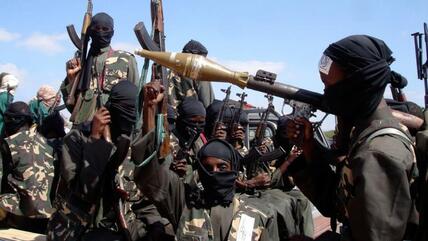 Islamism in eastern Africa
Not immune to terror
Somalia, Kenya and their neighbouring countries are increasingly being haunted by extremist violence. This essay assesses why this region has become a hotbed of Islamism and why one-dimensional military interventions by external forces have not delivered the desired results. By Emmanuel Kisiangani
-
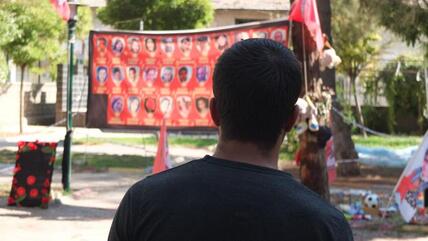 Interview with a survivor of the Suruc attack
"All we want is freedom"
The faces of the 31 members of the Federation of Socialist Youth Associations (SGDF) killed in the attack on 20 July still gaze down from banners strung around the courtyard of the Amara Culture Centre where the bomb was detonated. Inside, surrounded by broken windows, sits Adnan, a 25-year-old Kurd, who describes the IS terrorism that drove him out of Kobani, only to catch up with him across the border in Suruc. Fabian Kohler spoke to him about the attack
-
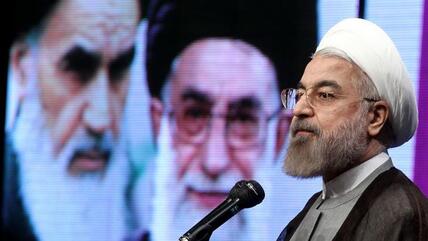 State and religion in Iran
"Shias tend to support the underdogs"
The Shia faith has always been a defining aspect of Iranian nationhood. In the twentieth century, the pro-Western regime of Shah Mohammad Reza Pahlavi silenced critics and was eventually toppled by a popular revolution with strong religious dimensions in 1979. Tehran's stance has since been basically anti-Western, but that may now be changing. Maysam Behravesh, a political analyst with Tehran Bureau, assessed the nature of the Shia regime in an interview with Hans Dembowski
Society
More about Society-
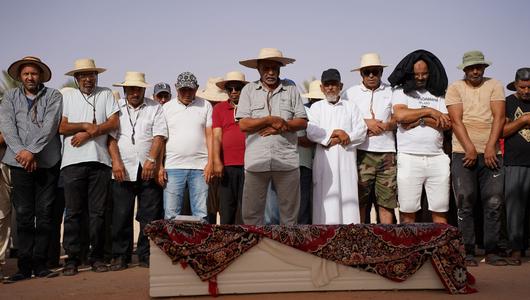 Tunisia and Libya
A border economy in freefall, a town in mourning
Ben Guerdane, southern Tunisia, has long depended on informal cross-border trade. Now that livelihood is fading, and a recent fatal shipwreck has laid bare just how precarious life has become.
-
 French author Bergeaud-Blackler
The Muslim Brotherhood's phantom caliphate
Florence Bergeaud-Blackler's warning about the Muslim Brotherhood in Europe reads like academic research. In reality, however, it is a conspiracy theory that undermines the secularism the French scholar of Islamism claims to defend.
-
 The Palestinian village of Susiya
Archaeology of a dispossession
Susiya is a small Palestinian village in the West Bank. In 1986, when the remains of a synagogue were found in the village, the site was declared a national park and the land confiscated. Residents were relocated to nearby agricultural lands. Last March, the Israeli government sought permission from the High Court of Justice to demolish the village and relocate its residents again, claiming the land for further archaeological work. Ylenia Gostoli visited the village to find out more
-
 The headscarf in the colonial period
Remove your veils!
As far back as over 100 years ago, people were already arguing that the headscarf was a symbol of male oppression and therefore incompatible with Western civilisation and its system of values. In the French colonies, authorities actually followed through on these ideas, forcing women to take off their veils. Historical insights from Susanne Kaiser
-
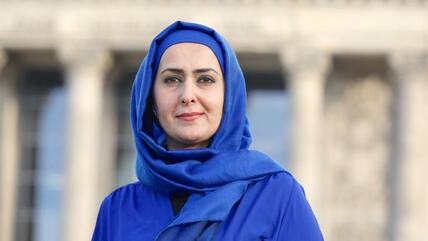 Interview with Fereshta Ludin
"The decision for or against the headscarf is wholly a matter for the woman herself"
Fereshta Ludin is probably one of the most famous teachers in Germany. Her battle to be allowed to wear the headscarf in the classroom began in 2003 – initially without success. But she is optimistic following the latest ruling from the judges at Germany's Constitutional Court in Karlsruhe. She spoke to Emran Feroz
-
 The headscarf ruling from Germany's Constitutional Court
Heated debate on all sides
The headscarf ruling handed down by the Karlsruhe judges on 13 March met with divided reactions. While some are calling it a landmark decision, others see it not as a solution but as a potential source of further problems. Canan Topcu outlines the various positions
-
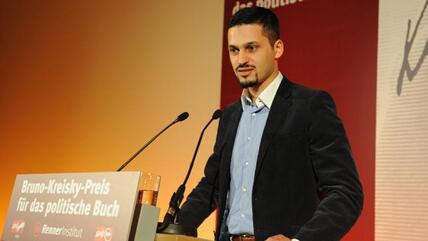 Interview with the political scientist Farid Hafez
"An expression of institutional Islamophobia"
The most recent amendment to the Islam Law in Austria is also making waves in Germany. While some politicians at the conservative end of the spectrum would like to introduce a "German version" of the law, critics believe adopting it would be the wrong way to go. One of these critics is the Austrian political theorist Farid Hafez. Emran Feroz asked him about his objections to the new law
-
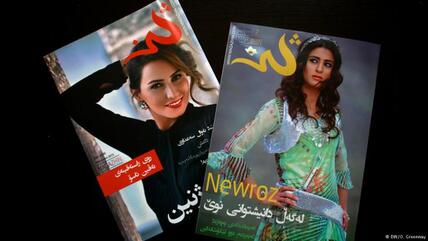 Women's magazine "Zhin" in Iraqi Kurdistan
Challenging traditions
A number of female journalists in Iraqi Kurdistan are shaking up a male-dominated domain with a magazine that aims to highlight the problems and abuse many women still face. They are reporting on women's success stories and addressing controversial issues such as female genital mutilation. Melissa Tabeek visited the editorial team in Sulaymaniyah
Culture
More about Culture-
 Gaza documentary "NAZA"
Killing by algorithm
"NAZA" is in cinemas now and will soon be free to watch on The Guardian. The documentary about Israel's war in Gaza shows how technology creates distance from killing. The automation of warfare, including the use of AI, is shocking, but not new.
-
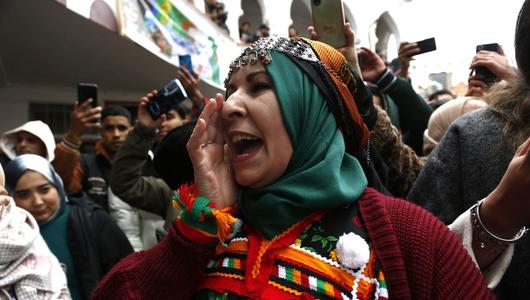 Influencers in Algeria
How the Amazigh language is thriving online
On TikTok, Instagram and YouTube, Tamazight is gaining new visibility. Influencers in Algeria are breathing new life into the language, following decades of campaigning by Amazigh activists for official state recognition.
-
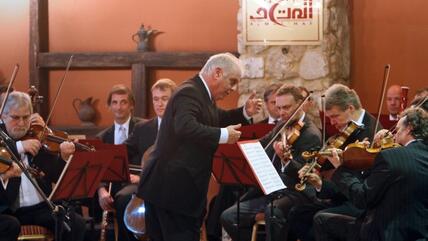 Daniel Barenboim and Arab Anti-Israel Sentiment
A Classic Example of Political Naivety
The Israeli star conductor and pianist Daniel Barenboim and his West-Eastern Divan Orchestra were invited to perform in Qatar. Then, following pressure from Arab opponents of a normalisation of relations with Israel, the invitation was withdrawn. As far as the Jordanian author Fakhri Saleh is concerned, this is evidence of political naivety
-
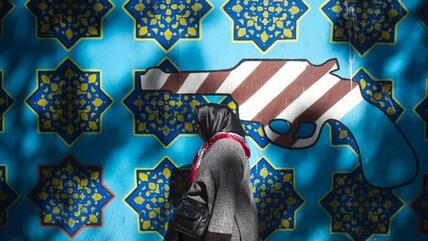 The Iranian Writer Amir Hassan Cheheltan
The Loyal Dissident
Amir Hassan Cheheltan is one of a group of internationally known Iranian artists who have no intention of turning their backs on their country, and who will not allow themselves to be sidelined or frozen out by the regime. Stefan Buchen met him in Berlin
-
 Prison Sentence for Egyptian Actor Adel Imam
Curbing Cultural Expression
The sentencing of the famous Egyptian actor Adel Imam for allegedly offending Islam in one of his films spotlights the latest bout of power posturing by Muslim hardliners and the increasing threat to freedom of expression on the Nile. A report by Amira El Ahl in Cairo
-
 Interview with Mohammed Hanif
The Joys and Struggles of Everyday Life
Mohammed Hanif's first novel, A case of exploding mangoes, was a critically acclaimed success. Claudia Kramatschek met the author and spoke to him about Pakistan, minorities and his most recent novel, Our Lady of Alice Bhatti
-
 Supposed Fatwa against Iranian Rapper Shahin Najafi
''We Will Continue with Our Work''
Iran's grand ayatollah has issued what many have interpreted to be a fatwa against the rapper Shahin Najafi, who has lived in Germany for the past seven years. In this interview with Shahram Ahadi, Najafi gives his take on the situation
-
 Interview with Orhan Pamuk
''The Museum of Innocence'' – A Declaration of Love to the City of Istanbul
Orhan Pamuk is Turkey's most famous writer. In 2006 he also became the first ever Turkish writer to be awarded the Nobel Prize. He recently presented a very special museum to his home city of Istanbul. An interview by Aygül Cizmecioglu
750th anniversary of Rumi's death
750th anniversary of Rumi's death - Qantara.de
Most read articles
-
Palästinensische Fotografin Karimeh Abbud
Wiederentdeckt und gefeiert
-
Frauen in Saudi-Arabien
Gefangen in einem System der Gender-Apartheid
-
Riad Seif als Zeuge im "Syrien-Folterprozess" in Koblenz
Auftritt einer Legende
-
Fragen & Antworten
„From the River to the Sea“ – verboten oder nicht?
-
Sex-Tourismus in Ägypten
Braut für einen Sommer
-
Westsahara-Sängerin Mariem Hassan
Die singende Revolutionärin