A window into the Kuwaiti soul
Topics
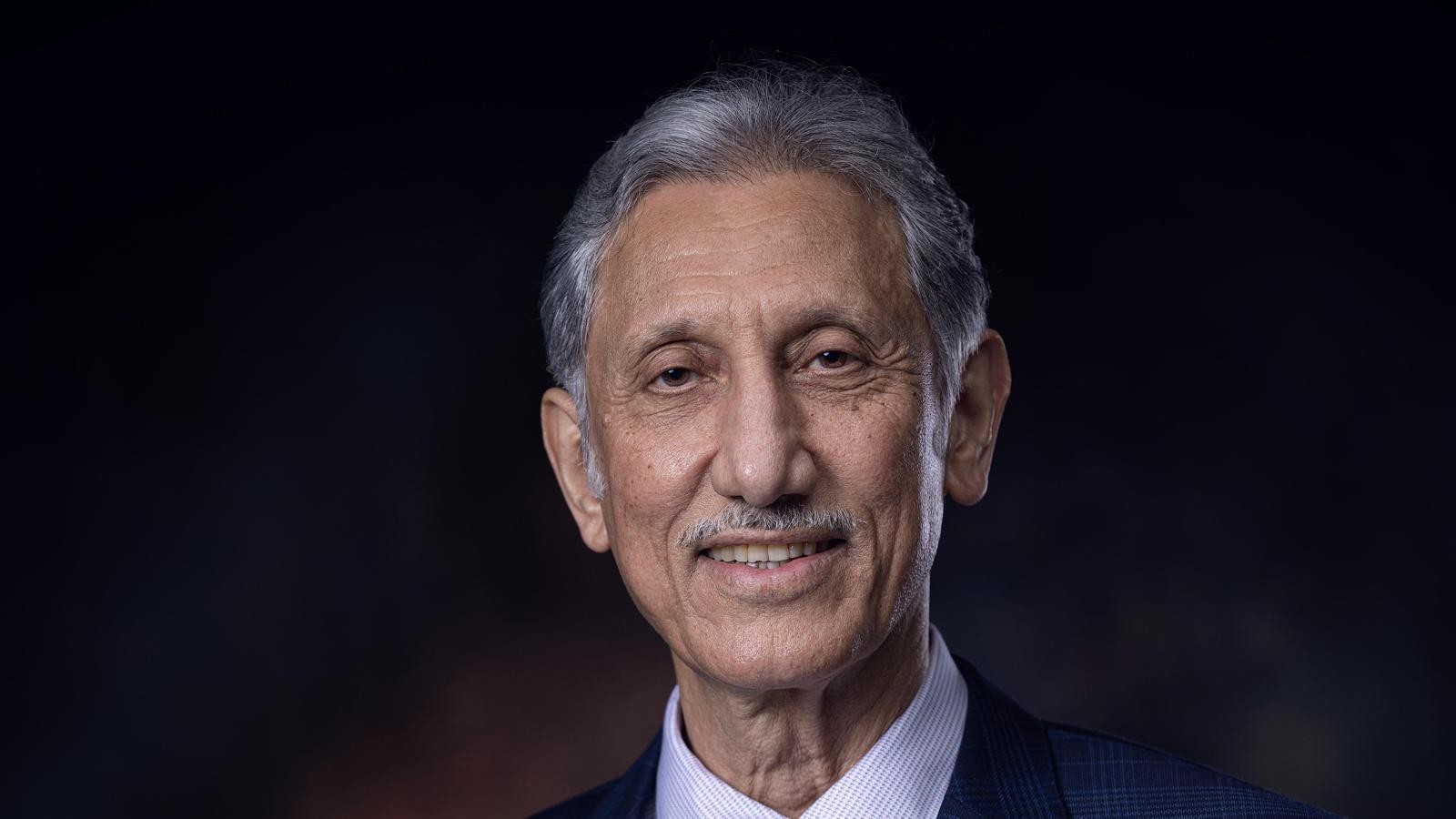
Those hoping to visit author Taleb Alrefai must first ascend to the first floor of the Al-Qibliyah school in the historic Mubarakija district of Kuwait City. There, in room number 33, sits al-Rifai (born in 1958), surrounded by piles of books and the echoes of a fading world.
Al-Rifai is not an ivory tower writer, but rather a central pillar of contemporary Kuwaiti literature. A civil engineer by training, he has long worked for Kuwait's National Council for Culture, Arts and Literature, dissecting the tectonics of his society with a structural engineer's precision. His writing resembles an "engineering of the mind".
When we meet, Al-Rifai describes how a slipped disc in his back is causing a pulsating numbness in his leg, which forces him to stand up repeatedly and pace his office, counting the steps.
Physical pain caused by stress is a fitting metaphor for Alrefai's concerns as an author. Where others see only the buoyant rise of the Gulf states, Alrefai details the static strain on a society in which conventions remain rigid and traditional values wither. Alrefai probes the cracks in the foundations of Kuwaiti modernity.
Regionally, Alrefai is highly acclaimed—he was nominated for the International Prize for Arabic Fiction (IPAF)—and yet his major works have not yet been translated into German, and his voice is almost completely absent from the culture pages of German newspapers.
Absent from German discourse
Germany's literary scene often suffers from selective perception when it comes to Arabic prose, seeking out either hubristic "Tower of Babylon" narratives of oil wealth and megalomania or clichéd, orientalist portrayals of oppression. Alrefai defies these categories. He chooses not to write about the skyline, but rather about the stasis of social norms hiding in plain sight beneath that sky.
More often than not, topics such as the Sunni-Shia conflict or the moral ambivalence of the conservative elite are ignored in German literary discourse. This is our blind spot. In staring so fixedly at the economic power of the Gulf states, we tend to miss the interfaith fault lines and the struggle for individual authenticity.
Alrefai dismantles the façade of a society which outwardly maintains impeccable piety while suffocating under its own prohibitions in private. He addresses social problems not in political treatises, but as human tragedies.
To read Alrefai is to raise the bushiya, the Gulf society facial veil so opaque to outsiders; it is to partake in a literary version of the samri dance. The veils fall, the soul's thirst is quenched—echoes of the famous songs of Mahmoud al-Kuwaiti.
An Alrefai primer
Alrefai's work is an act of literary truth-telling. Back in 1998, with his novel "The Shadow of the Sun" (ظل الشمس), he broke a fundamental taboo of the Gulf states and wrote about the fate of migrant workers. Through the character of Hilmi, an Egyptian teacher, he shed light on exploitation and inter-Arab tensions.
His 2002 work, "The Scent of the Sea" (رائحة البحر), received the Kuwait National Award for Arts & Literature. Short story collections such as "Small Thefts" (سرقات صغيرة, 2011) and "The Chair" (الكرسي, 2012) attest to his ability to capture the gravity of the mundane.
Alrefai is also the founder and director of the al-Multaqa Cultural Forum in Kuwait and of the al-Multaqa Prize for Arabic Short Stories, one of the most prestigious literary awards in the Arab world.
His latest novel, "Doukhi; Improvisations on Longing" (دوخي.. تقاسيم الصبا 2025) is a literary adaptation of the life of Kuwaiti musician Awad Doukhi (1932–1979). It recounts, in fictional form, how Doukhi left behind a poverty-stricken childhood to become a musical icon, modernising Kuwaiti music in the process.
The book is also a meditation on decades of social change in Kuwait, offering a glossary of the traditions, professions and dances of old Gulf society, and underscoring Alrefai's ability to intertwine personal destinies with the history of an entire country.
For international readers, the ideal introduction to the work of Taleb Alrefai would be the novel "Here" (في الهُنا, 2014), which was nominated for the IPAF 2016. In it, Alrefai deploys metafiction, integrating himself into the plot as a character and breaking the illusion of storytelling to ruthlessly expose society's faultlines.
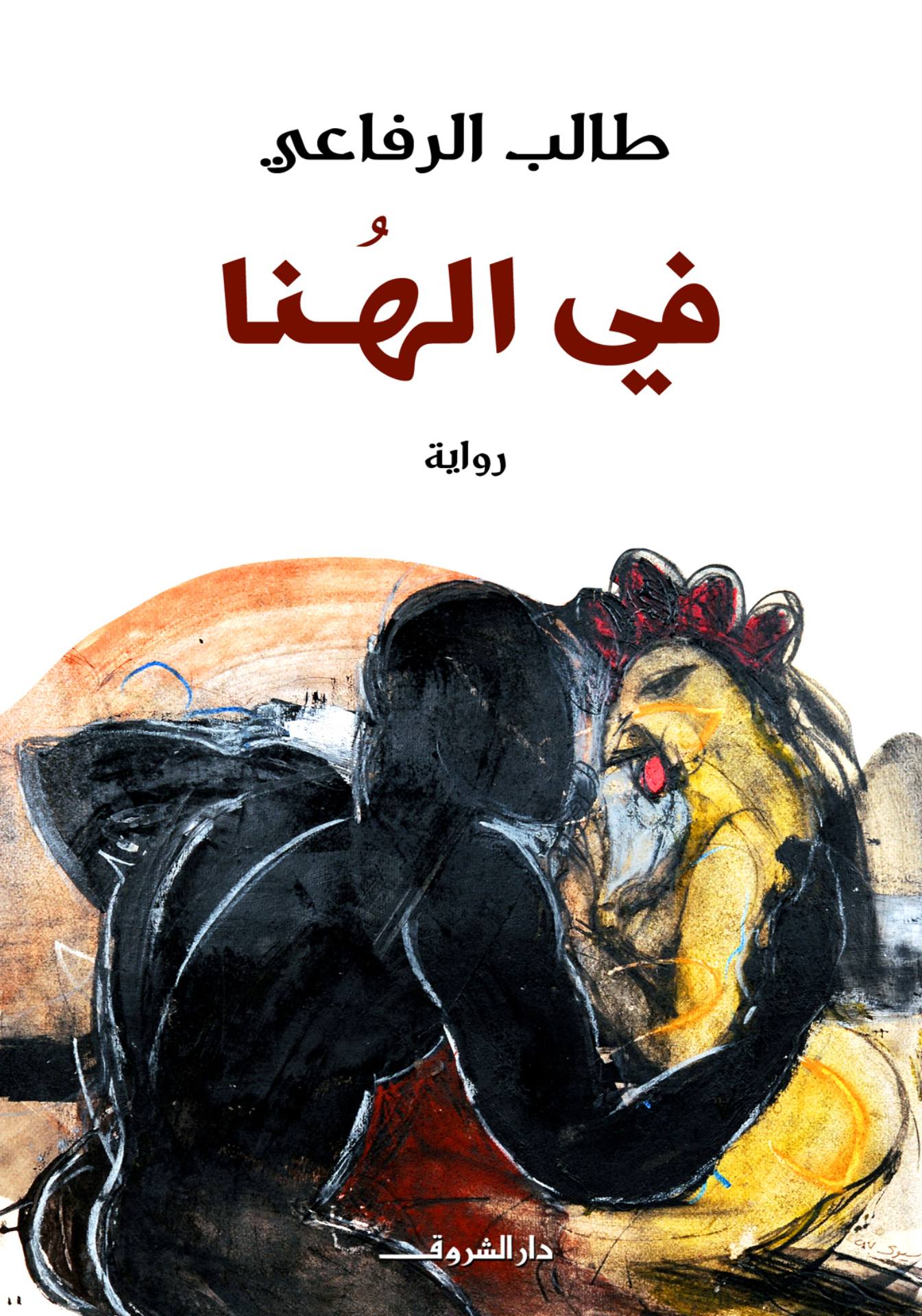
The author appears as a character called Alrefai who is visited by a fictional heroine, Kauthar, who wishes to tell him her story. As they sit together in Alrefai's office, a "double exposure" of reality and fiction occurs: Alrefai writes down Kauthar's fate, and she sits physically opposite him.
Kauthar is the perfect embodiment of Kuwait's contradictions. She heads up the private accounts department of a bank, drives a Porsche, carries Hermès bags and wears a Chopard watch. Yet this high-end armour offers little protection from the threat of social ostracism.
Kauthar's love for Mischari, a married Sunni, is more than simple adultery in Kuwait; it is also a social scandal because Kauthar is a Shiite. With great mastery, Alrefai shows how Kauthar is torn between her desire for children and her pursuit of social legitimacy.
An invitation to see things differently
Taleb al-Rifai is far more than a reporter from the Gulf region. He is a master at capturing the human condition, and his texts are a "salvation of the soul" through the written word.
He takes us into the narrow corridors of the Palace of Justice and behind the closed doors of the al-Dasma villas, home to the Kuwaiti bourgeoisie. He wants to show that the pursuit of freedom and love is universal—even when sectarian dogma and tribal structures stand in the way.
Including Alrefai in the German literary canon is essential for an understanding of the Arab world beyond the headlines. His works offer the painful, elegant truth of a society in upheaval rather than an exoticised idealisation. Those who read him understand that writing is not a luxury, but rather the only way to breathe more freely in a world of masks.
Translated from German by Louise East.
© Qantara.de