A film tracing the roots of colonial violence
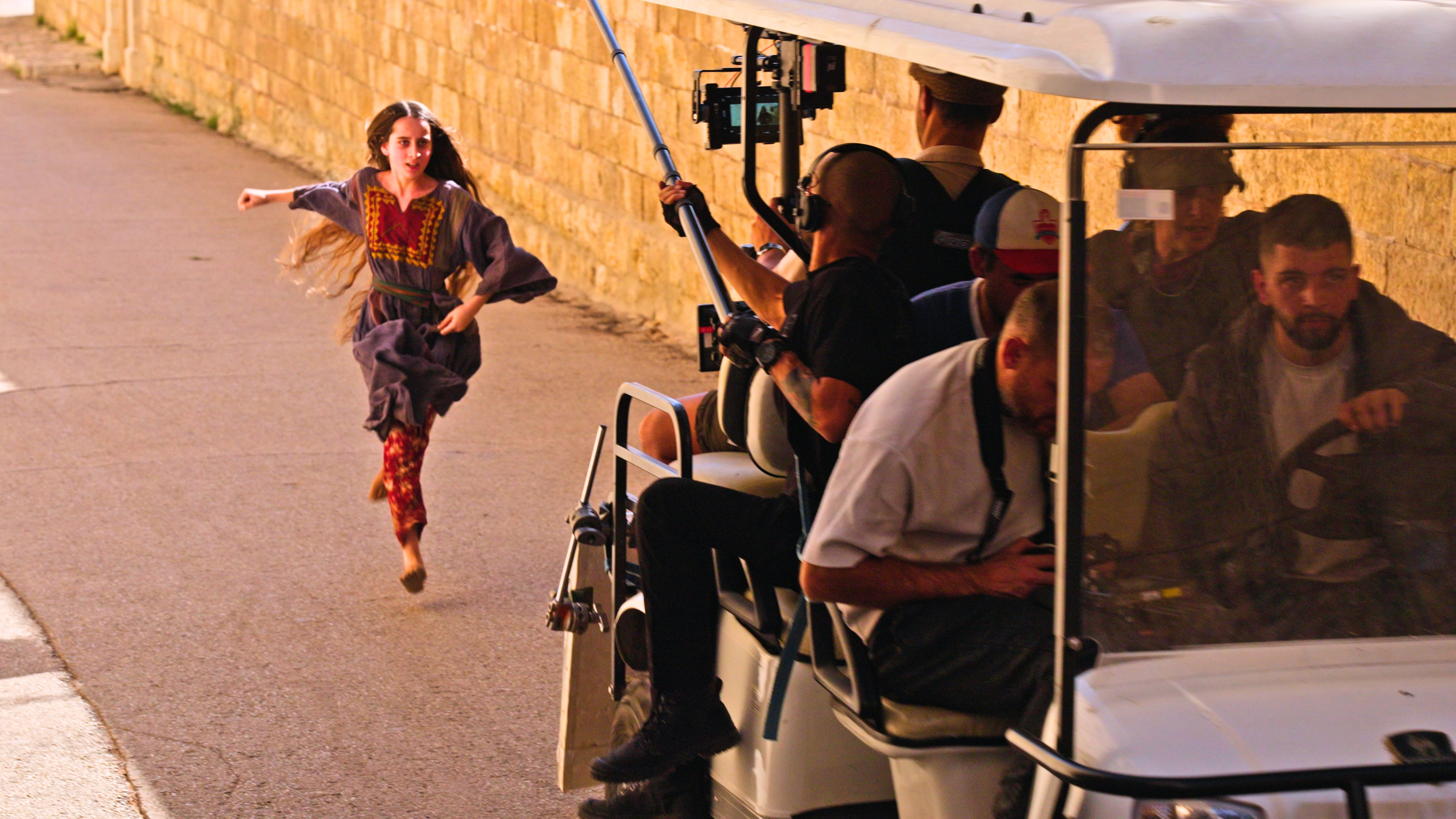
"Palestine 36" zooms in on a significant yet often overlooked chapter of Palestinian history—the Great Revolt of 1936-1939 against the British Mandate and accelerating Jewish immigration, an uprising that began with demonstrations and strikes, before being violently suppressed by Mandate authorities.
An international co-production involving Palestine, Britain, France, Denmark, Qatar, Saudi Arabia and Jordan, the film received international recognition, winning the Tokyo Grand Prix award among others. It was shortlisted for the 2026 Academy Award for Best International Feature Film and is now in German cinemas.
The film steadfastly refuses to romanticise the role of Palestinians in these events. Instead, it presents them as real human beings: people who loved, raged, protested, stole, feared and worried.
Director Annemarie Jacir strives to explain history authentically while also lending it a human dimension. As a Palestinian filmmaker grappling with questions of identity relating to both past and present colonial experiences, Jacir carefully recreates the era with close attention to detail extending to fashion, architecture and other elements of everyday life.
Jacir also worked with a production team made up largely of Palestinians. In an interview with Qantara, Jacir outlined their painstaking process. "We spent an entire year preparing for the shoot," she said. "Every detail in the film mattered."
For example, the typewriter featured in the film dates back to 1936. "We eventually found it in Beirut and transported it to Palestine," she explained.
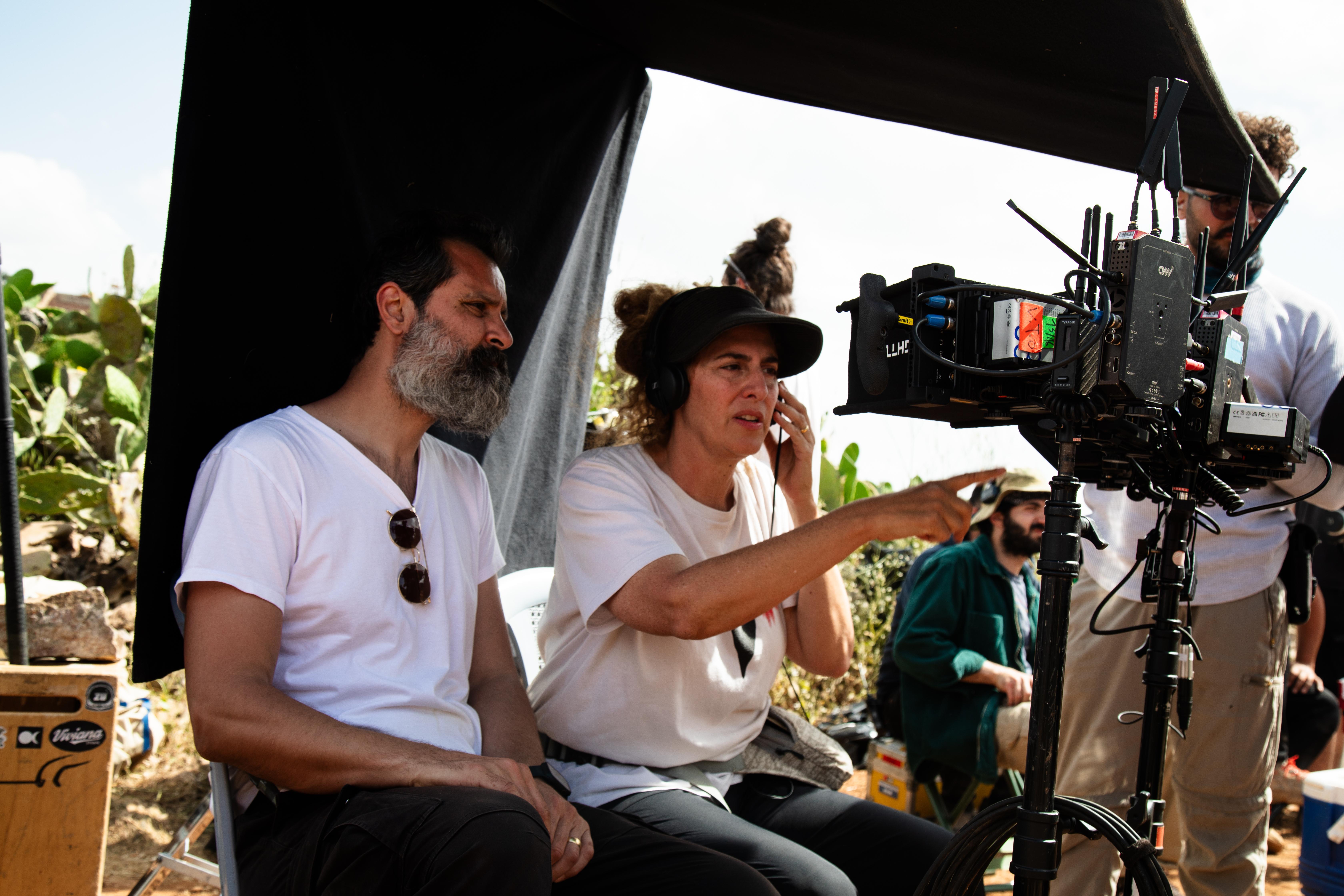
Jacir aimed to create a lasting testimony of a pivotal chapter of Palestinian history. She spent years gathering support and funding for the project, which ultimately had a budget of around six million dollars. "Making a film about the 1936 Revolution is something I had wanted to do for a long time, but I also felt a deep sense of responsibility," she said.
Most of the film was shot in Palestinian towns and villages. In their effort to make it look historically accurate, the production team even planted entire fields near a village in the West Bank.
With the outbreak of the war and the genocide in Gaza, filming was interrupted four times. Production was temporarily relocated to Jordan before the team was able to return to Palestine in November 2024. But the interruptions proved costly. "Each time we had to rebuild everything from the ground up," Jacir said.
A cross-section of Palestinian society
The film follows Youssef, played by Karim Daoud Enaya, a young villager who works as a driver in Jerusalem for Amir Bek, portrayed by Dhafer Abidine, and his wife Khuloud, played by Yasmine Al Masri. They come from a bourgeois Palestinian family involved in politics and journalism, and the film gradually reveals the economic, cultural, and class differences between them and Youssef.
Much of the narrative unfolds in the village, where life appears peaceful and full of warmth: villagers work the land, children play freely, laughter fills the air, and lovers exchange glances across Palestine’s scenic landscapes.
Yet looming behind this calm is a threat that no one fully grasps.
Newcomers dressed in European clothing are seen on the green hills in the background. The villagers initially believed the newcomers would live alongside them—when, in reality, they were seeking to replace them. In one scene, villagers attempt to negotiate with the new arrivals about the fences that cross their fields, but bullets begin flying before the conversation even begins.
A "political and personal" film
Those familiar with the work of Annemarie Jacir will recognise her trademark approach: socially grounded films that weave the themes of foreign rule and occupation into the narrative through telling details, rather than making it the central plot. This approach can be seen in her films "Wajib" (2017) and "Salt of This Sea" (2008).
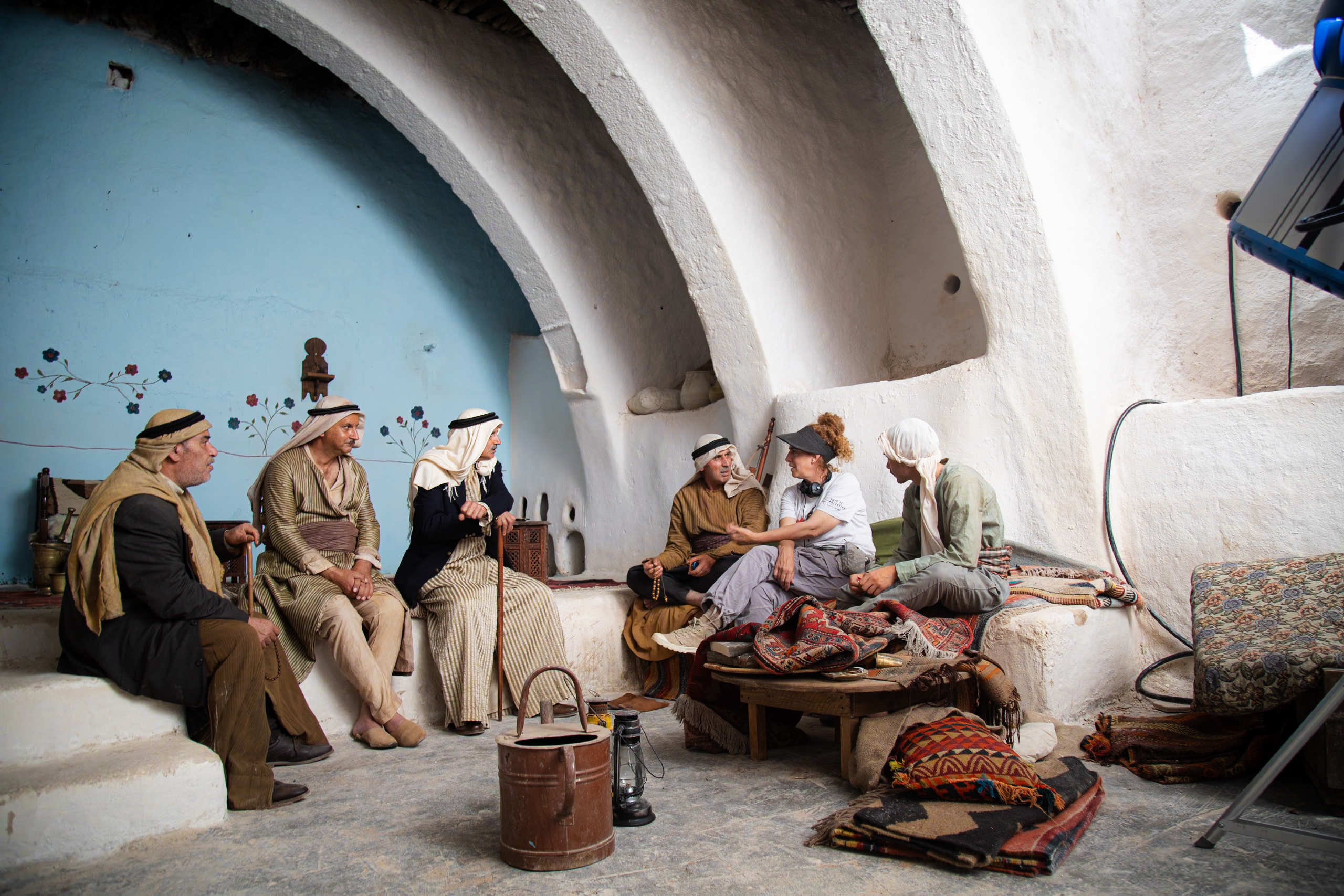
In "Palestine 36", Jacir sought to create what she describes as a "political and personal" film, at a time when many films about Palestine focus on violence, war and genocide. "My film is brutal but is never ‘gory’," she explained. "I like the audience to come to their own conclusions at their own pace."
Despite the film's epic scale and its engagement with a key political moment, it homes in on human relationships, family dynamics and the lives of ordinary people living in extraordinary circumstances. During the making of the film, she was particularly influenced by works such as "Malcolm X" (1992), "The Battle of Algiers" (1966), and "The Wind That Shakes the Barley" (2006).
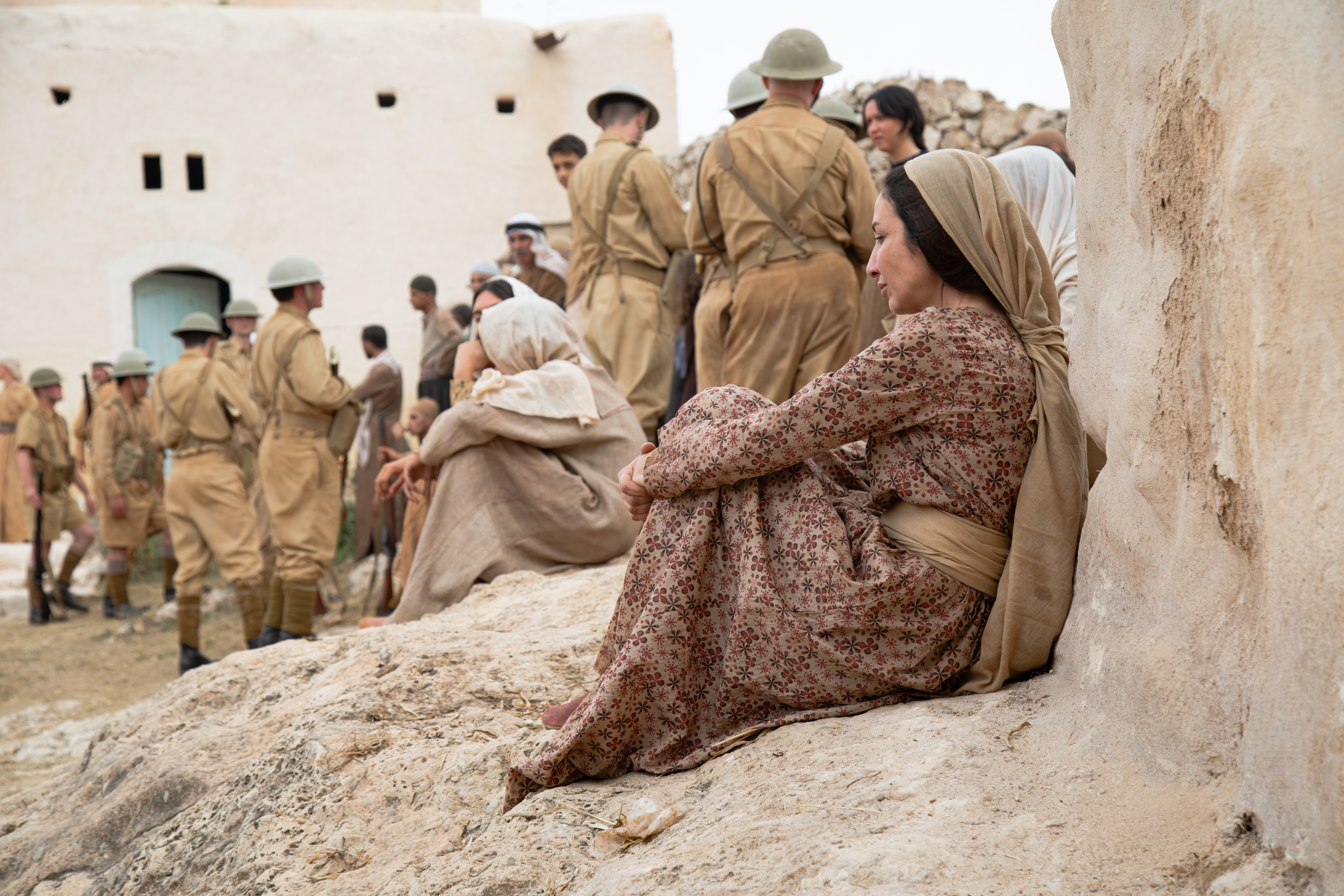
Alongside its portrayal of Palestinians and Jewish immigrants, the British Empire plays a central role. Its soldiers, checkpoints and flags are depicted across different cities.
The film revisits what became known as the "Tegart Fence", a system of barbed-wire barriers designed by British officer Charles Tegart along the Lebanese border to block the movement of fighters. The use of such barriers persists to this day, reflecting a colonial mindset still embedded in Israel's segregation policies, implemented through its nationwide military security apparatus.
For this reason, the brief appearance of the character Tegart, played by Liam Cunningham, is significant. As a British counterinsurgency expert, his presence hints at Palestine’s next chapter. Throughout the film, viewers observe how the foundations of the system used to oppress Palestinians date back to British rule.
"The British set up the entire system of occupation that the Israelis use today, from the use of human shields, checkpoints, land confiscation and collective punishment, to administrative detention and expulsion," Jacir said.
History is the central protagonist
As in most of Jacir’s films, there is no singular hero in "Palestine 36"; instead, a sense of collective heroism is conveyed. The focus of the film is the events it depicts, while Jacir works as a conductor, carefully leading a cast of hundreds of actors.
"I did not want to adopt the mainstream idea of having a central character for this film. "Palestine 36" is about a mass uprising, an uprising of the people," she explains.
At the end, the film turns to Gaza, concluding with a poem displayed on a black screen by the Gazan poet Salim al-Naffar (1963–2023), who was killed along with his family after 7 October 2023, and whose bodies remain under the rubble. The poem reads:
"From this small land, we grew.
Our river birthed creeds and bloodlines
Our rhythm has always been
die standing
In spite of wretched planes
and all that life fractures,
we remain.
Even if skies crush our land
our song sings on"
This is a shortened and edited translation of the Arabic original. Translated by Jess Smee and Jannis Hagmann.
© Qantara.de