What will happen to the women and children of al-Roj camp?
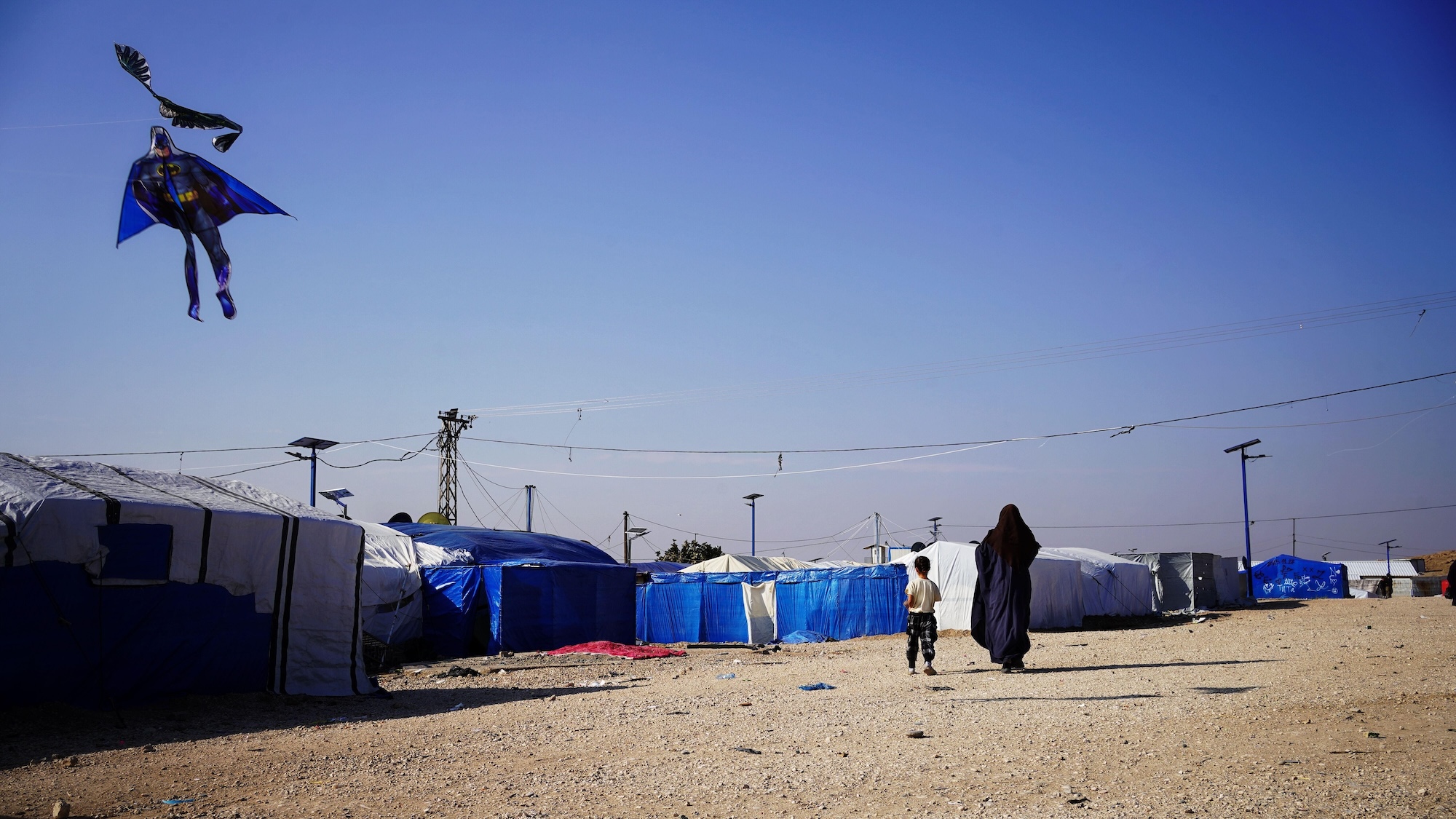
As Dalal stood outside her tent in al-Roj detention camp in northeast Syria in early August, the sound of gunfire ripped through the air. Terrified, she ran inside to check on her nine-year-old son and eight-year-old daughter.
"There was so much screaming and shouting," Dalal said. She recalls that bullets struck a neighbour's fridge, just missing a child.
The shots came as the Syrian Democratic Forces (SDF), the Kurdish-led force that then controlled the camp, entered in armoured vehicles to confront women protesting. Since late July women residents of al-Roj have mounted public protests calling for an end to alleged abuses and greater freedoms, citing years of unlawful detention, worsening living conditions and heavy-handed security.
The deteriorating conditions are documented in a report by the Swedish-based NGO Repatriate the Children (RTC), based on testimony from more than 40 women in al-Roj. Qantara also spoke to women inside the camp with the help of RTC, which facilitated access to the detainees.
The sound of gunfire has long been familiar in the camp, but for Dalal, hearing the SDF shoot so close to where her children were sleeping brought the fear home. "They use gunfire to scare us," she said. "I mostly stay in my tent because I am really scared of those riots and for my children."
A camp born from the defeat of IS
In January 2026, Syrian government forces launched an offensive against the SDF, which controlled al-Roj as well as the much larger al-Hol camp. The SDF withdrew from al-Hol, creating a security vacuum as Syrian forces moved in. Thousands of women and children subsequently fled as the camp was rapidly emptied, fuelling fears of trafficking, exploitation and renewed contact with IS networks.
With the collapse of al-Hol, al-Roj is now the last remaining large camp in northeast Syria for detainees linked to the Islamic State (IS). The vast majority of its residents are foreign women and children. After the SDF was dissolved by its commander-in-chief, Mazloum Abdi, on 25 August, al-Roj is now also the responsibility of the Syrian state – a development that could pave the way for the camp’s imminent closure.
Located near the Iraqi border in Hasakah province, al-Hol camp is home to more than 2,300 people with around 54 nationalities. Many of the residents arrived after the 2019 fall of Baghouz, the last IS territorial stronghold in Syria, when thousands of people fled or were detained by SDF forces during the final stages of the US-backed campaign against the group.
Those detained in al-Roj are believed to be the wives and children of alleged IS members as well as civilians caught in the fighting. Many say they were manipulated into travelling to Syria by husbands or relatives.
Some of al-Roj's detained women are suspected of continuing to support IS, though Dalal insists she is not one of them. She says her husband joined IS and later forced her to travel with him to Syria. In 2017, after he was killed, Kurdish forces detained her near Baghouz while she was eight months pregnant.
For the children in al-Roj, the circumstances of their parents' arrival have little bearing on their daily lives. Some were born in the camp; others were brought there as infants and have spent their childhood behind its concrete walls and barbed wire. They have grown up with limited access to education and healthcare, their childhoods dictated by armed guards and checkpoints.
Conditions at al-Roj
According to the RTC report, alleged violations such as harassment and abuse have increased in frequency and severity since the start of 2026.
"After the political changes and US military pullout from northeast Syria earlier this year, the situation for women and children locked inside al-Roj camp went from terrible to terrifying," Letta Tayler, Middle East counterterrorism advisor at Human Rights Watch, told Qantara.
"Many women told me they have barely slept at night, fearing they or their children will be beaten, robbed or threatened by camp guards, or even snatched and secretly detained for infractions like possessing a cellphone."
The RTC report details children being separated from their mothers during security operations. Detainees described night-time raids, beatings, theft, threats and gunfire, as well as reduced access to healthcare and basic services.
"The soldiers use their cars to ram into women and kids to scare them or when they need to collect them for interrogations," said Dalal. "One child fainted when he was picked up by the soldiers; he was held for an hour then released to his mother."
Another woman detainee described similar harassment by camp guards, alleging that they had entered her tent and stolen money and personal belongings.
"My son had an AK [-47] pointed at his back for going to the shops when it wasn’t his turn to buy ice cream," she told Qantara. The woman also alleges that SDF vehicles had deliberately swerved toward her son on his short walk to school, apparently to frighten him. Fearing for his safety, she withdrew him from school and now teaches him at home.
"Stop kicking the can"
For years, Kurdish-led authorities and human rights organisations have urged foreign governments to repatriate their nationals from northeast Syria's camps and prisons. But governments have mostly been reluctant to bring their citizens home, citing domestic opposition, national security concerns and difficulties prosecuting suspected IS members.
There have nevertheless been signs of movement in recent months. In April, 13 Australians, four women and nine children, were transferred from al-Roj to Damascus and handed over to Australian officials. Two months later, several Indonesian families also left al-Roj as part of a coordinated repatriation process.
But these departures remain exceptions rather than a clear path home for those still inside. And as responsibility for the detention system shifts, uncertainty over their future is growing.
Most detainees still see no clear route home. "We have sent many emails asking about leaving, but camp authorities always tell us that it is complicated, and they need help from the international community," Dalal said.
IS networks are believed to remain active in and around northeastern Syria, and the collapse of al-Hol raised concerns about what happens when large numbers of detainees disperse without adequate safeguards.
"There are real concerns about women freed from al-Roj joining or re-joining ISIS or other armed groups in Syria, either willingly or involuntarily, and of their children being forced to do the same," HRW's Tayler told Qantara. "This is yet another reason why countries should repatriate now rather than continuing to kick this can down the road."
If Syrian authorities follow the same approach taken at al-Hol, al-Roj could also face closure in the coming months. But with many countries continuing to rebuff calls to repatriate their nationals, closing the camp won't end the legal and physical limbo faced by its residents. Depending on their nationality, some could face prosecution in their home countries. Others could face torture or other serious human rights violations.
Yet Dalal is willing to take that risk if it means returning home with her children. "I want to return home, even if I have to face prosecution," she said.
She has watched her children grow up behind fences, without a stable education or a clear sense of where they belong. "I want to return home so my children can have an identity and an education," said Dalal. "The most important thing for me is that my children are finally free."
© Qantara.de