The cost of redevelopment
Saturday, 13 June, in Casablanca. A two-minute walk from the seat of the regional government, a fan zone has been set up for supporters of the national team. For the opening match, hundreds gather to celebrate Morocco's 1–1 draw against Brazil, cheering and waving flags as the Atlas Lions kept pace with the five-time world champions.
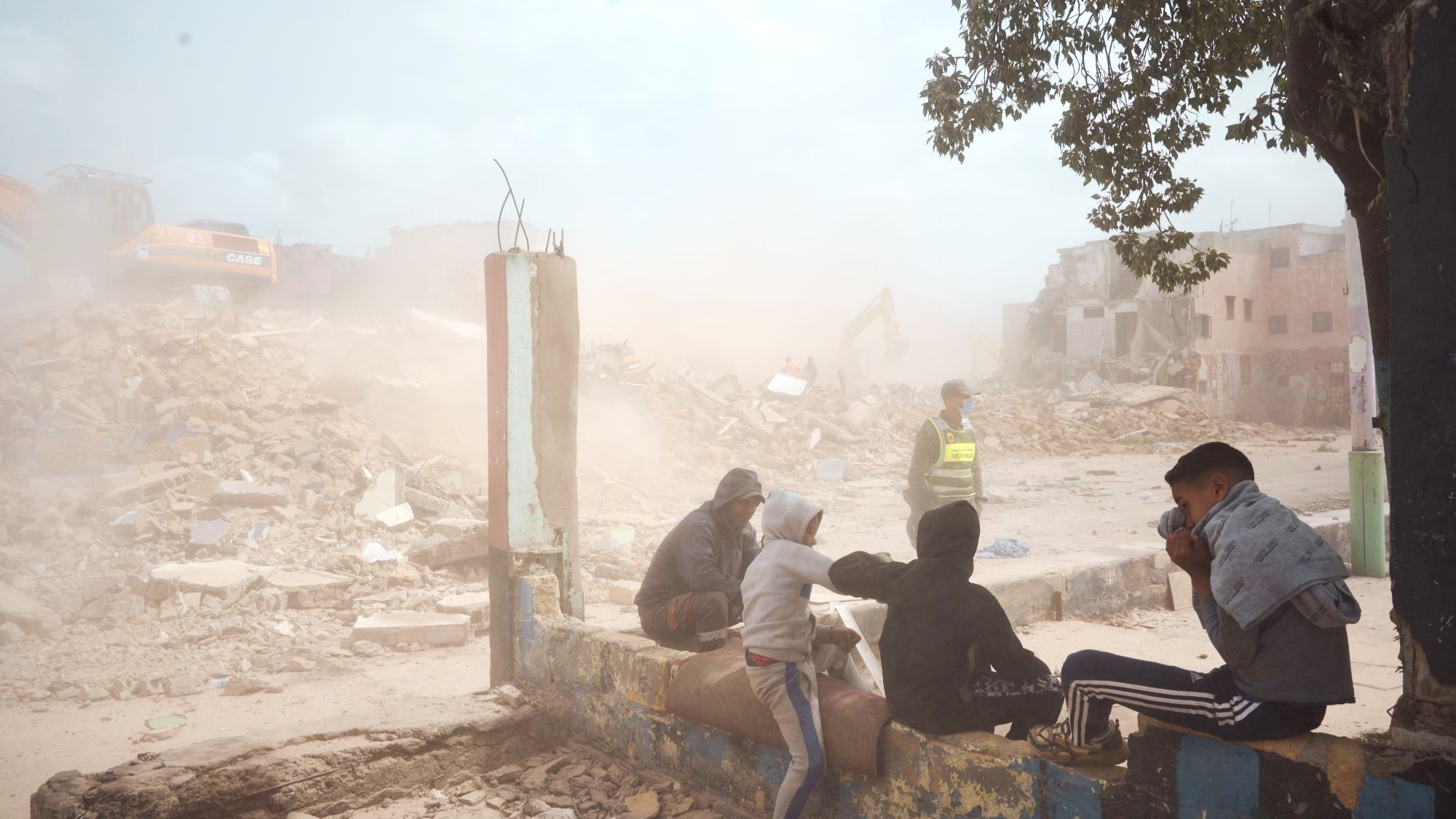
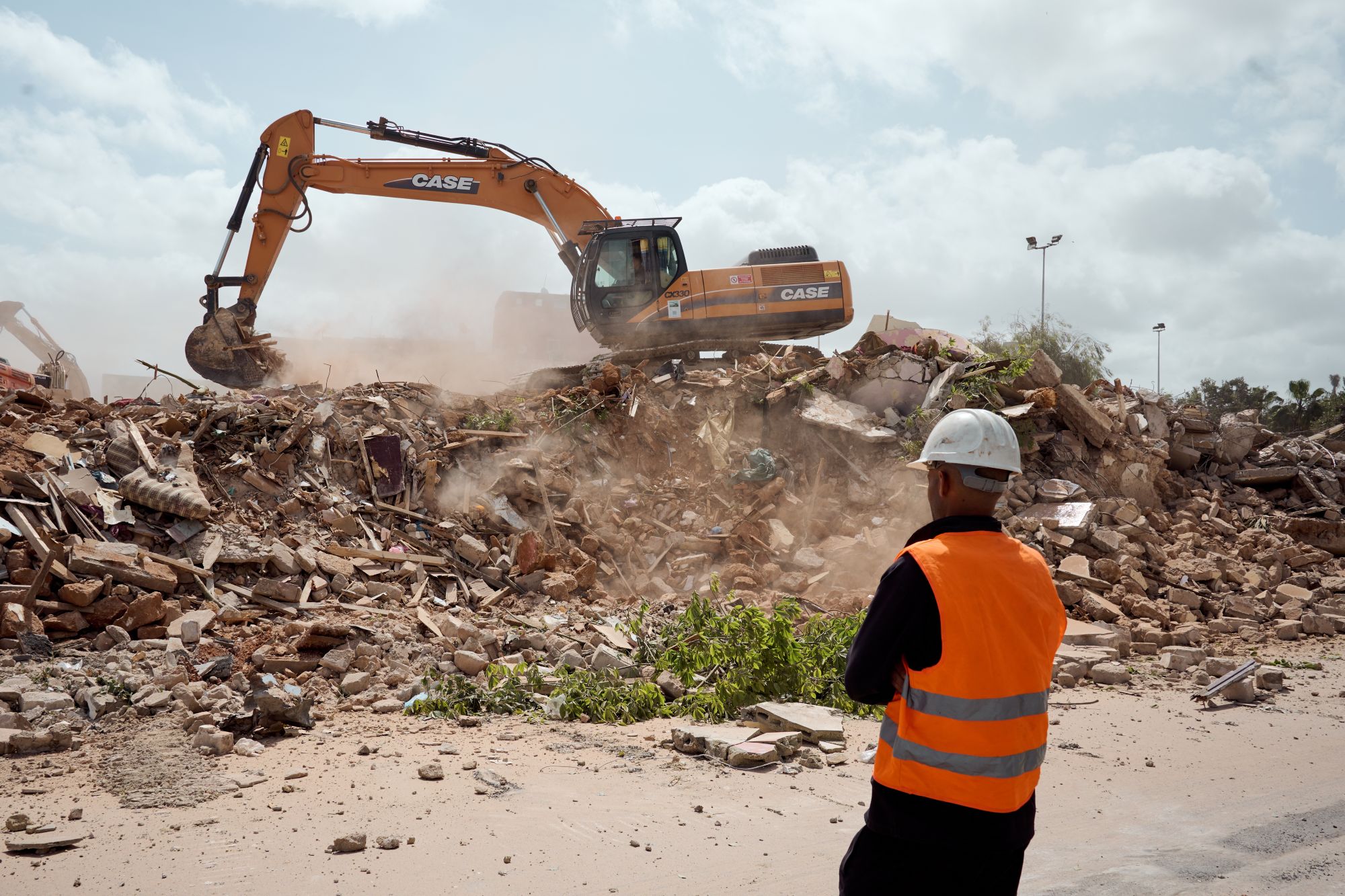
Less than a kilometre away, however, the red and green of the football shirts give way to a more sombre black colour. Piles of rubble and bulldozers can be seen in Casablanca's old medina, where the Avenue Royale urban-renewal project is underway, officially fast-tracked to impress visitors at the 2030 World Cup co-hosted by Morocco, Spain, and Portugal.
This is the Quarter of the Martyrs in the old medina, once a bastion of resistance against French rule during the Protectorate (1912–1956). But as the project advances, it is as if an eraser were wiping away entire pages of a history book.
The Avenue Royale project promises to create "the largest promenade in Africa". First announced more than forty years ago, Avenue Royale was relaunched in September 2025 through a two-billion-dirham (around €187 million) agreement between the city, developer Casablanca Iskane et Équipement, CDG Développement, and Sonadac.
It aims to restore the medina's "tourist and cultural vocation," Casablanca’s mayor Nabila Rmili told the city council, adding: "You must be proud of this historic moment."
But the international attention which comes with the global football tournament comes at a cost. As part of the Avenue Royale, nearly 16,000 families and 2,500 businesses have been affected by a rehousing process, according to Rmili.
Livelihoods upended
For many, being forced to move is just the start of an ordeal. Nassim, in his thirties, sells fish at Bab Marrakech, at the entrance to the medina near Casablanca’s port. Moving to Hay Errahma, he says, would destroy his livelihood.
After all, the daily round trip to the port costs 35 dirhams (around €3.30). "They are taking our homes, our businesses, and our dignity," he says. "It is not just a neighbourhood dying, it is a way of life being erased."
Ahmed, 33, another fishmonger born in the Bab Marrakech neighbourhood, also faces a bleak future. Rehoused in Hay Errahma, ten kilometres from the port, he must rebuild his business in a district he does not know.
"Getting to the port at two in the morning will cost me 60 dirhams (around €5.60) every day, when I only make 200 (around €18.60). How am I supposed to earn a living and start a family?"
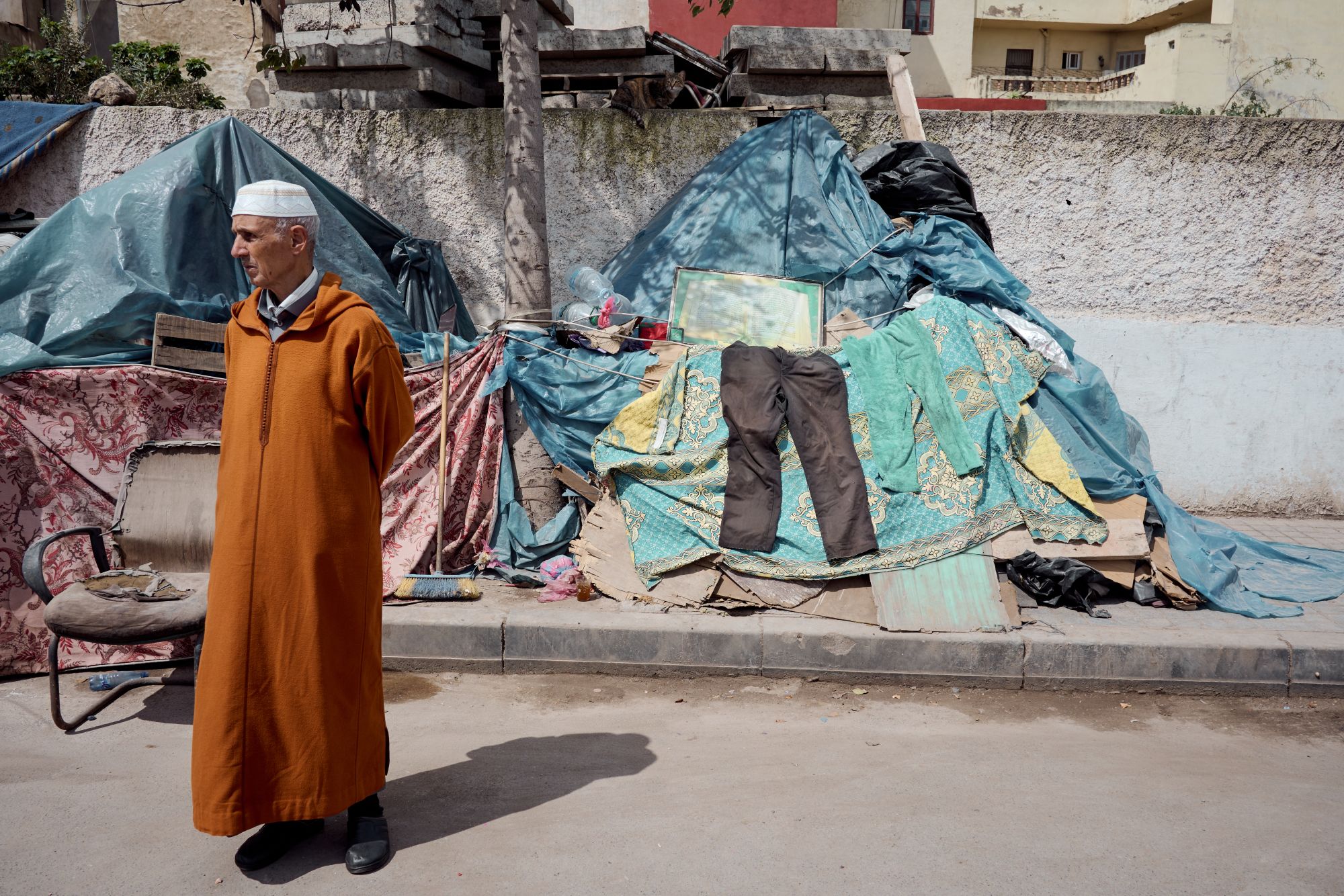
Abdelouahed, 45, also moved to Hay Errahma, but rented a second flat in the medina so his children can stay at their school, after failing to get a place at one near their new home. The additional rent now consumes half his salary. "It is an injustice to build the Avenue Royale," he says.
Officials, however, argue that the development plans are in locals' best interest. Abdessadeq Morchid, secretary of Casablanca's city council, says residents of buildings at risk of collapse will now be rehoused in Annasim, a district where part of the old medina's population has already been resettled. He adds that the plan was meant "to preserve social cohesion."
Crumbling historic buildings
While some are reluctant to leave their homes and livelihoods, others are keen to move out of buildings that have long been in need of renewal. The day after Morocco's 1–1 draw against Brazil, Samira, 58, points to cracks running floor to ceiling in her house. "This is where we live, with the fear of dying in our sleep," she says.
Eight months earlier, a four-storey building in Derb Rmad, in the medina, collapsed, killing two people, among them an elderly couple on the fourth floor. "The cracks had been widening for years, but no one came," says Samira.
The district authority paid 8,000 dirhams (around €750) to those left homeless. "That's all," she says. "A tiny sum, when you've lost your home, your papers, and some here have lost loved ones." Seen this way, clearing the most dangerous buildings could save lives, even if the way it is being done leaves residents bitter.
Samira grew up in this quarter wedged between the port and the route of the future avenue. She raised six children there and sold vegetables just a few steps away. Back in 2012, she was promised a new apartment. In 2015, she was given a voucher to collect it, but the developer later told her the unit had already been sold—a "shady deal," as she puts it.
She has been waiting ever since, unable to pay the fees required to qualify for rehousing: 100,000 dirhams (around €9,300) for the developer and 20,000 dirhams (around €1,870) for the notary.
To this day, she and others live in the old medina, watching their world collapse around them. In Bab Marrakesh, vendors still lay out fish, fruit, and vegetables on the pavement amid the sound of jackhammers. Through Casablanca Aménagement, a municipal development company, the city has launched a 64-million-dirham (around €6 million) reconstruction of the market, which it says will modernise local commerce.
But, in reality, the space left for traders "shrinks by the day," says a vendor in his twenties. He adds that many have already left in search of new places to sell their goods. He has little faith that the project will have a fair impact on residents. "We know how it goes: a handful of sellers will benefit, and the majority will be left out."
World Cup sets local rents in Morocco soaring
Other Moroccan cities are seeing a tournament-driven surge in housing prices too. National figures confirm it is also happening in Marrakesh, Tangier and Morocco's capital, Rabat, which is being hardest hit. Once a quarter is earmarked for redevelopment, owners price in the expected windfall, and rents are pushed up.
"A flat that cost 800,000 dirhams (around €75,000) is now revalued at over 1.5 million (around €140,000), because they have wiped out several hundred homes to lay the foundations of an upmarket district," says Abdelfattah, 35, in Rabat.
Tenants are bearing the brunt of the rising costs. Hassan, who lives in the same area, says his landlord is demanding an additional 2,000 dirhams (around €185) per month at renewal, or the return of the flat. "That is impossible. I work 500 metres from home, and my children go to school near the building."
In Rabat, the bulldozers are also advancing. Demolition began in March to widen avenues and open up the seafront. Fatima, 65, who has lived in the L'Océan district for more than 50 years, describes how a demolition order was delivered verbally, with no written document.
Compensation was set at 13,000 dirhams (around €1,200) per square metre, far below market value, with residents told to leave in the middle of Ramadan. A neighbour says owners were ordered to leave within a week, but no one can say who issued the instruction. "Everyone you ask says it came from above."
For those who accept, rehousing means the distant outskirts of Rabat: a flat in Tamesna, or a building plot in Aïn Aouda. "We lived in the heart of the city, and they moved us far away," says one resettled resident. In the neighbouring district of Akkari, another sums up the widespread feeling of bitterness: "Why is this being imposed on us? For the 2030 World Cup? Where will we be by then?"
"We want health, not the World Cup"
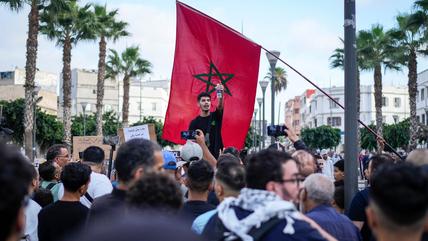
The anger reaches well beyond the demolished quarters. In September 2025, a youth movement known as Gen Z 212 brought protesters into the streets of Rabat, Casablanca, Tangier and other cities, denouncing the billions earmarked for World Cup stadiums while public hospitals and schools go without.
"Gen Z has surprised the political elites"
For two weeks, a group called Generation Z 212 led mass youth protests across Morocco, demanding reforms in healthcare and education. Researcher Mohamed Sammouni says the movement lays bare a crisis of political legitimacy.
"Stadiums are here, but where are the hospitals?" became the rallying cry, alongside : "We want health, not the World Cup." The protests, among the largest in years, drew a heavy response: Human Rights Watch reported three people killed and close to a thousand arrested.
Meanwhile, building work continues apace: wider roads, new hotels, a vast promenade, a city fit for the cameras and crowds that 2030 will bring. Residents keep asking the same question: who is it for?
"The Avenue Royale is for tourists, not for us," says Abdelouahed, the 45-year-old who had to rent a second flat in Casablanca. The tournament will last a month. For many Moroccan families, its consequences are permanent.
This article was produced in collaboration with the Friedrich Naumann Foundation (Tunis Office) and is part of the series "Spotlights – Perspectives from North Africa and the Middle East".
© Qantara.de