Qantara Startseite Englisch
-
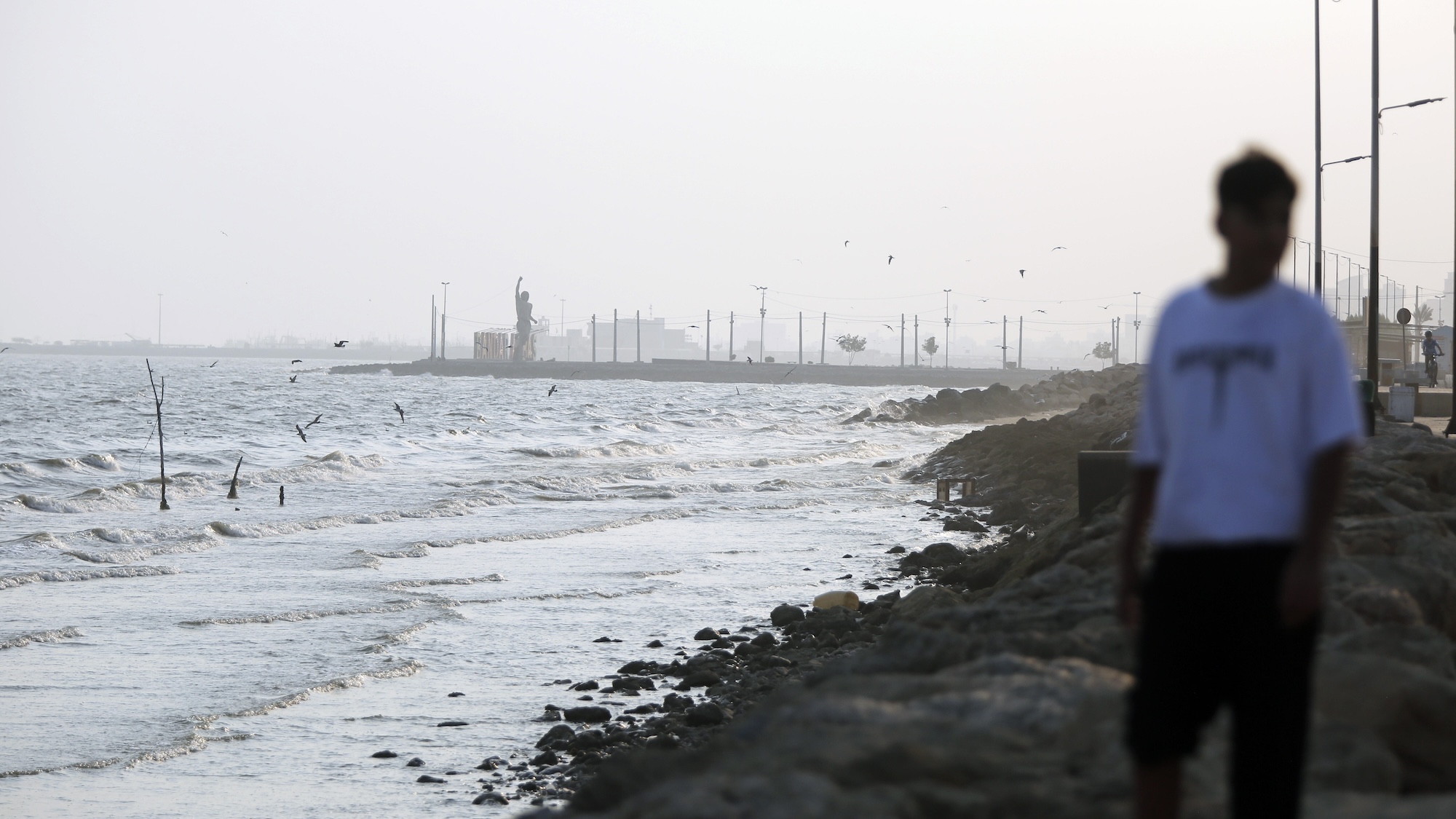 Hormuz and Bab el‑Mandeb
Centuries of struggle for the Straits
Three colonial powers—the Portuguese, the Dutch and the British—gained, and then lost, control over the straits of Hormuz and Bab el-Mandeb. Today, as the US and Iran struggle over these vital chokepoints, history offers a warning.
-
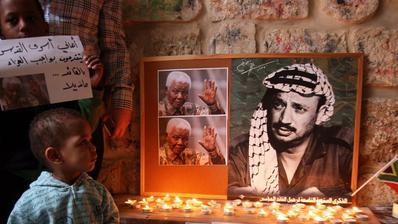 Anti-colonialism
"Palestine reveals the limits of international solidarity"
Why do African publics stand so firmly with Palestine while many of their governments court Israel? Algerian researcher Raouf Farrah traces the answer to the continent's anti-colonial past, and to the gap between popular solidarity and state diplomacy.
-
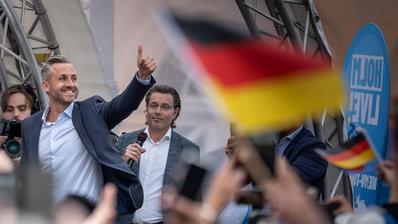 German state elections
Migrants face a shifting political reality
The far-right AfD made historic gains in September's state elections, while the Left Party came out on top in Berlin for the first time. Migrants across the country are now considering what the results could mean for their everyday lives and futures.
-
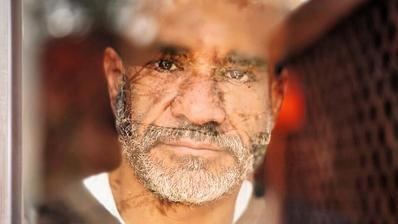 "Postmuslim" by Youssef Rakha
One author, multiple selves
"Postmuslim" is an intimate new collection of essays in English by Youssef Rakha. The Egyptian author explores his complex relationship with the West while tracing his intellectual evolution over several decades.
Politics
More about Politics-
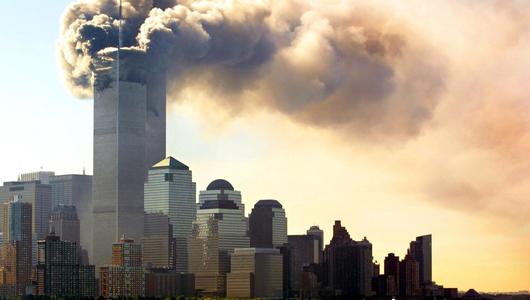 Gilbert Achcar on the impact of 9/11
"The Iraq War shattered the promise of a new world order"
The attacks of 11 September 2001 fundamentally altered US foreign policy and triggered a series of wars that have reshaped the Middle East. 25 years on, Gilbert Achcar reflects on the US response to 9/11 and its enduring impact on the region.
-
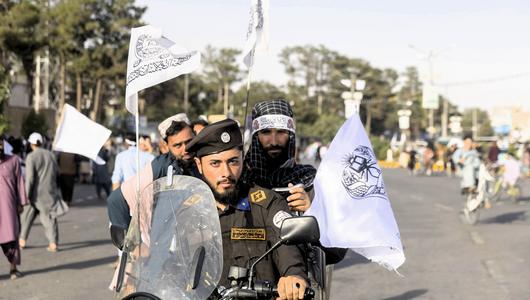 Taliban in Afghanistan
Power consolidated, society reshaped
In the five years since regaining power, the Taliban have cemented their rule in Afghanistan, bringing armed conflict in the country to a relative lull. Their ambitions go beyond maintaining control: they are seeking to transform the country from the bottom up.
-
 German-Turkish relations
Part of us
In reaction to the mounting German-Turkish political crisis, Germany′s Foreign Minister Sigmar Gabriel has written an open letter emphasising that the shift in relations with Ankara should not impact on German citizens with Turkish roots. Commentary by Alexander Goerlach
-
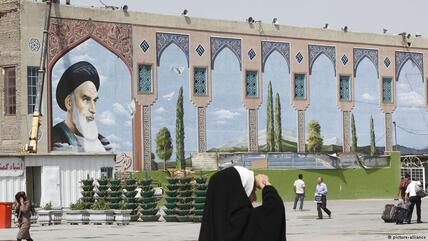 Book review: Henner Fürtig on Iran
Through Realpolitik-tinted glasses
In his book "Großmacht Iran – Der Gottesstaat wird Global Player" (Iran: a major power – from theocracy to global player), Henner Fürtig, director of the GIGA Institute for Middle Eastern Studies, predicts a promising future for the Islamic Republic of Iran as the most important regional power in the Middle East. Miriam Abdollahi read the book
-
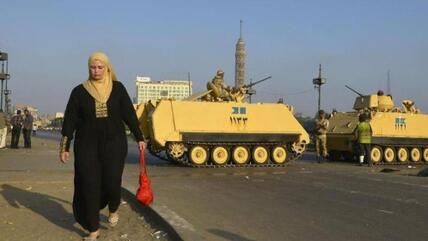 Authoritarian rule in the Arab world
Fear of change
Given their poor records in so many areas, how is it that authoritarian regimes in the Arab world manage to cling so successfully to power? In this essay, Amr Hamzawy examines how the ruling elites in the countries of the Arab spring use a mixture of oppression and fear of chaos and disorder to nip any demands for democratic change in the bud
-
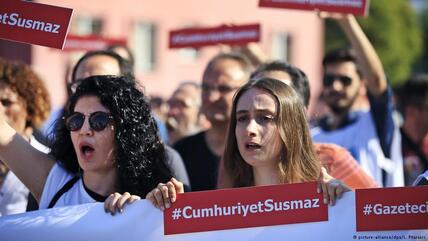 Freedom of speech in Turkey
Journalists under siege
A tragedy is slowly unfolding in Turkey. Since the failed coup attempt in 2016, more than 120 journalists have been arrested. "It's time we speak out for them," say the journalists from Al Jazeera who were imprisoned in Egypt.
-
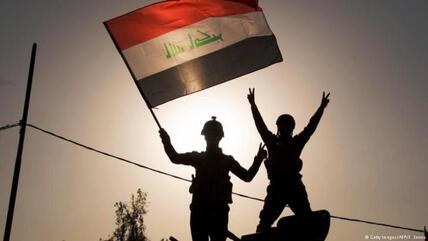 Islamic State
Down but not necessarily out
With Mosul and Raqqa retaken, the fate of Islamic State's territorial caliphate is sealed. Yet Loay Mudhoon says that's no reason to give the all clear, as IS is nothing more than a symptom of a crisis of statehood
-
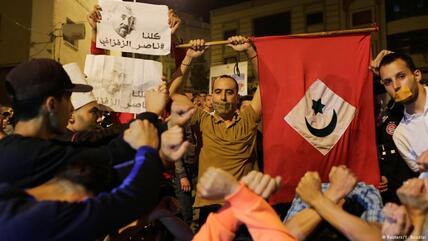 The "Hirak El-Shaabi" protest movement in Morocco
The uprising of the marginalised
For several weeks now, clashes have been raging in Morocco between the nation's security forces and members of a new protest movement, "Hirak El-Shaabi", which is calling for autonomy, social justice and the release of political prisoners in the north African country. By Mohamed Lamrabet
Society
More about Society-
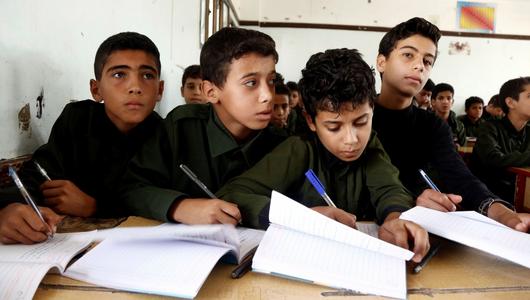 Education and climate in Yemen
Too hot for class
In Houthi-controlled Yemen, the decision to schedule the school year by the Hijri calendar has pushed classes earlier into the harshest heat of summer. For students this has compounded the impact of climate change, posing health risks and driving up dropout rates.
-
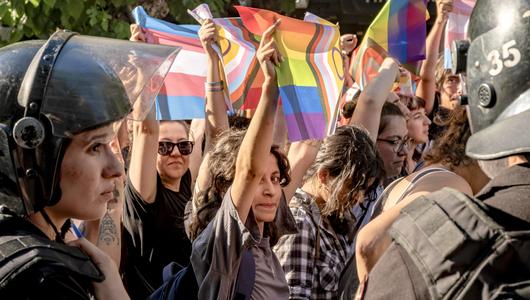 Turkish women's association Havle
"White secular women do not have a monopoly on feminism"
The Muslim queer-feminist group Havle uses religious arguments to challenge discrimination. Facing growing hostility and, most recently, arrests, two members speak about the struggle for LGBTQ rights in the country.
-
 Interview with the Lebanese journalist Hazem Saghieh
More lapdog than watchdog
Rather than acting as a counterweight to the ruling class, the press across the Arab world serves the interests of oligarchs, despots and governments, says Hazem Saghieh. In interview with Kai Schnier, the Lebanese author and journalist explains why he censors himself and why he believes that journalism from Rabat to Riyadh will never be a catalyst for political change
-
 Algeria′s disillusioned majority
Desperately seeking voters
Algeria's upcoming parliamentary poll is failing to spark the interest of the populace. Few have any hope that the discredited political class will provide solutions to the country′s pervasive social malaise. At the same time, a handful of dedicated civil society campaigns are focusing on initiating change at grassroots level. Sofian Philip Naceur reports from Algiers and Oran
-
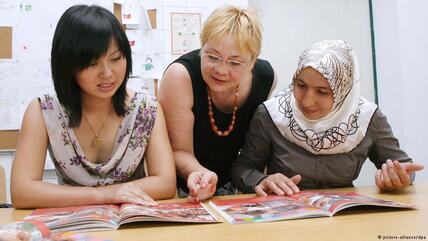 Germany′s integration debate revisited
Piling on the pressure
What exactly does integration mean? And just how much allegiance may a society demand of its migrants? Such questions are currently the topic of vigorous debate – especially following the recent referendum result in Turkey. Expecting that migrants should do all the adapting in order to conform to the majority society will, however, only stir up conflict, warns Claudia Mende
-
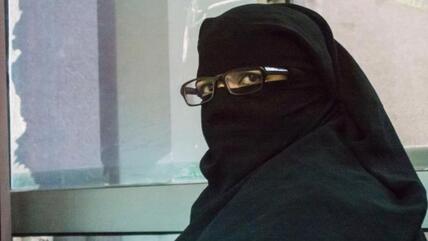 Sex tourism in Egypt
A bride for the summer
Hundreds of under-age Egyptian girls enter temporary marriages with rich tourists from the Persian Gulf during the summer in return for money for their families. These unions – dubbed summer marriages – are not legally binding and end when the foreigners return to their own countries. By Elizabeth Lehmann, Eva Plesner and Flemming Weiss-Andersen
-
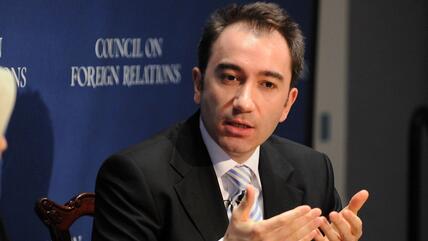 Mustafa Akyol′s ″The Islamic Jesus″
The heart of the matter
Turkish journalist Mustafa Akyol′s latest book ″The Islamic Jesus: How the King of the Jews became a prophet of the Muslims″ is a thought-provoking read, challenging not only the Church′s ascription of Godhead to Jesus, but also the Islamic fixation with God′s law rather than His intention. Lucy James read the book
-
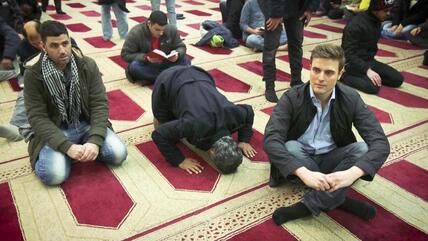 Constantin Schreiber′s controversial mosque report
Outside Islam
Constantin Schreiber, a German television journalist, conducted research on sermons given in Muslim houses of prayer and used it to produce a book and some TV reports. Now he has come under fire. Schreiber is accused of employing underhand methods and taking a biased approach to his subject. Is there anything in the criticism? Canan Topcu has the answers
Culture
More about Culture-
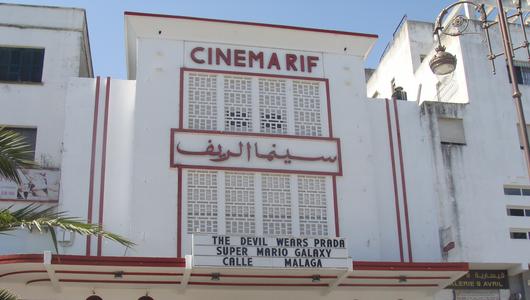 Arthouse film in Morocco
Keeping Tangier's cinematic history alive
20 years ago, the historic Cinema Rif in Tangier was renovated and reopened as the Cinémathèque de Tanger, one of the few arthouse cinemas in North Africa today. Elisa Pierandrei traces its history and place in Morocco's vibrant film culture.
-
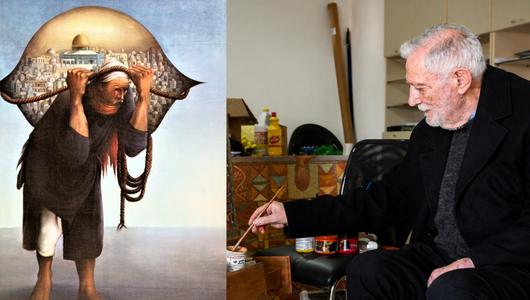 Remembering Sliman Mansour
The artist behind a Palestinian icon
"Camel of Hardship" by Sliman Mansour, who died on 24 August, is one of the most recognisable images in Palestinian art. Asmaa al-Ghoul tells how it came to appear on walls across the country and why it remains deeply embedded in collective memory.
-
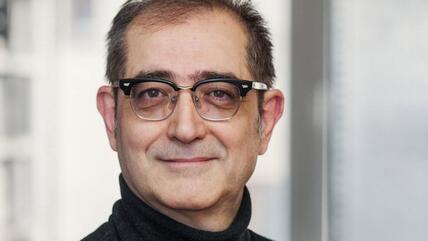 Interview with filmmaker Samir
An Iraqi odyssey
In his impressive 3D documentary "Iraqi Odyssey", the Iraqi-born Swiss filmmaker Samir combines the personal stories of some of his relatives with archive footage of events in Iraq from the Ottoman Empire to the era of Saddam Hussein. Igal Avidan spoke to him in Berlin
-
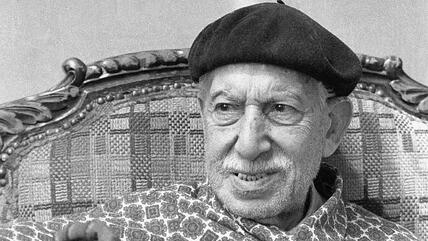 Book review: Tawfiq al-Hakim's "The Revolt of the Young"
A revolutionary manual for older generations
Tawfiq al-Hakim's "The Revolt of the Young" was originally published in 1984. Published in English translation in 2014, this 30-year-old collection of essays seems as relevant to the problems facing Egypt's youth today as it did when it was first published. According to Marcia Lynx Qualey, however, the book is even more relevant to older generations as it encourages them to try and understand and sympathise with the aims of their children
-
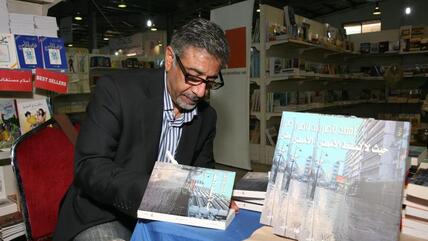 Amjad Nasser on the role of Arab writers in Arab society
Speaking out in societies without words
In the last four years, Arab public intellectuals have come in for much close scrutiny and criticism. Some people complain that Arab thinkers and writers have disappeared from political life, while others argue that most of them are too much in the public eye, having allied themselves with one dictator or another. Marcia Lynx Qualey spoke to Jordanian poet and journalist Amjad Nasser about the role of Arab writers in contemporary Arab society
-
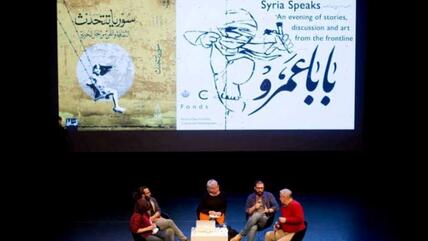 "Syria Speaks"
Challenging violence with creativity
The recent launch of "Syria Speaks: Arts and Culture from the Frontline" at events in The Hague and Amsterdam was in a sense a homecoming for a remarkable book whose roots lie in an exhibition of works by Syrian artists and cartoonists held at the Prince Claus Fund Gallery in Amsterdam in 2012. By Susannah Tarbush
-
 Goethe and the Orient
Why did the poet's mind wander to far-off climes?
When Goethe compiled over 200 poetic works to create his West-East Divan in 1814 and 1815, the 60-year-old had already been fascinated with the Orient his whole life. But what made the poet's mind wander to far-off climes? By Melanie Christina Mohr
-
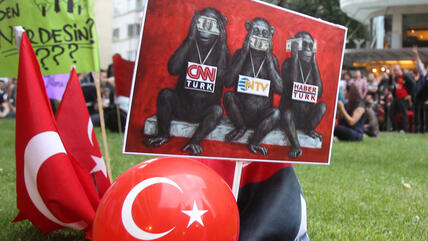 Artists in Turkey
Artists against Erdogan's censorship
Turkey welcomes private investors in the fields of art and culture, but artists feel oppressed by the government. Beyond censorship and commercial speculation, an alternative art scene offers some hope. Ceyda Nurtsch presents them.
750th anniversary of Rumi's death
750th anniversary of Rumi's death - Qantara.de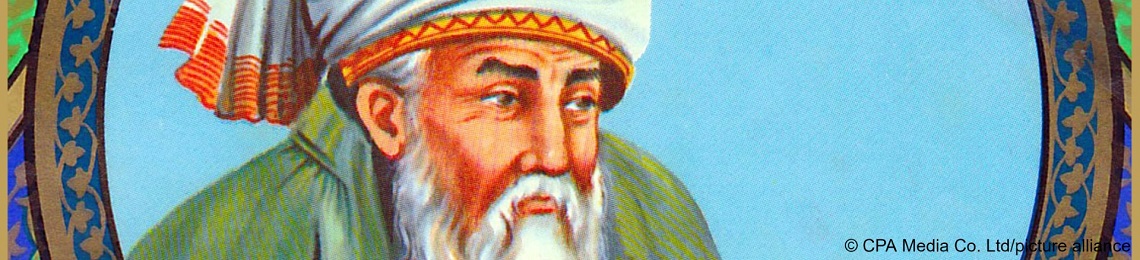
Most read articles
-
Deutsche Landtagswahlen
Politische Signale an migrantische Communities
-
„Postmuslim“ von Youssef Rakha
Ein Autor, mehrere Versionen
-
IS-Gefangenenlager in Syrien
Die Frauen und Kinder von al-Roj
-
Gender-Roman „The Passerby“ aus Ägypten
Mann oder Frau, frei oder unfrei?
-
Koran-Auslegung
Warum ich als Muslima kein Kopftuch trage
-
Rassismus in der arabischen Welt
Sind arabische Gesellschaften rassistisch?