The politics of neutrality
Topics
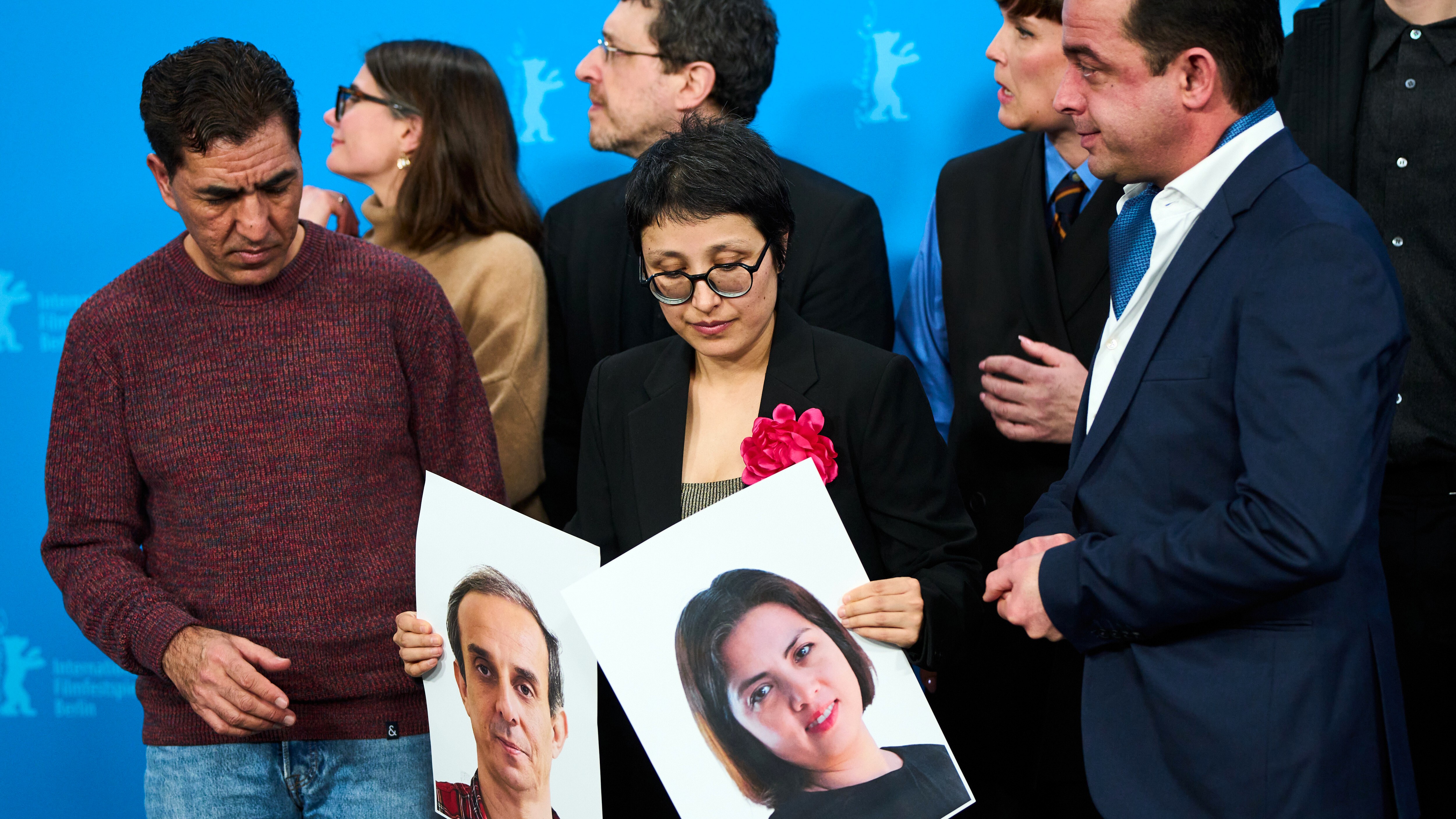
For an Afghan living in Germany, the opening of the 2026 Berlinale film festival with "No Good Men", a film set in the final days of the Afghan Republic, was a moment of quiet recognition. The story of a society on the brink of collapse, produced in exile and shaped by those who themselves became displaced after 2021, carried a particular weight for those who watch the collapse from afar.
The integration of real footage from Kabul’s chaotic final days with scenes produced in Germany blurred the line between documentation and memory. With cast and crew on stage in Berlin, a political failure that had unfolded thousands of kilometres away was narrated within one of Europe’s most prestigious cultural spaces.
But when Jury President Wim Wenders suggested that filmmakers "have to stay out of politics", the contradiction was impossible to ignore. The very film that opened the festival was inseparable from politics: it dealt with state collapse, gender repression and the consequences of international intervention. The West has invested heavily in promoting democracy and human rights since the 2001 invasion of Afghanistan. The director herself called her film a "political romantic comedy."
The question, then, was not whether art is political, but when it is allowed to be recognised as such. Who decides which conflicts can be framed as moral tragedy and which are considered too entangled, too immediate, or too controversial for cultural spaces?
The claim of neutrality itself is political, and neutrality in cultural institutions is not the absence of politics, but the careful design of its boundaries.
A similar tension emerged at the Frankfurt Book Fair in 2023, when the organisers publicly expressed solidarity with Israel and postponed the LiBeraturpreis award ceremony for Palestinian author Adania Shibli. Although the prize itself was not withdrawn, the decision triggered a broader debate about cultural space and political positioning. For some observers, the episode illustrated how institutions respond to moments of crisis by recalibrating visibility: amplifying certain voices while postponing others.
These cultural debates take place alongside growing legal and academic disputes in Germany about the country's obligations under international law and its role in the Gaza war. Open letters from scholars, civil servants and human rights experts illustrate how deeply polarised the conversation has become. Cultural institutions operate within this charged environment, where expressions of solidarity, criticism or neutrality are immediately interpreted in legal or diplomatic terms.
The tension surrounding Gaza has not been confined to cultural venues. It has extended into universities, migration law and public demonstrations, where expressions of solidarity are often judged through the lens of Germany's Staatsräson (reason of state). In such a climate, cultural institutions face increasing pressure to define their stance carefully, knowing that neutrality itself will be scrutinised.
The "Cultural Cold War" is ongoing
In recent months, debates within German cultural institutions have surfaced, centred on language, neutrality and the limits of political expression. Discussions about how to describe the war in Gaza, and how employees may engage with it publicly, reveal the institutional pressures that accompany cultural diplomacy. They underscore that cultural institutions are not detached from geopolitical realities but deeply embedded within them.
A former Goethe-Institute employee has detailed how internal communications discouraged staff from using the term "genocide" in reference to Gaza, while the CEO of the institute explicitly framed it as a soft power instrument in "the interplay of politics and culture."
Germany's major publicly funded organisations must balance artistic independence with foreign policy and domestic political factors. Cultural diplomacy has long been recognised as an integral part of a country’s external engagement, connecting artistic exchange with broader political objectives. In practice, this does not necessarily result in overt censorship. Rather, it produces a subtler form of boundary-setting: decisions about tone, emphasis and timing that shape how conflicts are presented and which narratives are foregrounded.
This friction is not a contemporary glitch; it is the inheritance of a tradition where culture serves as an integral pillar of foreign policy. We are still operating within the framework of the "Cultural Cold War", where the deployment of art was never a neutral act of appreciation but a curated projection of Western liberal values.
Today, however, that projection has narrowed. We see a form of "humanitarian government", a term coined by anthropologist Didier Fassin, where institutions celebrate art that addresses "universal" tragedies like Afghanistan because they fit a clear moral hierarchy. In these stories, the Western institution can safely act as the benevolent host. But when a conflict like Gaza enters the frame, the humanitarian consensus shatters.
By maintaining a distance or postponing ceremonies, an institution isn't being objective; it is choosing to prioritise its own diplomatic stability over the volatile nature of artistic truth. This legacy of "strategic culture" persists today, but its mechanics have shifted.
Projecting an image of consensus
While art was used during the Cold War to project an image of absolute liberty, in the contemporary era, it is often used to project an image of absolute moral consensus. As Fassin notes in his work on "humanitarian reason", certain lives are rendered grievable through the lens of universal tragedy, while others are obscured by the complexities of contemporary geopolitics. When a film about Kabul is celebrated, it confirms a shared Western moral script; when a discussion on Gaza is postponed, it is because that script has been contested.
Conflicts such as Afghanistan are often presented in Europe as moral emergencies that allow for relatively unambiguous solidarity. They can be condemned without destabilising present alliances. Other conflicts, particularly those involving close diplomatic partners, generate more caution. The distinction does not reflect the severity of suffering, but the political proximity of the actors involved.
Who defines "world literature"?
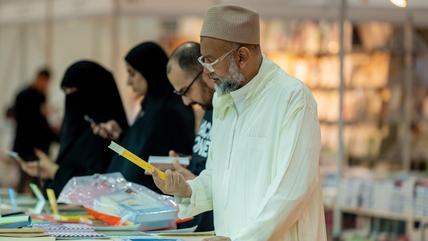
German publishers of "world literature" still prioritise Western works. With limited translations, lack of media attention and stereotypes in publishing, authors outside Europe and the US rarely get the attention they deserve.
Cultural institutions navigate an environment in which any public statement carries diplomatic implications. Claims of neutrality may reflect not indifference, but institutional risk management. Acknowledging this requires clarity rather than moral denunciation.
Cultural institutions do not stand outside politics; they organise it. They determine which issues can be framed as universal humanitarian concerns and which are treated as politically charged disputes. Recognising this dynamic does not weaken their legitimacy. On the contrary, greater transparency about how these boundaries are drawn could strengthen public trust.
Art will not leave politics. Nor should it. The more pressing question is whether cultural institutions can openly reflect on the frameworks within which they operate. In an era of heightened polarisation, the credibility of cultural spaces may depend less on claims of neutrality than on their willingness to examine how neutrality itself is constructed.
© Qantara.de