A complicated love

Topics
A video collage shows people dancing: a woman twirls in a circle, her hips swaying; two men laugh as they shake their chests. A man in overalls skips around his car. People in traditional dress hop to the beat of the dabke.
The soundtrack is a French chanson from the 1970s which sounds like an ode to life: "I live on love and dance. I live as if I were on holiday. I live as if I were eternal, as if the news was free of trouble."
Abruptly, the footage changes: the song is silenced, the camera pans across a house in front of which rubbish is piled high. A woman opens the door from inside, and pushes garbage aside to leave the house. The scene dates from the time of the 2015 rubbish crisis in Lebanon’s capital, Beirut.
For filmmaker Lana Daher, the scene is an apt metaphor for the current situation in Lebanon: "For everything that is rotting beneath the surface and being ignored by those in charge". She points out that although there are occasional light-hearted and carefree moments in Lebanon, "the next morning you wake up and yet again, you have to come to terms with reality."
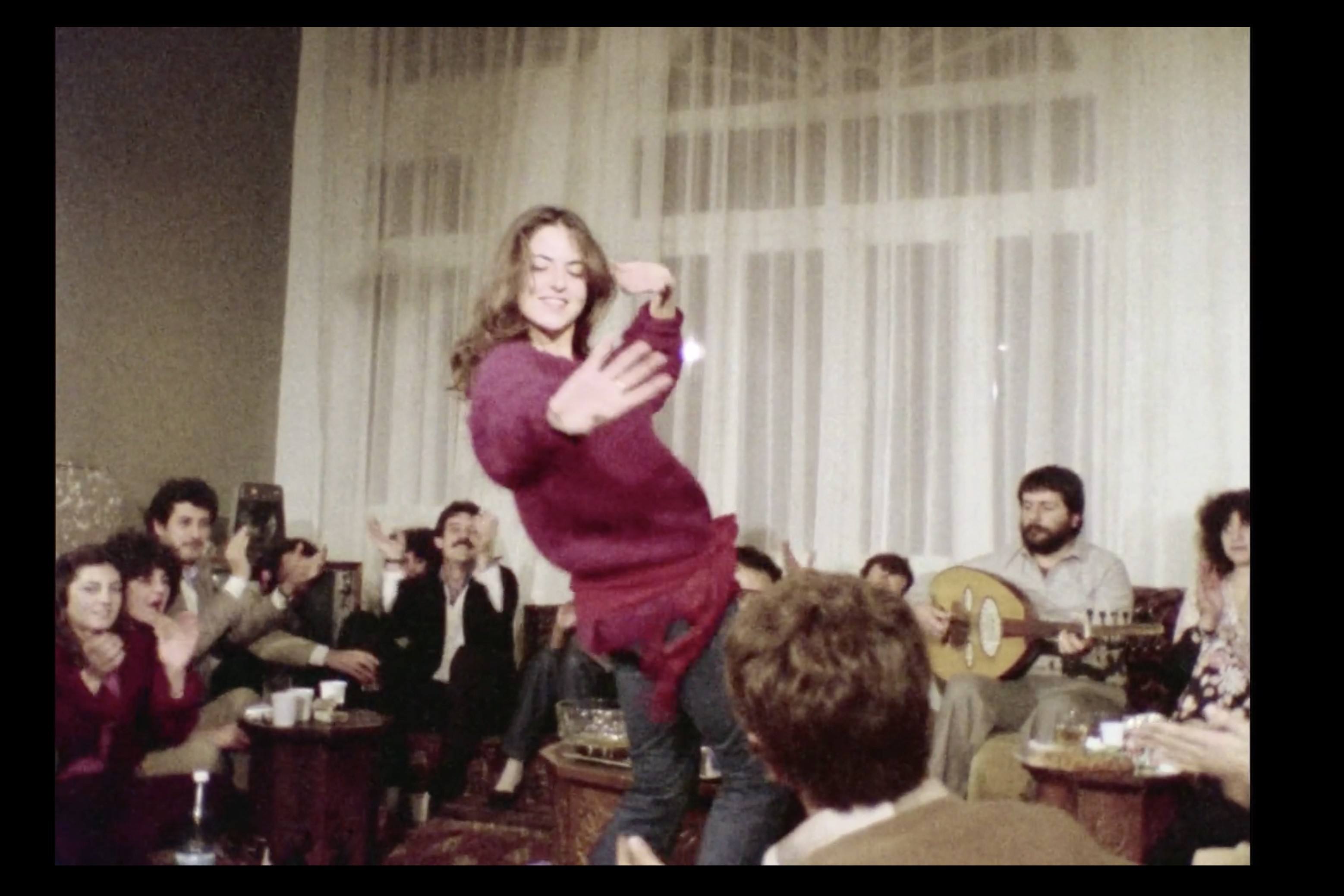
Daher's film, "Do You Love Me", which opens in German cinemas on 7 May, weaves together a vast array of film clips, painstakingly harvested from Lebanon’s film history over the course of years.
The result is a poignant collage which highlights a very Lebanese conundrum: how love for a complicated homeland coexists with deep-seated problems which trip up its inhabitants at every turn.
Lebanon’s search for a shared narrative
Lana Daher was born in Beirut in 1983, in the middle of the Lebanese Civil War. The war ended when she was six years old but it remained a constant presence throughout her childhood and youth. The violence was clearly visible in the city's ruined buildings and the bullet holes pock-marking its walls, but the war was never spoken of.
"I could see that my mother was anxious and nervous, but she didn’t seem to connect that to what she'd experienced," recalls Daher. In many families, she suspects, the trauma of the war years was never processed but rather passed down to the next generation.
At the state level, too, Lebanon has repressed its history. There's no national archive. The school history curriculum covers only the period up to independence in 1943. The religious and ethnic diversity of Lebanese society and government continues to complicate the search for a shared narrative about the injustices that took place.
“There is no single, unified, history book, because that would mean choosing one perspective,” says Daher.
"Do You Love Me" offers a very different perspective on history, one seen through the lenses of numerous cameras spanning decades, in footage filmed by professional filmmakers, journalists and home video enthusiasts.
Daher spent eight years scouring Lebanon’s archives, visiting universities and television stations, meeting cultural practitioners and private individuals. In total, she sifted through a total of 20,000 works: audio recordings, images, feature films, home videos, podcasts and articles. She compared the process of hunting for the fragments with the work of an archaeologist: "It was a very long and slow process."
100 years of Lebanese history
The result is a striking portrait of a country stumbling from one catastrophe to the next: the civil war of 1975–1990; the political assassinations in the early 2000s; the ongoing economic crisis and constant power outages; mass protests against corruption and mismanagement; the Covid pandemic; the 2020 port explosion, and repeated wars with Israel. The latest escalation between Israel and Hezbollah is, yet again, hitting the Lebanese civilian population hardest.
"I included many short clips of difficult moments in our history," says Lana Daher. "Not to retraumatise people or dredge up painful memories, but to say, this is what happened and we lived through it."
She also wants to remind people that, to this day, justice has remained elusive, and no one has been held accountable: "And it's ordinary people who keep paying the price."
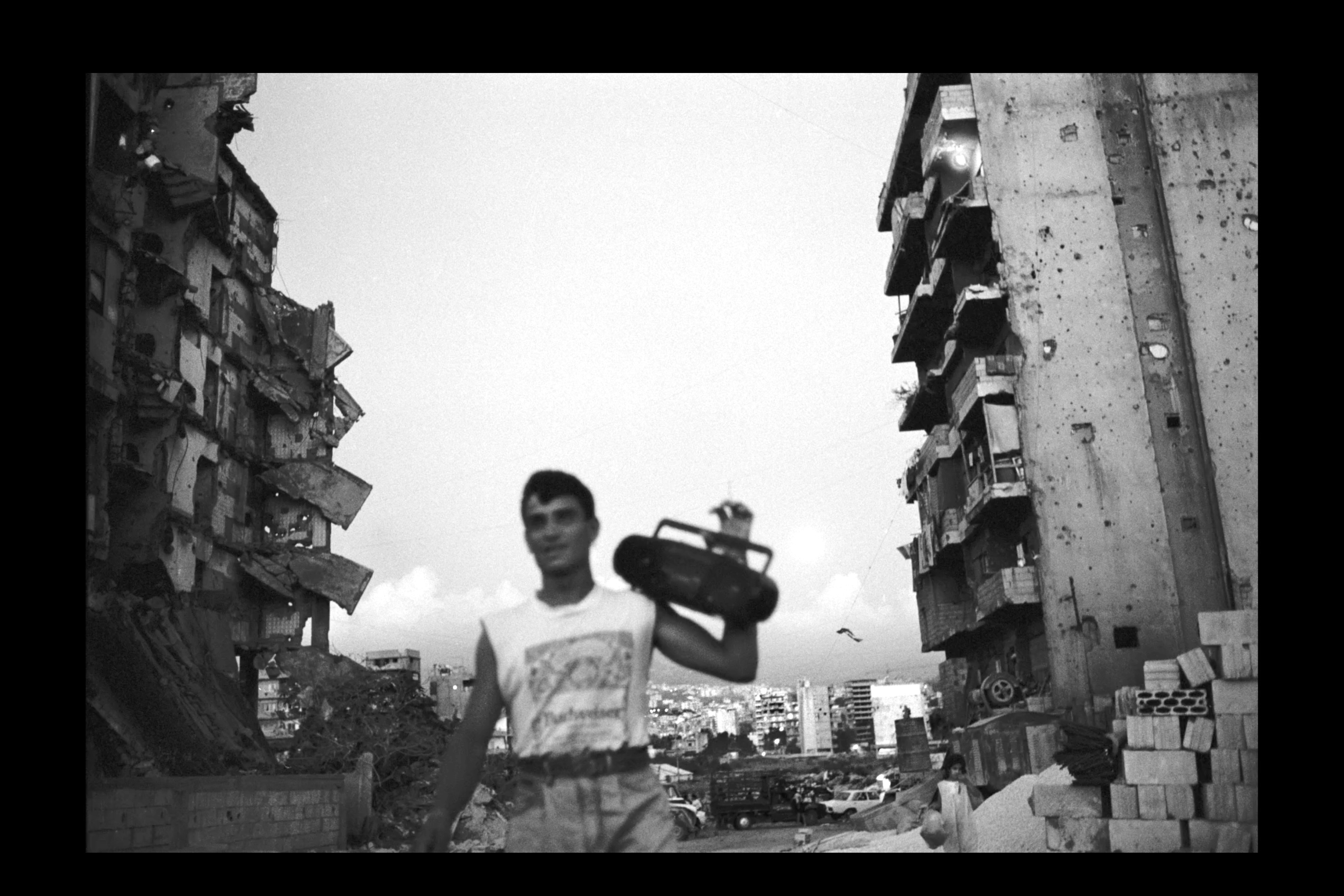
The images in "Do You Love Me" span a hundred years of Lebanese history yet fit together organically, almost as if they weren't separated by decades, as if the characters they depict weren't entirely distinct, some fictional, others real.
When characters on screen gaze out to sea or through the window of a car, their yearning seems to be one and the same. When they walk through ruined buildings that were once their homes, it's unclear whether the devastation was caused by the civil war, the Israeli air strikes or the port explosion. The shock is the same.
"Leave? And go where?"
What connects all these people? "A love for this place, a complicated love," says Daher. "Life in Lebanon is unreliable. It’s a rollercoaster ride between war and peace. You can never know when everything might change in an instant."
Many Lebanese people no longer want to live with this uncertainty and are emigrating, a theme to which the film devotes several scenes. Tearful goodbyes. Long embraces. Planes taking off. A woman declaring, "We have to leave" and a man replying: "Leave? And go where?"
Many of Daher's friends have left Lebanon, but despite the inherent risks, she wants to stay. Beirut, she notes, is her home, and as an artist, staying has its advantages: "These difficult situations also bring growth and creativity."
Within Lebanon's cultural scene, this energy is being harnessed to create art and engage with what is happening. Much like Lana Daher does in this film: "Portraying this place authentically was only possible because I chose to stay."
"Do You Love Me"
France, Lebanon, Germany, Qatar 2025
Original languages: Arabic, French, English
Director: Lana Daher
Running time: 75 mins
Translated from the German original by Louise East.
© Qantara.de