"We all live in the shadow of the revolution"
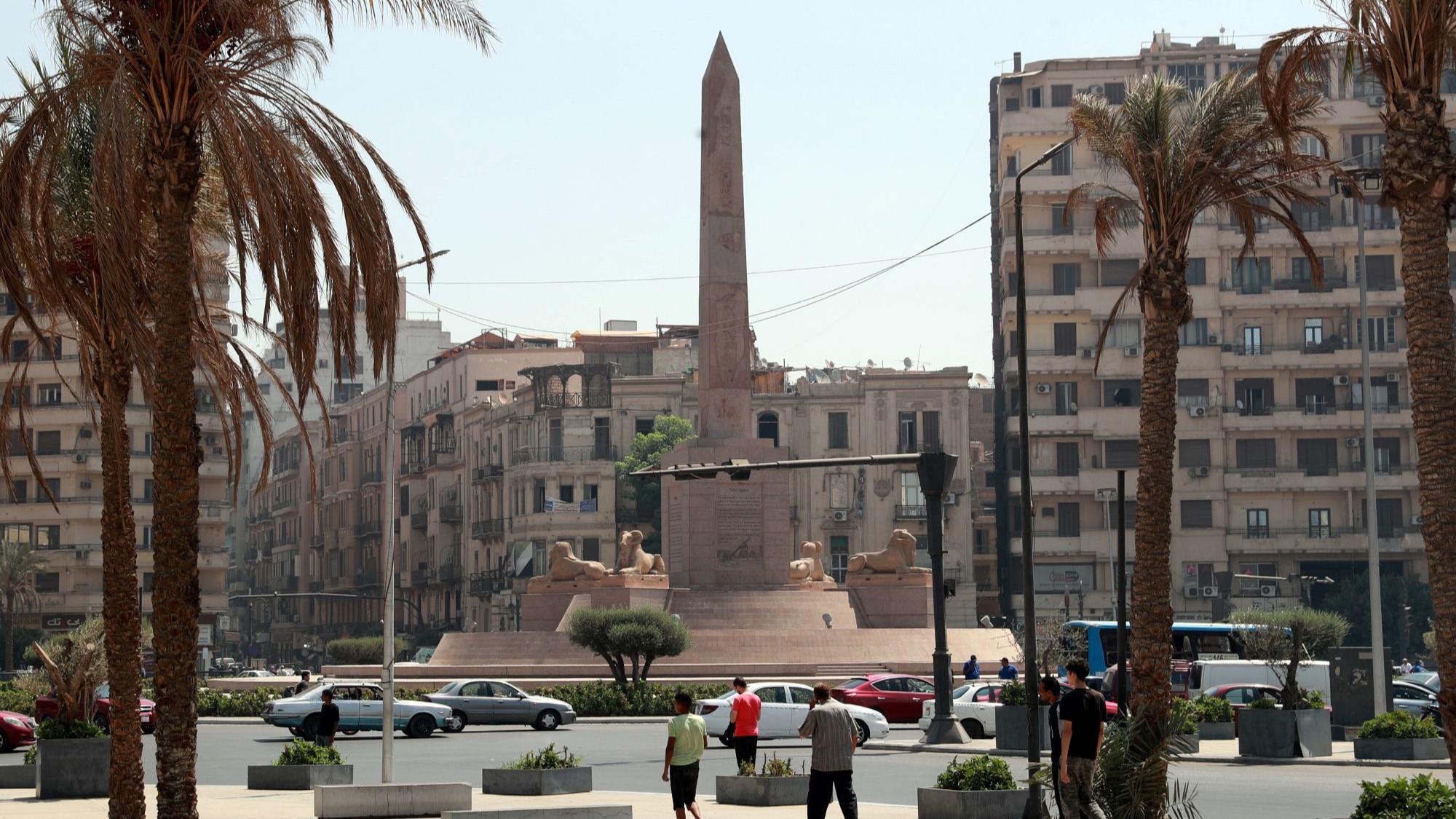
When the Egyptian Revolution erupted on 25 January 2011, Marwan Mahrez, Youssef Tobia, Maggie Waleed and Youssef Elesawy were children, unaware of the magnitude of the events unfolding around them. Now in their twenties, they have inherited a legacy of shattered dreams and face a different set of challenges from those confronted by the revolutionary generation.
Today, they face not only an authoritarian regime reminiscent of the pre-revolutionary period, but also a dangerous security situation, an economy in crisis and a society worn down by despair. For them, the question of political change has been overtaken by an even more complex one: how to retain what little space for action remains in such a closed and restrictive environment.
The Egyptian revolution made headlines during the Arab Spring as a spontaneous youth movement, but it quickly faltered. The spontaneity that lent it legitimacy also became a fatal weakness in the absence of unified leadership. The resulting power vacuum after the fall of Hosni Mobarak on 11 February 2011 allowed established political forces—primarily the Muslim Brotherhood and the military—to take centre stage.
The Muslim Brotherhood came to power in the 2012 elections, but its mistakes in government and the sharp polarisation that accompanied its rule led to its removal in the summer of 2013. The military then re-emerged as the sole power broker, closing the chapter opened by the 2011 uprising.
"Our generation has lived with the cost of the revolution"
Marwan Mahrez (21)
Marwan, a student activist from Cairo, was six years old when the revolution erupted. He embodies a generation forced to live with the consequences of its failure, or, as he puts it, one that has "inherited the bill, not the Square". The revolution's romantic promises—"bread, freedom and social justice"—have evaporated, he says, leaving behind only dire economic and security consequences.
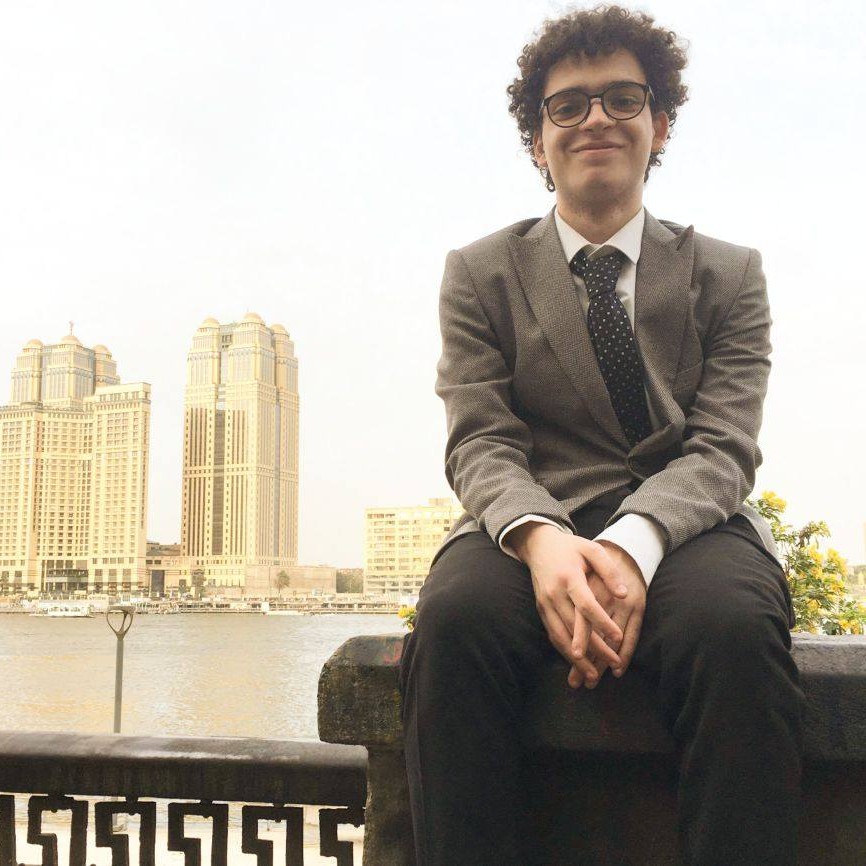
Marwan says that Egypt today is marked by sharp polarisation and economic decline, while the regime invokes the memory of 25 January to justify further repression. He sees the revolution not as a heroic narrative to be celebrated, but as a suffocating and repressive reality—particularly in universities, where he is politically active.
"Our generation has lived with the cost more than it lived the revolution," he says, pointing to young people who have been imprisoned for expressing their views on social media.
For Marwan, the dream of leaving the country, shared by many of his peers, has become more attainable than the dream of a free Egypt. He sees this as the outcome of the failure of the revolution's political trajectory, which handed power to regimes that had no place in the revolution, culminating in social breakdown.
Nevertheless, Marwan says he still aspires to "live with dignity in the homeland", even as he acknowledges that "the collective will for change seems paralysed today".
"We all live in the shadow of the revolution"
Youssef Tobia (27)
Youssef, a pharmacist from Assiut, represents the distinct situation in southern Egypt, where politics takes on more complex and less visible forms.
He says that the age gap between the generation that led the 2011 revolution and Generation Z dissolves in the face of the fact that "we all live in the shadow of the revolution, which has shaped our personalities and outlook, despite its political outcomes".
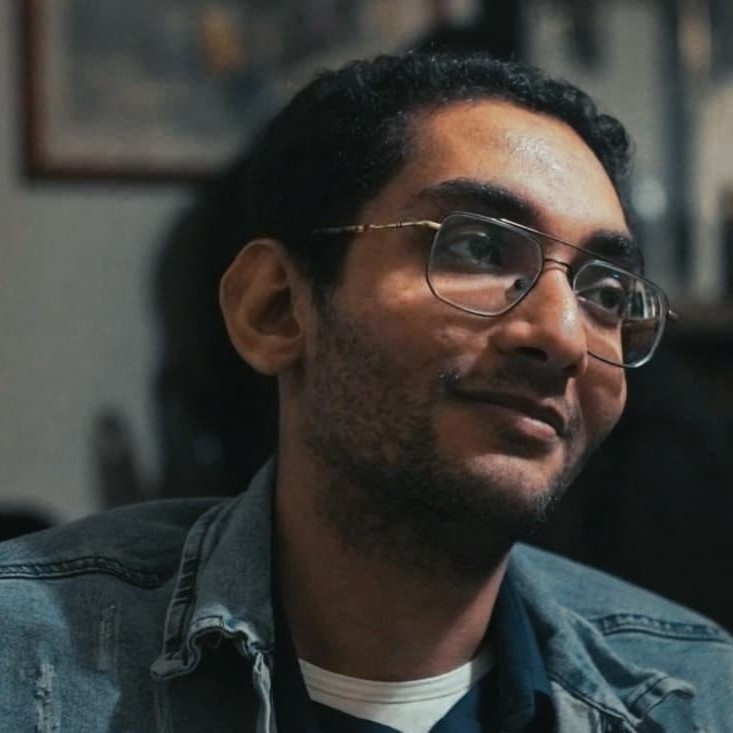
Nevertheless, Youssef describes his generation as a "lost generation": one whose consciousness was shaped in the chasm between two distinct eras—the dreams of January's 2011 and the dismal reality that ultimately replaced them. For this generation, revolutionary values have been crushed under the harsh conditions imposed by the ruling regime, which has turned the struggle into a daily fight for survival.
He adds that the revolution did not fail because its goals of "bread, freedom and social justice" were wrong. The revolutionaries had the "dream", he says, but the "deep state" held the "tools". Through its control of the media, judiciary, and military establishment, it diverted the course of change toward restoring security control and consolidating the current regime, which now commemorates 25 January only as "Police Day".
Youssef, a young member of the Egyptian Communist Party, also volunteers as a film programmer at Elwkala ("the agency"), an independent youth initiative in Upper Egypt that hosts screenings and fosters open discussion. For him, the struggle has shifted from the streets to the screens. He describes the work of young filmmakers and artists in southern Egypt as "a living embodiment of resistance; it is cinema that does not aim for entertainment, but digs into the structural crises left by the policies of post-revolutionary governments."
"These simple films are visual documents that chronicle economic and social marginalisation", he continues. "They transform art into a tool. They help us regain the ability to act in a time of political deadlock."
"Seeking out the remaining political spaces is the only way"
Maggie Waleed (25)
Maggie, an activist from Alexandria, says that Egypt today has regressed on every level—politically, economically, and socially. She sees her generation as “a sharp critic” of the developments since the revolution and likens the revolution to “a summer dream: that fleeting moment when everyone sensed a bright future, before waking up to the reality of a one-voice state.”
Egypt's political prisoners speak
A new anthology gathers the words, drawings and memories of Egyptian prisoners—some well-known, many anonymous—who document life inside the carceral state.
Reflecting on the pre-revolutionary era, she says: "Even under Mubarak's regime, there were limited spaces for political pluralism and cultural debate. Today, these spaces have vanished, replaced by a one-sided media and a public sphere that persecutes anyone who deviates from the norm."
"The crackdown is no longer limited to political activists; it has extended to content creators, influencers, and writers, in an attempt to impose a single narrative."
This political deadlock has led Magi's generation to adopt what she calls an "individual survival" mindset. Nevertheless, she continues to fight in her own way: "Educating oneself and seeking out the remaining political spaces is the only way to respond to a reality that pushes a person towards giving up or escaping."
"Action is a necessity for change"
Youssef Elesawy (20)
Youssef, a computer science student at Mansoura University, has a hazy memory of walking in Tahrir Square as a child with his father. At the time, he felt a sense of awe but didn’t fully grasp its impact. Later, it became central to his political coming-of-age.
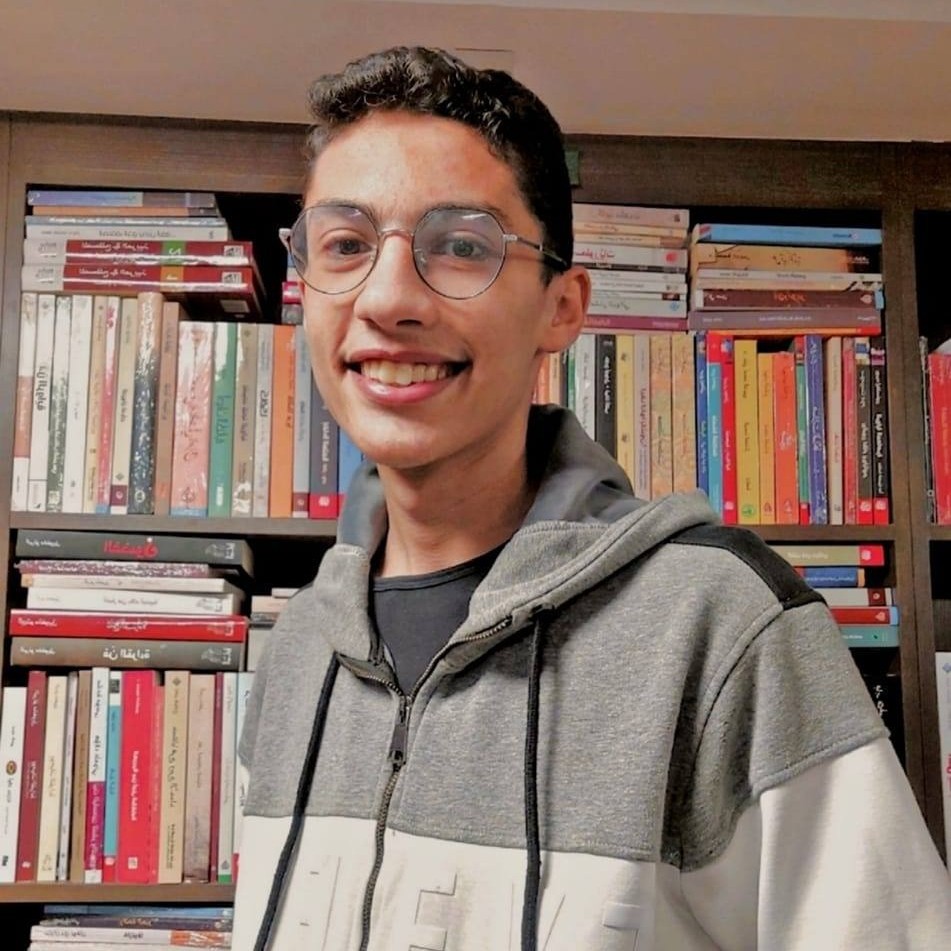
"Today, we are living a distorted extension of the pre-January era, where despotism takes on an urban form that reflects a class division."
Youssef points to the government's urban transformation policies, characterised by expanding gated communities. He argues that "it is not just real estate development; it is a symbol of a policy of spatial isolation, aimed at entrenching the separation of the ruling elite from an increasingly impoverished population."
"The concrete wall is the regime's tool for closing off the public sphere and nationalising political consciousness, while encouraging individualism and superficiality to isolate citizens from Egypt's issues."
As a member of the Socialist Popular Alliance Party, Youssef approaches politics as a "moral duty." For him, it means refusing to be a passive observer of events.
In June 2025, he and several colleagues organised a solidarity protest at Mansoura University in support of Laila Soueif during her long hunger strike to demand the release of her activist son, Alaa Abd El-Fattah.
After the protest, Youssef was interrogated by security forces. But the experience only reinforced his belief that "action, however limited it may seem, remains a necessity for change."
© Qantara.de