A home for Istanbul's refugees
Topics
Mazen Rabia looks up, greets us briefly, then makes his next move on the chessboard. After the game, he says, they will cook, eat together and then there's time to talk.
Rabia sits in a long room in Istanbul's Beyoğlu district, provisionally furnished, yet open and inviting. There's a kitchen area, an array of Arabic books and a ping-pong table. Two people play the saz, a traditional long-necked Turkish lute. On the walls hang a Palestinian flag and the new Syrian flag, interspersed with handmade crafts and group photos.
Addar, as the organisation is called, is not just a meeting place. Over the years, it has become a key point of contact for Syrian refugees with a wide variety of needs. It offers language courses and advice on school or university administration, as well as support with everyday matters such as dealing with authorities or medical issues.
"At first, many people didn't even know how to make a doctor's appointment in Turkey, or what their rights were," says Rabia. "So we tried to help with everything they needed in their daily lives."
Hailing from Damascus, Rabia is of Palestinian-Syrian descent and has been living in Turkey for around 15 years. He has eight siblings who, as is the case for many Syrian families, live dispersed across several countries.
In Syria in the mid-1980s, Rabia was imprisoned for political activities. "Under a dictatorship," he says, "you have the right to go to university and, at the same time, the right to end up in prison."
Rabia studied theatre in Syria and began teaching Arabic informally to foreign students who came to the country. After his imprisonment, he was not allowed to work officially, but language instruction was the one area in which he managed to remain active. Today, he works as an Arabic lecturer at Koç University in Istanbul.
When he came to Istanbul to teach in 2011, he encountered a growing Syrian community. Most Syrians had only been in the country for a short time. Many faced obstacles when dealing with the authorities, educational institutions or the healthcare system.
"At first, they had hardly any opportunities," he recalls. "They didn't know the language." Syrians in Istanbul lacked orientation and space in which they could even begin to organise their daily lives.
Temporary residence for Syrians
At the peak in 2019, more than 3.7 million Syrian refugees were living in Turkey. Today, there are around 2.5 million.
In 2014, the Turkish state created a legal framework for the temporary protection of the Syrian community. It prohibited deportations and provided Syrians with access to basic healthcare, education and, under certain conditions, the labour market.
However, this framework did not offer Syrians opportunities for long-term residence or naturalisation. Their status remained explicitly temporary.
It was during this time that the idea for Addar was born, not as a project or aid organisation, but as a practical and physical place. Addar means "house" in Arabic. "The goal was to help ourselves and to find a safe space," says Rabia.
In its first few months, Addar emerged primarily from a private setting. It was built by a circle of friends, some teachers and engineers, many with children, who simply needed a place where daily life was possible.
The focus was on spending time together, organising activities for children, cooking together and going on trips. It was only later that a formal structure emerged, allowing Addar to apply for support.
Addar regularly organises dance and sports classes, photography and cooking workshops, and knitting and handicraft groups. "Some of the activities simply arose from what people were good at," explains Rabia. "If someone could dance, there was a dance class. If someone could cook, there was cooking."
Some of these activities were also organised in collaboration with Turkish and international NGOs and universities. In the early years, the programme included museum visits and activities for families with children.
Known as "Hoca"
Over the years, Addar has offered many young visitors a space to prepare for school and university, even as their living situation remained uncertain.
At least 50 young people were prepared at Addar for study visits to the USA, Canada and Great Britain. Most of them completed master's degrees, and some are now working on their dissertations, Rabia proudly points out.
For Rabia, this is a sign that the years of hard work have paid off. The most important thing, he stresses, is not that these young people were able to leave Turkey, but that they found their own path. "We prepared them here." The students were supported through language tests and applications, and the necessary contacts were established, he says.
Some visitors address Rabia as Hoca, a Turkish term meaning teacher or mentor. One regular Addar visitor describes Rabia as a "father figure". Others describe Addar as a place that provides stability.
What has sustained Addar over the years has been people, time and trust. The initiative was always built on voluntary work, occasional support and the belief that a solution can be found to any problem. For Rabia himself, Addar is not just a project, but a place of arrival: "It is home."
The road to a new Syria
A year ago, rebel forces ousted Syria’s Assad regime. How has the country changed since? Leading experts weigh in.
People, time and trust
Today, Addar's existence is uncertain. "We are in a critical situation," explains Rabia. The association works entirely on a voluntary basis and has no permanent funding. Running costs, such as rent, are only covered for a few more months. Previous support was sporadic, and no new funding has been forthcoming recently.
"We are not a professional organisation," Rabia stresses. There is no one systematically collecting money. Instead, Addar's work is still based on the needs of everyday life: cooking, teaching, organising, listening. Everyone involved is aware that this work is becoming increasingly difficult, Rabia says.
To Rabia, Addar is almost everything—his life and that of many others. Having to close would be hard for many, especially those who learn, help out and feel at home here.
Addar's situation, Rabia says, should be understood in the context of changing political conditions. Although the number of Syrian refugees in Turkey is declining, he says, "not all of them are returning to Syria." This is only an option for some, for example, those who still have family or property there. Others have long since organised their lives in Turkey, he explains, even if their prospects remain uncertain.
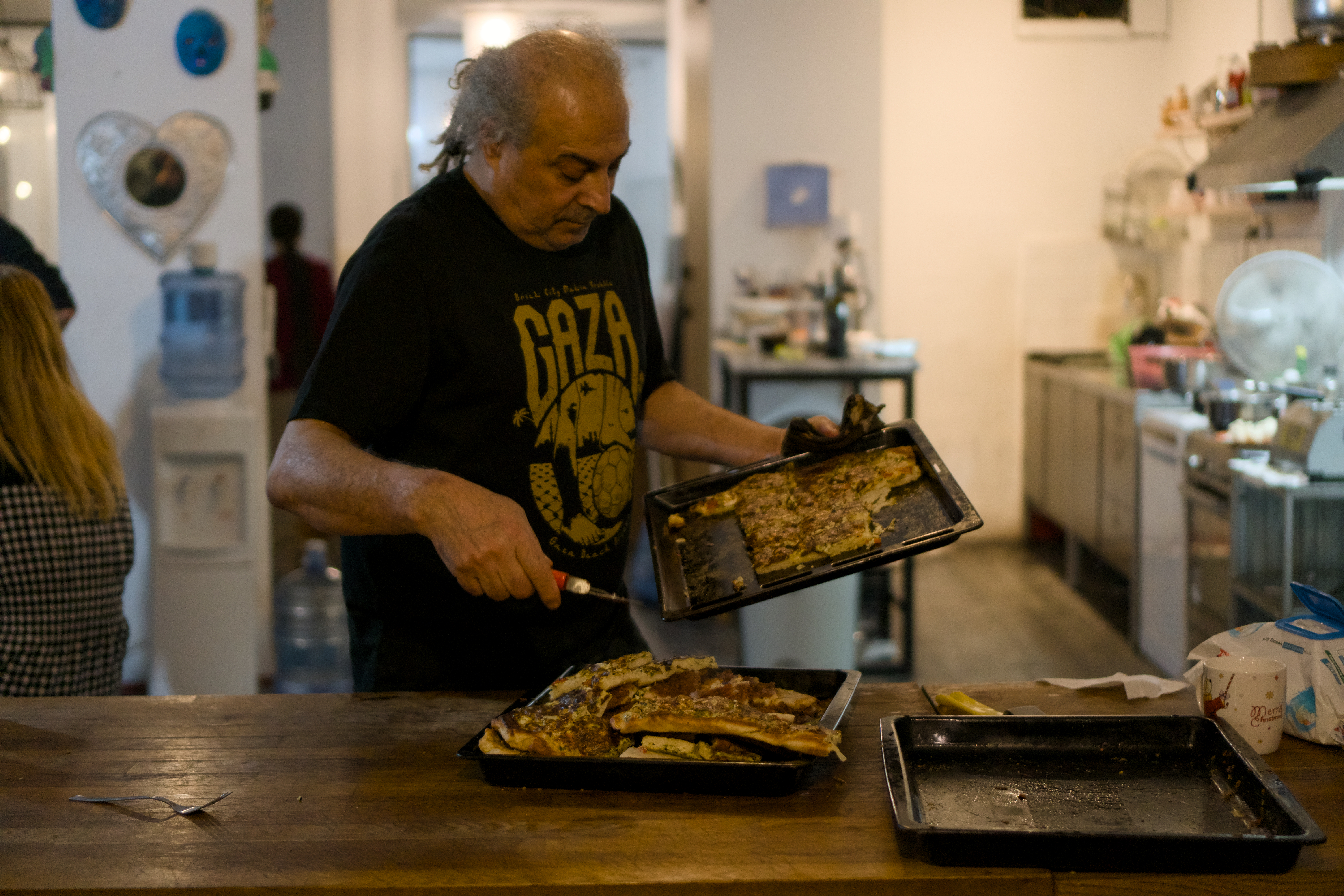
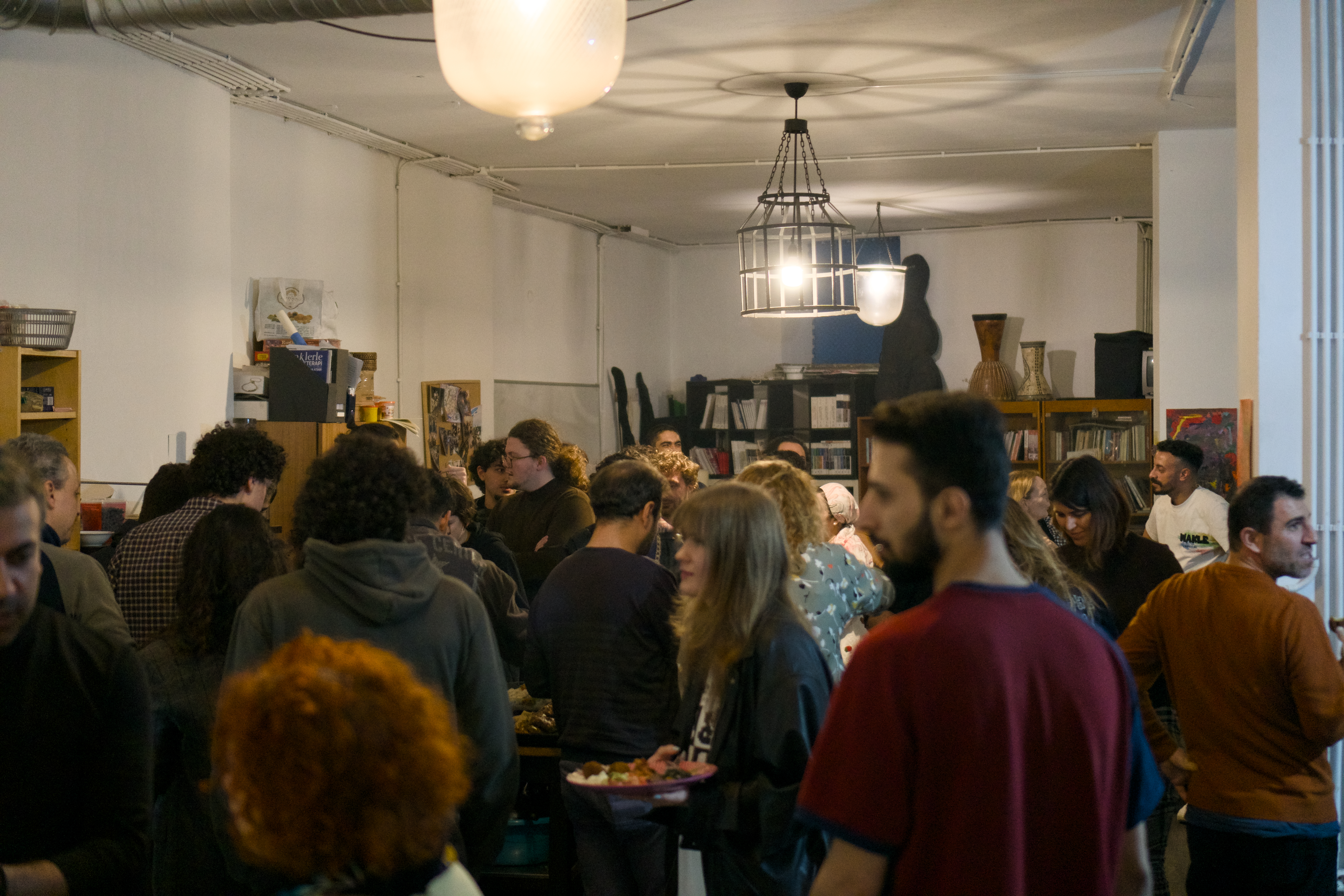
The day after our first visit, Addar became an open meeting place, as it does every Friday. In addition to regulars, there are many first-time visitors. Rabia cooks; people eat standing up or sitting on cushions. The conversations switch between Arabic, Turkish and English.
But that communal meal could have been Addar's last. Shortly after the visit, Addar announced on Instagram that, for financial reasons, communal meals would no longer be offered on Fridays. For now, meetings will continue to take place.
This is an edited translation of the German original. Translated by Max Graef Lakin.
© Qantara.de