Qantara Startseite Englisch
-
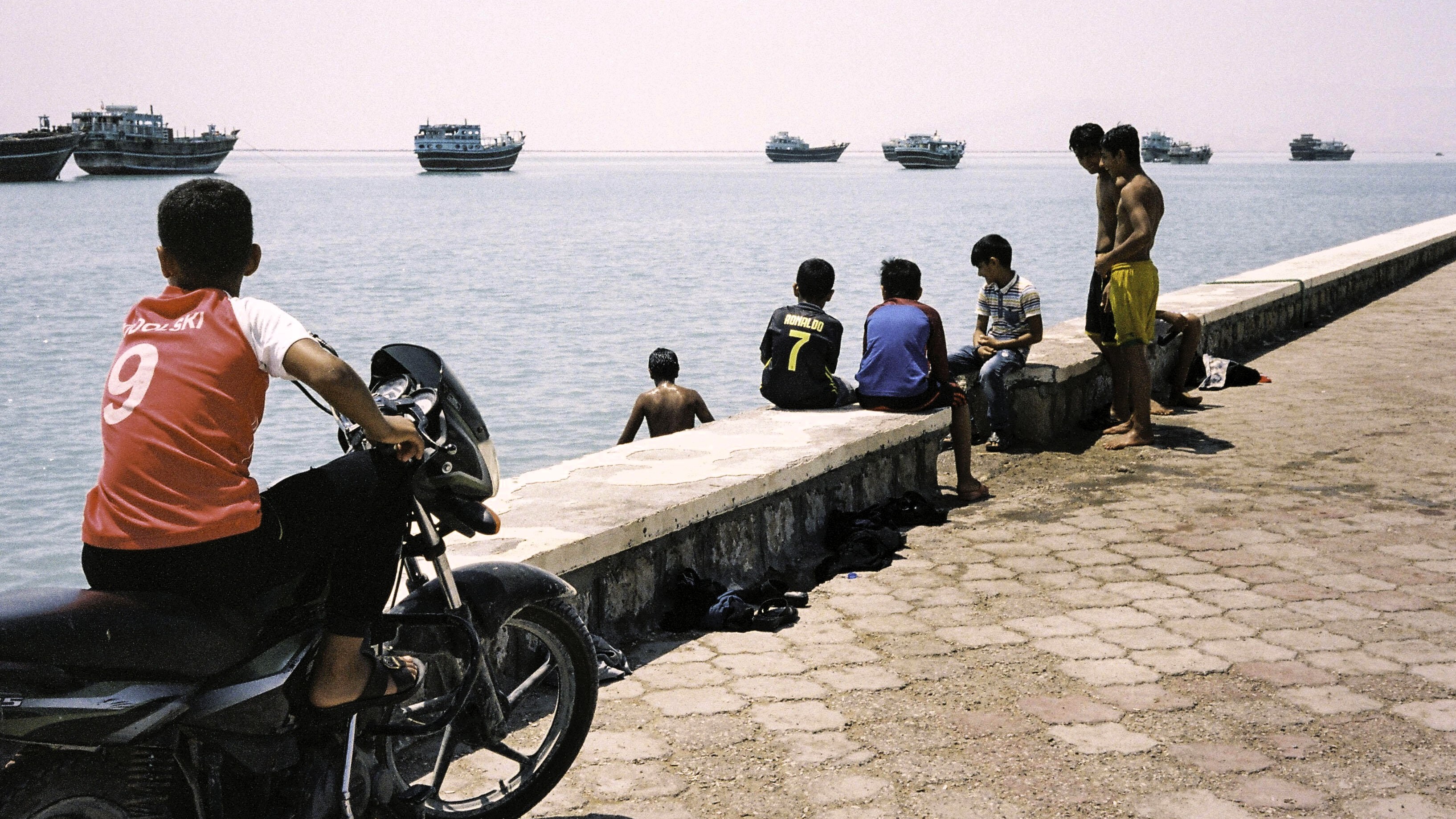 Iran's Gulf region
More than a strait
The Strait of Hormuz is at the centre of geopolitical tensions. But a closer look at the cultural landscape reveals a different picture: on Iran's southern coast, African, Indian and Arab influences converge, creating a cultural tapestry far removed from the image of a homogeneous theocratic state.
-
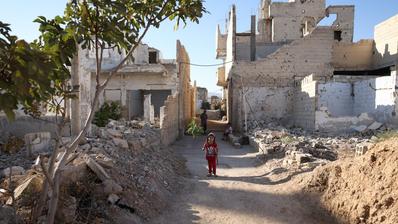 Reconstruction in Syria
Whose land will major investors build on?
Syria is relying on competition and foreign investment to fund its reconstruction efforts. In Damascus, citizens are being asked to sell their land for a multi-billion property project. Yet many long to rebuild their own homes.
-
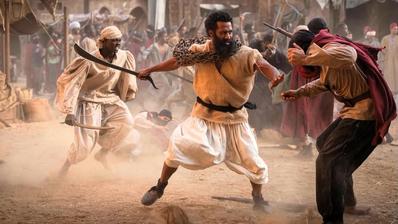 Egyptian film "Asad"
Slave drama sparks debate on national identity
In Egypt, a historical film has sparked a present-day controversy, with critics accusing "Asad" of distorting the past and promoting Afrocentric narratives. Beneath the political rhetoric, however, lies a deeper cultural dispute.
-
 Iranian author Shahrnush Parsipur
Writing in defiance
With the death of Shahrnush Parsipur, Iran has lost one of its most indomitable literary voices. The author of "Women Without Men" confronted censorship and oppression throughout her life. Most recently, she refused to glorify the war against Iran as a liberation.
Politics
More about Politics-
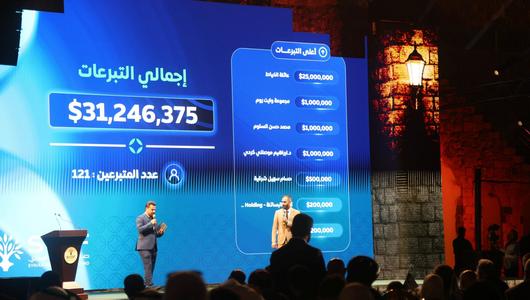 Syria after Assad
Striking deals with the old elites
The HTS regime presents itself as the "liberator of Syria" while collaborating with key figures from the Assad era. Instead of conducting a thorough reckoning with the past, the new elites are consolidating power with the help of the old.
-
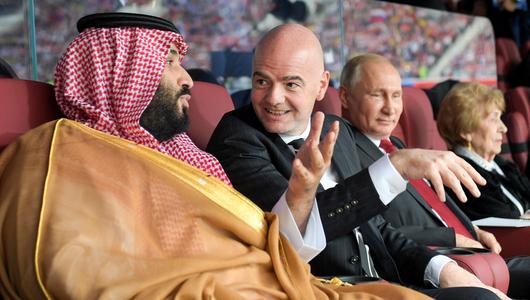 Saudi sports policy
The limits of Saudi Arabia's football ambitions
Saudi Arabia has emerged as an influential player in the politics of international sports, particularly football. The 2034 World Cup will be hosted by the Kingdom, but war in the Gulf could be jeopardising its ambitious goals.
-
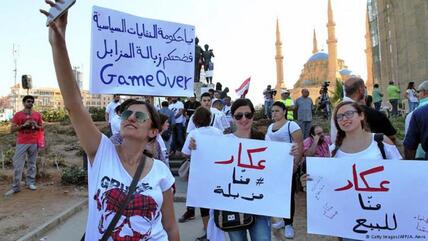 Lebanon's "You Stink" protest movement
Rubbish knows no religion
Triggered by a waste disposal crisis, a new movement has formed in Lebanon. Yet the "You Stink" campaign is more than an initiative against unsolved rubbish problems; it is also a rebellion against Lebanon's family clans and confessionalism, a system that divides up political power among the country's religious communities in proportion to their percentage of the population. By Karim El-Gawhary
-
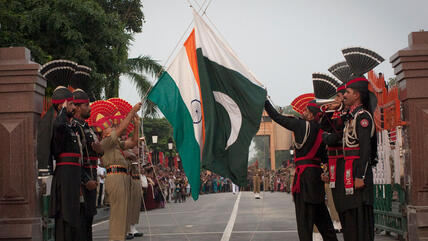 Politics and religion
The instrumentalisation of religion
Since time immemorial, religion has not only been used as an inspiration and a guide for life, but also as a way of furthering interests and achieving specific political ends. This instrumentalisation can be either intentional or unintentional. In this essay, Hakim Khatib looks at a number of countries where Islam has been instrumentalised in the recent past and examines the various different forms this instrumentalisation can take
-
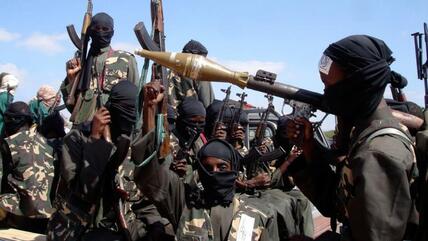 Islamism in eastern Africa
Not immune to terror
Somalia, Kenya and their neighbouring countries are increasingly being haunted by extremist violence. This essay assesses why this region has become a hotbed of Islamism and why one-dimensional military interventions by external forces have not delivered the desired results. By Emmanuel Kisiangani
-
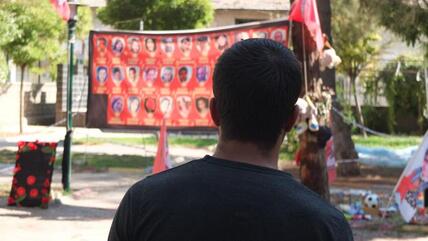 Interview with a survivor of the Suruc attack
"All we want is freedom"
The faces of the 31 members of the Federation of Socialist Youth Associations (SGDF) killed in the attack on 20 July still gaze down from banners strung around the courtyard of the Amara Culture Centre where the bomb was detonated. Inside, surrounded by broken windows, sits Adnan, a 25-year-old Kurd, who describes the IS terrorism that drove him out of Kobani, only to catch up with him across the border in Suruc. Fabian Kohler spoke to him about the attack
-
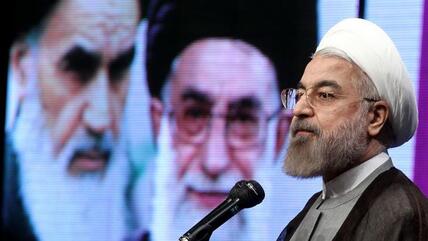 State and religion in Iran
"Shias tend to support the underdogs"
The Shia faith has always been a defining aspect of Iranian nationhood. In the twentieth century, the pro-Western regime of Shah Mohammad Reza Pahlavi silenced critics and was eventually toppled by a popular revolution with strong religious dimensions in 1979. Tehran's stance has since been basically anti-Western, but that may now be changing. Maysam Behravesh, a political analyst with Tehran Bureau, assessed the nature of the Shia regime in an interview with Hans Dembowski
-
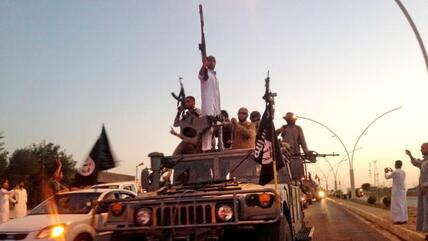 Interview with Wilfried Buchta on the rise of IS and the fall of Iraq
"Iraq is irreversibly split"
In his new book, "Terror vor Europas Toren" (Terror at the Gates of Europe), Wilfried Buchta analyses the reasons for the rise of the jihadist militia of the self-styled "Islamic State" and the disintegration of the Iraqi state. Ulrich von Schwerin spoke to Buchta, a scholar of Islam, who worked as a UN analyst in Baghdad for many years about the future of the nation
Society
More about Society-
 250 years of the USA
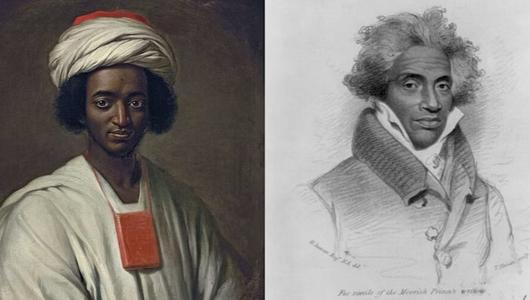
How enslaved African Muslims resisted bondage
The history of Islam in the U.S. does not begin with voluntary immigration. It can be traced back to the country's formative years, and to the millions of enslaved Africans, up to a third of whom are believed to have been Muslim.
-
 Femicide in Turkey
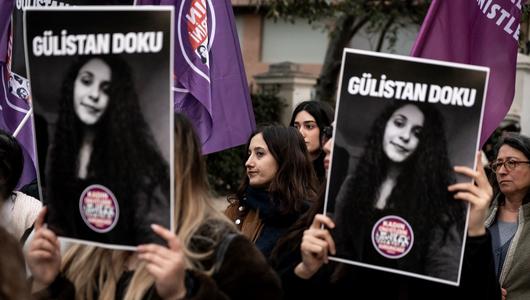
Where is Gülistan Doku?
Years after a young Kurdish woman's femicide, new probes have led to arrests. The suspects are sons of civil servants. The case ignited a Turkish debate on state failure and alleged cover-up. Yet the wider issue of anti-Kurdish violence remains sidelined.
-
 Interview with Turkish women's rights activist Selime Buyukgoze
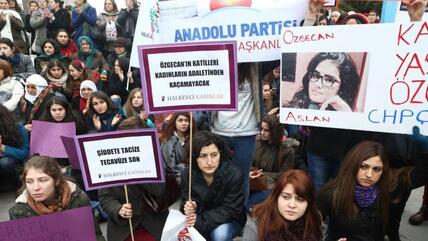
A history of resistance
The attempted rape and subsequent murder of the student Ozgecan Aslan alerted the world to violence against women in Turkey. Ceyda Nurtsch spoke with Selime Buyukgoze from the women's rights organisation Mor Cati about women's struggle for self-determination
-
 Book review: Victoria Schneider's "Are you Charlie?"
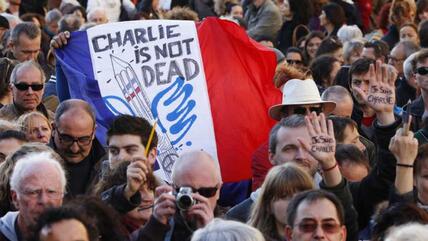
A deeply divided country
A very topical and important e-book entitled "Are you Charlie?" was published on 25 February. Its author, Victoria Schneider, offers her impressions of France after the "Charlie Hebdo" attack and paints a picture of a divided society. Claudia Kramatschek read the book
-
 Interview with the Islam scholar Lamya Kaddor
Jihad as a form of youth protest
In her new book "Zum Töten bereit. Warum deutsche Jugendliche in den Dschihad ziehen" (Willing to kill. Why German youths are joining the jihad), religious education teacher and scholar of Islam Lamya Kaddor asks why some young Germans are attracted to the jihadi cause. Claudia Mende spoke to her about the radicalisation of young Germans
-
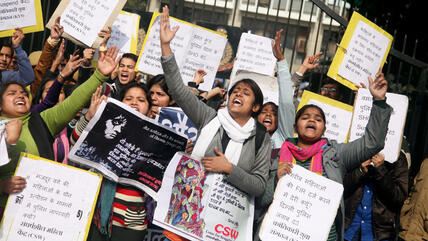 Leslee Udwin's controversial documentary "India's daughter"
Indian government ban causes uproar
The Indian government's ban on the broadcasting of "India's Daughter", a documentary about the fatal gang-rape of a woman in New Delhi in 2012, has reopened the debate about the attitude to violence against women in the country. In the wake of this dreadful crime, women and activists are resorting to new measures to create awareness and challenge sexual harassment in the country.
-
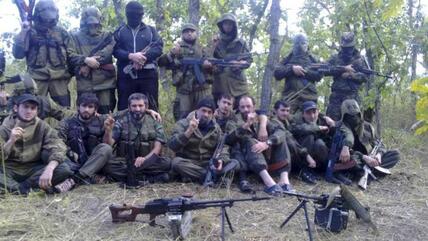 Jihadism in Dagestan
A growing problem in the fight against terrorism
Pakistan, Afghanistan, Yemen and Somalia are known to be hotbeds of Islamist activity. For some time now, many young, radicalised Muslims have been leaving their homes in Europe and northern Africa to join the ranks of radical Islamist groups such as IS. However, little attention has thus far been paid to the number of jihadis coming out of the Russian Republic of Dagestan. By Kiran Nazish in Afghanistan
-
 Anti-Muslim sentiment in Canada and the US
Playing on people's fears
North America has seen an alarming number of anti-Muslim attacks in recent months. With elections coming up in both Canada and the US in the next two years, Richard Marcus takes a look at the context of these attacks and the reactions to them
Culture
More about Culture-
 Lebanese literature in translation
The rediscovery of Alis al-Bustani
Published in 1891, Alis al-Bustani's only novel "Sa'iba" dismantles the comforting assumptions of Arab modernity. A new translation restores to view a woman writer long consigned to obscurity.
-
 Islamic history scholar Sabine Schmidtke
"The Holocaust reshaped knowledge production about Islam"
Hedwig Klein's life and scholarship were cut short by the Holocaust in 1942. In her new book, Sabine Schmidtke traces Klein's intellectual legacy and sets the record straight on her involvement in Hans Wehr's Arabic dictionary.
-
 Prison Sentence for Egyptian Actor Adel Imam
Curbing Cultural Expression
The sentencing of the famous Egyptian actor Adel Imam for allegedly offending Islam in one of his films spotlights the latest bout of power posturing by Muslim hardliners and the increasing threat to freedom of expression on the Nile. A report by Amira El Ahl in Cairo
-
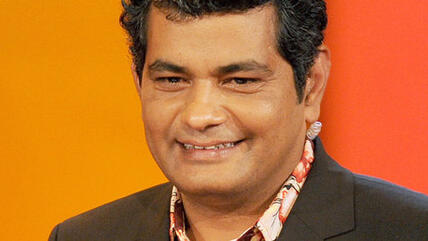 Interview with Mohammed Hanif
The Joys and Struggles of Everyday Life
Mohammed Hanif's first novel, A case of exploding mangoes, was a critically acclaimed success. Claudia Kramatschek met the author and spoke to him about Pakistan, minorities and his most recent novel, Our Lady of Alice Bhatti
-
 Supposed Fatwa against Iranian Rapper Shahin Najafi
''We Will Continue with Our Work''
Iran's grand ayatollah has issued what many have interpreted to be a fatwa against the rapper Shahin Najafi, who has lived in Germany for the past seven years. In this interview with Shahram Ahadi, Najafi gives his take on the situation
-
 Interview with Orhan Pamuk
''The Museum of Innocence'' – A Declaration of Love to the City of Istanbul
Orhan Pamuk is Turkey's most famous writer. In 2006 he also became the first ever Turkish writer to be awarded the Nobel Prize. He recently presented a very special museum to his home city of Istanbul. An interview by Aygül Cizmecioglu
-
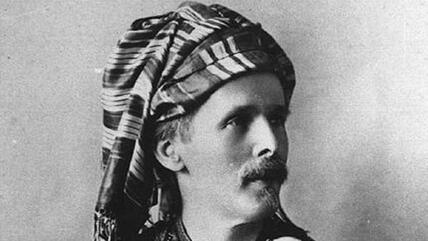 The 100th Anniversary of Karl May's Death
Literary Genius or Man of Legendary Hubris?
Karl May is the most widely read of all German writers. This year, which marks the 100th anniversary of his death, a number of new biographies seek to reconsider Karl May's place in German literary history. Andreas Pflitsch read two of them
-
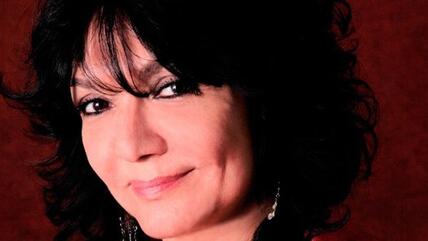 Sexuality in Contemporary Arab Women's Literature
Of Personal Experience and Artistic Freedom
When Arab women write about sexual encounters, are they recounting their own personal experiences or are their descriptions born of their literary fantasy? And whatever the answer is, should one measure literature using a moral yardstick or should criticism focus on the content of the work alone? Rim Najmi asked a number of female Arab writers to share their thoughts on this matter
750th anniversary of Rumi's death
750th anniversary of Rumi's death - Qantara.de
Most read articles
-
Prostitution, Drogen und Geldhandel in Syrien
Neuer Anstrich, alte Gebrechen
-
Sex-Tourismus in Ägypten
Braut für einen Sommer
-
Frauen in Saudi-Arabien
Gefangen in einem System der Gender-Apartheid
-
Iranische Diaspora in Berlin
„Es ist ein Archiv der Emotionen“
-
Aufstand im Iran
Wut im politischen Vakuum
-
Iranische Autorin Shahrnush Parsipur
Schreiben gegen das Verbot