Writing in defiance
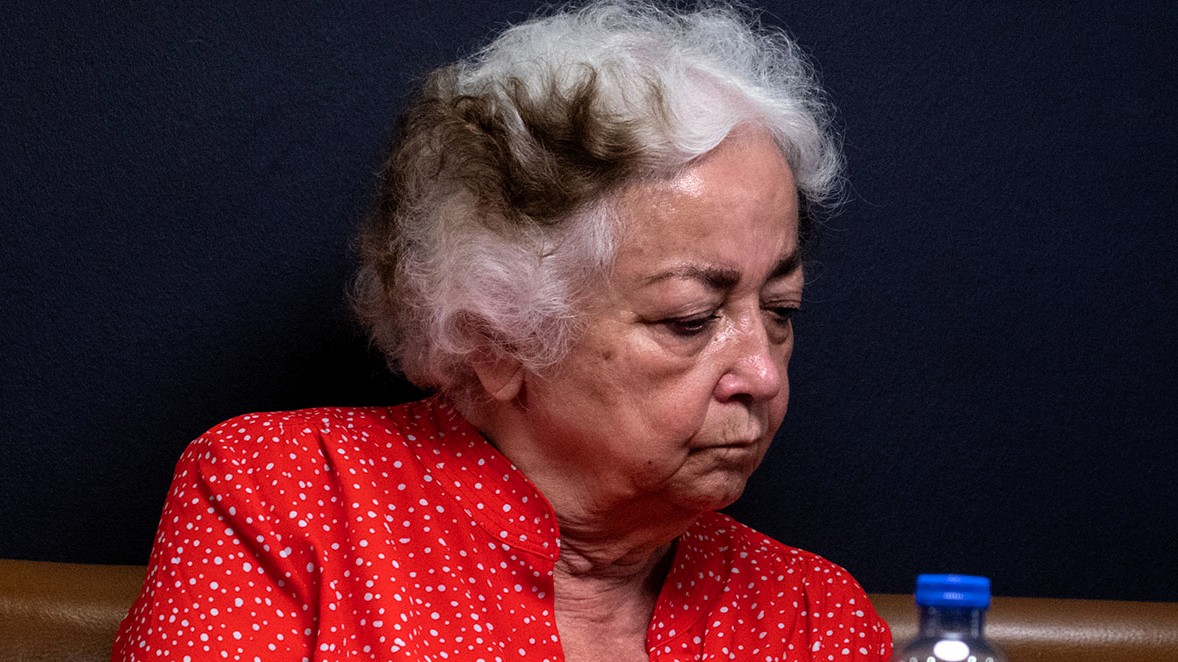
A writer, translator, cultural researcher and long-standing activist with the Iranian Writers' Association, Shahrnush Parsipur passed away last Friday at the age of 80 in exile in California. Her work is not only integral to the history of modern Persian literature; it is also part of the history of women who saw writing not as an ornament, but as a form of resistance.
Born in Tehran in 1946, Parsipur spent part of her childhood in Abadan and studied sociology at the University of Tehran. She later worked as a producer for Iranian radio and television.
However, she resigned from this post after protesting against the execution of the left-wing activists Khosrow Golesorkhi and Keramatollah Daneshian, as well as against the arrest of the writer Gholamhossein Saedi.
Even then, with the Shah still in power, it was clear that Parsipur’s relationship with the authorities was characterised not by conformity but by dissent. Shortly afterwards, she was imprisoned for the first time. Following her release, she went to France, where she studied Chinese language and culture. In 1974, her first novel, "Dog and the Long Winter", was published in Iran.
After the 1979 revolution, she returned to her country and became involved in the Iranian Writers’ Union. Yet even the Islamic Republic left her no room to manoeuvre. In 1981, she was arrested along with her mother for possessing political writings. While in prison, she wrote two of her most important books: "Touba and the Meaning of the Night" and "Women Without Men" (1989).
Exiled but not silenced
"Women Without Men" became a seminal work of modern Iranian literature. This slim novel tells the story of women who break free from the restrictive roles imposed by family, morality and the patriarchal order. The garden in which they seek refuge is more than just a place of escape. It is a space of transformation, a counter-image to a society that controls women’s bodies and seeks to silence women's voices.
Parsipur wrote about bodies, desire, loneliness, fear and freedom long before these topics could be openly discussed in public in Iran.
The state's reaction was telling. "Women Without Men" was banned, and Parsipur was arrested once again. A single novel was enough to unsettle those in power. This perhaps illustrates most clearly where the political power of her literature lay: not in slogans, but in the idea that women could live differently, desire differently and tell their stories differently.
Parsipur later left Iran and lived in exile in the United States. But exile did not silence her. Her books continued to circulate, often outside official channels, read by generations who found in them a different language for female experience, oppression and self-liberation. In 2026, "Women Without Men" gained international attention once again when the English edition was shortlisted for the International Booker Prize.
A life of independence
To the end, Parsipur remained a voice that made people uncomfortable. When the US and Israel attacked Iran, she refused to side with those who presented war as a path to liberation. She spoke out strongly against the war and reminded people that, in the end, it is the people of Iran who die under bombs, missiles and political violence.
This stance reflected the independence that had always shaped her life. Parsipur had protested against the monarchy, she had suffered imprisonment and a ban under the Islamic Republic, and yet she refused to romanticise the violence against her country as liberation.

"A great demand for Persian books"
Cologne-based publisher Anahita Redisiu sells Persian books that have been banned or censored in Iran. She regards the situation in Iran with concern and has harsh words for Germany's stance towards the Iranian regime. Gerrit Wustmann spoke to her about politics and literature
Even in exile, Parsipur's daily life was anything but a life of literary comfort. Fellow exiles have recalled that Parsipur lived in poverty at times, took on menial work and always tried to preserve her independence.
In this lay a quiet dignity: she did not turn her suffering into a business model, nor her name into a project. She remained a writer who preferred to pay the price of solitude rather than lend her voice to power, ideology or opportunism.
Parsipur's death is a reminder that censorship does not simply erase literature. Sometimes, it transforms a book into a hidden memory. Shahrnush Parsipur gave that memory a form. She wrote about women not as victims of history, but as figures of possibility. Her literature remains alive wherever language refuses to be obedient.
This text is an edited translation of the German original. Translated by Max Graef Lakin with the support of AI-assisted translation tools.
© Qantara.de