Where is Gülistan Doku?
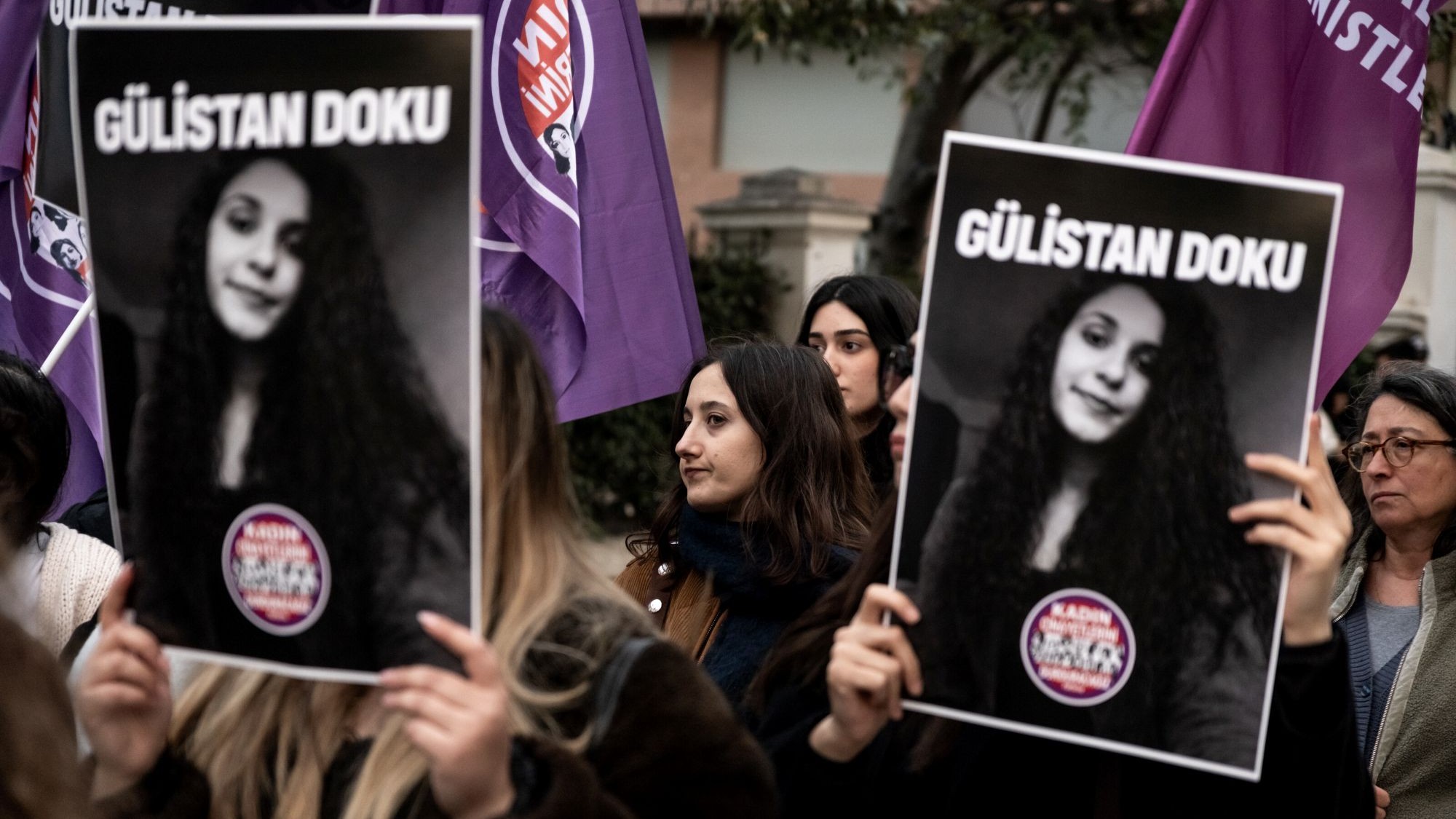
For 227 days in 2020, the authorities searched the Uzunçayır Reservoir in Dersim, in Eastern Anatolia. Boats equipped with modern search technology combed the area, divers made their way down to the muddy bottom, and some of the reservoir's water was drained. They were searching for the body of 21-year-old student Gülistan Doku. But they found nothing.
No one had seen Doku jump, and yet the police initially investigated the case exclusively as a suicide. The governor of Tunceli province—as Dersim is known in Turkish—personally delivered the news of her suicide to the Doku family.
This is how Doku’s sister Aygül recalls it in a podcast. Yet she says she did not believe the suicide theory from the outset. Friends, family and feminist groups are convinced that Gülistan was murdered. For six years, they have been asking: "Gülistan Doku nerede?—Where is Gülistan Doku?" For six years, there has been no answer.
A year ago, Ebru Cansu, the public prosecutor for Tunceli province, ordered a fresh investigation into Doku's case. Since then, evidence has been mounting to suggest a state cover-up of a crime.
Data relating to a visit by Doku shortly before her death was deleted from hospital records, a police officer deleted contacts from her mobile phone after her disappearance, and crucial CCTV footage is missing. In April 2026, a dozen suspects were arrested, some on serious suspicion of murder.
The main suspects are believed to be the son of the then-governor, and Doku’s violent ex-partner. The latter’s father—a police officer—may have tampered with evidence. The governor and a senior consultant are also accused of involvement in the cover-up. Doku was Kurdish; the alleged perpetrators are not. Senior posts in Kurdish regions are often filled by Turkish officials.
The sensitivity of the case has sparked a debate in Turkey about state failure, the instrumentalisation of the law and the lack of investigation into femicides, which are all too often dismissed as suicides.
In Kurdish media and within the Kurdish community, the case is being discussed differently, even beyond Turkey's borders: Doku's femicide is seen as part of a history of anti-Kurdish violence that specifically targets women.
Ebru Cansu, an unexpected hero?
In 2025, the We Will Stop Femicide platform recorded 459 murders of women in Turkey. Many remain officially unsolved and are often classified as suicides. "Why are so many Turkish women throwing themselves to their deaths?", ran a headline in The Guardian earlier this year.
One of these deaths may be directly linked to Gülistan Doku: the body of her friend, Rojwelat Kizmaz—who was also Kurdish—was found in the Hasankeyf reservoir in 2024. Another Kurdish student, Rojin Kabaiş, disappeared in the same year and was recovered from the shores of Lake Van. In both cases, the families are fighting for the truth, as they do not believe the official account that the deaths were suicides.
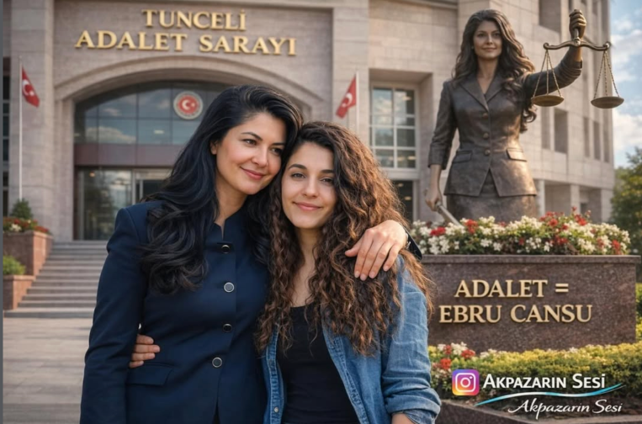
In this context, prosecutor Ebru Cansu emerges as a hero who is ensuring justice is done. She herself says that, as a mother, the fate of the missing young woman is close to her heart. AI-generated images are circulating on social media showing Cansu holding Doku in her arms.
The imagery is heroic. The women are standing in front of a courthouse where the Turkish flag is flying; the words "Justice = Ebru Cansu" are inscribed on a monument depicting the public prosecutor as Lady Justice.
Cansu is nonetheless part of a judicial system that has long been instrumentalised for political ends. This was evident, for example, in the repeated removal from office of Kurdish mayors and, most recently, in the dismissal of Özgür Özel, the leader of the Kemalist opposition party, the CHP.
The fact that the public prosecutor has taken action may not be purely down to individual initiative. Rather, the "male-dominated state wants to use the investigations as a means of settling internal scores, sacrificing some bureaucrats and promoting others", according to the feminist collective I Need Peace in a statement on Doku’s case.
Violence against Kurdish women
For human rights lawyer and activist Eren Keskin, who is monitoring the case, this is not merely a matter of a covered-up femicide. Rather, she argues, the case is part of a long history of systematic violence against the Kurdish population. In the 1990s, a guerrilla war raged between the Turkish state and the Kurdish Workers' Party (PKK). Since that time, a culture of impunity for state actors has prevailed in Kurdish areas, and this continues to this day.
The mobilisation of Kurdish women has always been a particular thorn in the side of the state authorities, explains sociologist and author Pınar Selek, who lives in exile in France. For this reason, "violence against women was used as a weapon in the war against the Kurdish population in the 1990s", says Selek, "including, amongst other things, systematic rape in prisons."
In 2020, the musicians Metin and Kemal Kahraman dedicated their song Çene ("daughter" in the Kurdish dialect Kirmançkî) to Gülistan Doku. In the song, they link the student's fate to the region's trauma: in 1937–1938, the Turkish state carried out massacres against the Kurdish Alevi population, with the army killing up to 70,000 people.
Abduction, assimilation and the sexual abuse of women and girls were part of the genocidal process. Eyewitnesses reported that women, whilst fleeing, jumped from high cliffs into the Munzur River and drowned.
For the musicians, the disappearance of bodies in the water forms a link between history and the present: "The waters swept my daughter away […] / Thirty-eight is a year of deep suffering for us / Let heaven and earth speak, let them tell you what we have endured."
Kurdish identity in the feminist movement
Across the country, feminists are mobilising against patriarchal violence and femicide and calling for these issues to be properly addressed. There are conflicting views on the extent to which these protests take into account the specific violence faced by Kurdish women.
Anthropologists Ronay Bakan and Seda Saluk criticise the fact that Kurdish realities are being sidelined in discourses on femicide. Take, for example, the case of Pınar Gültekin, who was murdered in western Turkey in 2020 and was mostly described in the international media as a "young Turkish woman". According to Bakan and Saluk, specifically Kurdish stories of repression and resistance are being overlooked.
At the same time, the Turkish media repeatedly label patriarchal violence within Kurdish communities as "honour killings", attributing this to a supposed backwardness and anti-modernity of Kurdish culture.
Turkey – a battle of narratives
For a century, the Kurds and other minorities in Turkey have been subject to state repression. With his dissertation "The Kurdish Question in Turkey", political analyst Ismail Kupeli presents a new research paper on the topic. Interview by Gerrit Wustmann
"The geographical context of the crime—namely, the fact that Doku was murdered in Eastern Anatolia—prevents it from attracting wider international attention," says Çiğdem, a lawyer living in Germany who uses her account, chidemlee, to raise awareness of Kurdish issues. For security reasons, she does not wish to disclose her surname. The lawyer identifies gaps in Turkish feminism when it comes to violence against Kurdish women.
"Feminism in Turkey today is no longer what it was 20 years ago," argues sociologist Pınar Selek. "The movement has learned a great deal from Kurdish women and has been transformed by them."
Anthropologist and media studies scholar Bahar Şimşek also believes that the fact that demonstrations for Gülistan Doku do not always explicitly refer to her Kurdish identity does not amount to a denial of it. "All the women who asked 'Where is Gülistan Doku?' at the 8 March demonstration in Istanbul also chanted 'Jin, Jiyan, Azadî'.” But the first question remains unanswered: Doku's body has never been found.
This text is an edited translation of the German original; translated by Max Graef Lakin with the support of AI-assisted translation tools.
© Qantara.de