The cost of staying outside Erdoğan's orbit
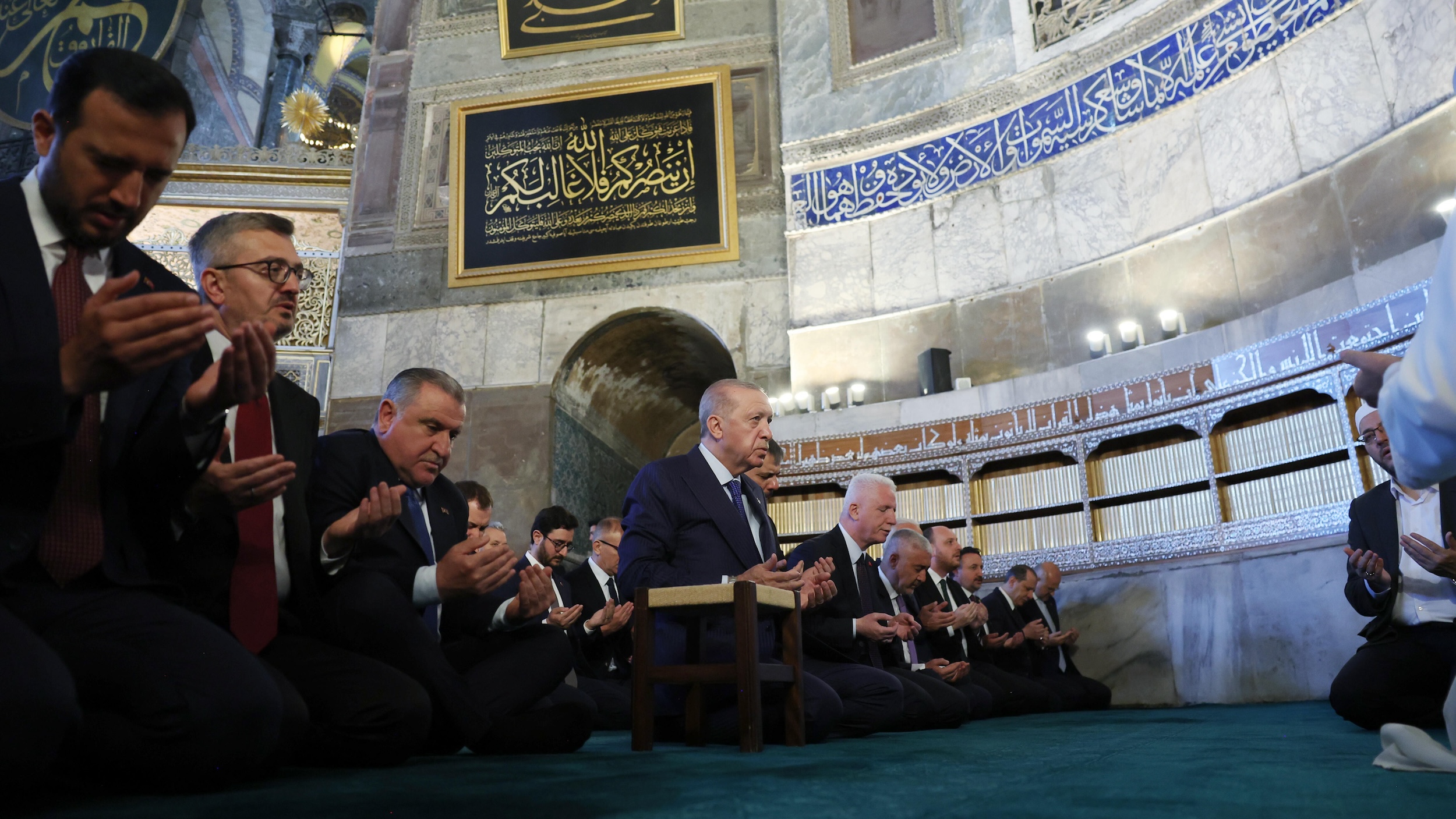
On 13 August, Turkish authorities launched a large-scale operation against the Süleymancı community, one of Turkey's largest Sunni religious networks. Its leader, Alihan Kuriş, was detained alongside dozens of others, while companies linked to the community were targeted over alleged money laundering, fraud and other financial crimes.
The government initially insisted that the investigation targeted not the religious community, but a criminal organisation centred around Kuriş. Yet the following day, the investigation extended to the community's main dormitory in Istanbul, making that distinction increasingly difficult to maintain.
To understand the operation, it must be seen against the backdrop of the Süleymancıs' increasingly antagonistic relationship with President Recep Tayyip Erdoğan's AKP. Having failed to co-opt the community or strengthen alternative leaders capable of bringing it into the AKP orbit, the government now appears to have turned to coercion.
A community built around Quranic education
The Süleymancı community traces its origins to Süleyman Hilmi Tunahan, an Islamic scholar and Sufi sheikh who made the preservation of Quranic education his principal mission under the restrictive secularism of the early Turkish Republic. At a time when traditional religious education had largely disappeared from public life, Tunahan established an informal network for Quranic recitation and memorisation.
Quranic education remained the Süleymancı movement's defining feature, with its network of Quran courses and student dormitories forming its organisational infrastructure. Even as the state relaxed restrictions on religion, established Imam-Hatip religious schools and expanded the Directorate of Religious Affairs (Diyanet), the Süleymancıs remained sceptical of state-run religious education.
Maintaining that their own training, particularly in Quranic recitation, was superior, they continued to operate a largely self-contained educational network, reinforcing the community's relative insularity within Turkey's religious landscape.

Religiously and politically, however, the Süleymancıs are firmly within Turkey's traditional Sunni conservative mainstream: nationalist, state-friendly and politically pragmatic rather than anti-systemic. Like other religious communities, their network is financed largely through donations and has accumulated dormitories, property and businesses, with formal organisations coexisting with longstanding informal fundraising practices—a legacy of decades spent operating under legal and political restrictions.
The community followed Turkish migrants to Western Europe from the 1970s onwards. In Germany, it developed one of the country's three major Turkish-Muslim mosque networks, today organised through the Cologne-based Association of Islamic Cultural Centres (VIKZ).
Outside Erdoğan's religious coalition
Turkey's religious communities have historically pursued their interests through accommodation rather than confrontation with the state. Since the transition to multi-party politics in the 1940s, they have typically developed clientelist relationships with political parties, exchanging electoral support for access, resources and protection.
For the Süleymancıs these relationships were particularly close. The movement's leaders after Tunahan repeatedly served in parliament, while the community traditionally endorsed centre-right parties rather than Turkey's explicitly Islamist movements.
This became increasingly exceptional after the AKP's rise in 2002. Erdoğan brought much of Turkey's fragmented religious-conservative constituency under the AKP umbrella, but the Süleymancıs remained outside it and repeatedly backed his rivals.
Strikingly, since the latest operation began, pro-government commentators defending the crackdown have themselves cited the community's refusal to support Erdoğan and its record of backing his opponents. While this forms no part of the official criminal case, its invocation in defence of the crackdown reveals how political disloyalty has itself become grounds for suspicion.
The community's persistent refusal to enter the AKP's political orbit mattered for reasons beyond its electoral influence. The AKP has increasingly sought to incorporate religious groups into its political project, rewarding cooperation with access to state resources and institutions. Where this failed, it has cultivated dissenting figures to bring communities under sympathetic leadership or sought to weaken them through internal division.
The Süleymancıs became a particularly clear example. Leadership traditionally remained within Tunahan's extended family, whose internal disputes provided the AKP with an opportunity to pursue precisely this strategy. Mehmet Beyazıt Denizolgun, a grandson of Tunahan, joined the AKP and served as one of its MPs. His son, Fatih Süleyman Denizolgun, followed the same path, serving as an AKP MP between 2018 and 2023.
Neither succeeded in bringing the community's main body with them. The majority remained loyal first to Ahmet Arif Denizolgun, another grandson of Tunahan, and later to his nephew Alihan Kuriş, while maintaining its political distance from Erdoğan. The current operation therefore appears to mark a third stage in the relationship: after co-optation and attempts to empower an alternative leadership failed, coercion followed.
Suspicion of foreign ties
The official justification for the current crackdown is financial rather than political. Prosecutors allege unexplained financial flows, money laundering and other irregularities surrounding Kuriş and a network of companies.
Yet the informal fundraising and opaque financial structures underlying these allegations are longstanding features of Turkey's religious landscape, rather than something distinctive of the Süleymancıs. Cash donations have historically financed dormitories, religious education, property and other activities across numerous communities. Financial irregularities alone therefore do little to explain why this particular community has become the target of such an operation.
The government's presentation of the case also goes beyond financial allegations. Interior Minister Mustafa Çiftçi explicitly drew attention to the Süleymancıs' activities in Germany, claiming that the community planned to shift its operations to a new headquarters under construction in Cologne. The implication was that relocating activities to Germany was itself suspicious, although Çiftçi did not explain why.
Yet the community's German presence is neither new nor clandestine, while its new Cologne headquarters has been developed through an open process, representing the further institutionalisation of a long-established German religious organisation. In Ankara's account, however, this institutional presence abroad is being treated as a security concern and incorporated into a broader narrative of suspicion.
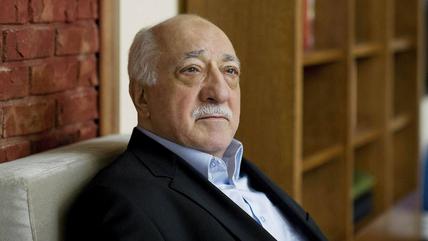
Portraying domestic opponents as connected to foreign powers is a familiar part of the AKP's political repertoire, most notably used against the Gülen movement through allegations of American backing. The Süleymancıs' German network now provides similar material for portraying a religious community outside the government's political control as foreign and threatening.
There is an important contradiction here. In Turkey, the Süleymancıs are targeted through financial allegations arising from the opacity and informality historically characteristic of the country's religious communities. Yet when they move towards greater institutionalisation and visibility in Germany, Ankara turns that increased visibility into a source of suspicion as well.
Under Erdoğan, support for the government has increasingly become an informal prerequisite for religious communities to enjoy state protection and operate without interference. The crackdown also sends a warning to other religious communities: remaining outside the government's political orbit carries a cost. Political loyalty is increasingly becoming a licence to operate.
© Qantara.de