Time to return to Gaza?
Palestinian Noha Soliman picks up her phone and scrolls through photos. There she is, together with her husband and her two daughters in Gaza before the war. In the meantime, her family has been torn apart. She recounts how she lives with her two daughters near Cairo while her husband is in a tent in the Gaza Strip.
"We can’t go back to Gaza now because of Mariam’s treatment, and he doesn’t know how to get out and come to us," she told Qantara, explaining that her seven-year-old daughter suffers from Mediterranean fever.
Noha first came to Egypt in 2024 to seek treatment for the inherited condition. Since the Rafah crossing reopened in February, some Palestinians who came to Egypt for medical care during the war have begun returning to the besieged Gaza Strip. Noha, however, has stayed in Egypt as her daughter’s treatment continues.
With the help of Egyptian donors, Noha has been staying in the Al-Qanater Al-Khairiya area near the hospital. "Living in Egypt is difficult even for Egyptians themselves, but that is still better than risking Mariam’s life," she said, adding that her daughter’s medical bill comes to about 10,000 pounds (approximately $215) and is unavailable in Gaza.
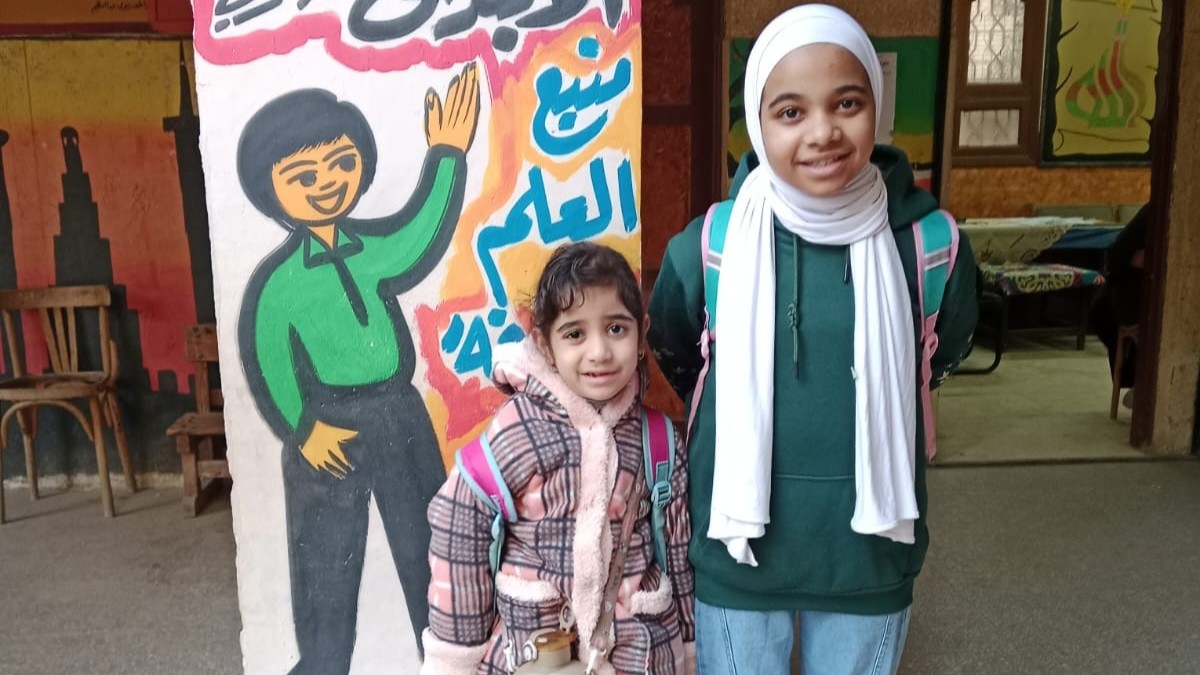
Noha currently works part-time at a cafeteria near her home for 2,000 pounds a month (about $34) and covers the treatment costs through sporadic donations or by borrowing money. She hopes that her husband—who is currently living in the Nuseirat refugee camp without a fixed place to stay and is forced to keep moving with his tent—will be allowed to join them in Egypt. His inability to communicate with those around him compounds his suffering, as he is deaf and mute and has always relied on his family to interpret for him in sign language.
Noha’s two girls do not attend Egyptian public schools but are enrolled in the more religious school of the Al-Azhar Institute, because like most Palestinians, Noha does not have residency. This lack of residency has prompted many Palestinians to consider returning to Gaza.
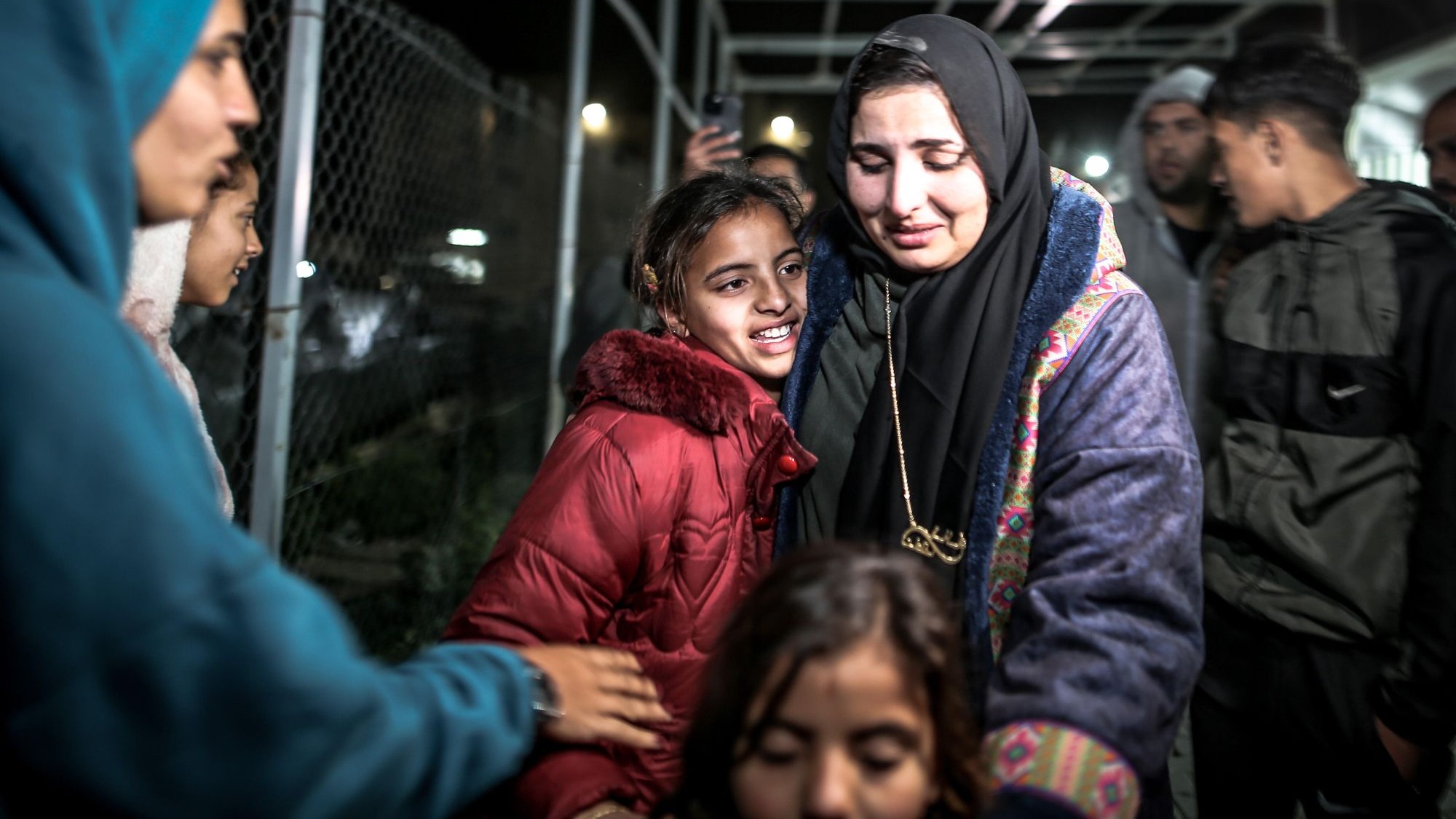
By the end of February, only 803 Palestinians out of approximately 110,000 living in Egypt during the war for medical treatment for themselves or their relatives had returned to Gaza. Palestinian activists who spoke to Qantara attributed the low number of returnees to "Israeli obstacles." Palestinians, particularly women, complained of "personal searches, humiliation, and the confiscation of their belongings" at the Israeli checkpoint after crossing from the Egyptian side.
Fear of crossing the border
For those seeking to return, first they have to register electronically at the Palestinian Embassy in Cairo. So far, more than 50,000 have registered to return, according to a well-informed Palestinian source speaking to Qantara on condition of anonymity. Coordination then takes place between Egypt and Israel regarding the names of those who will cross the border in specified groups.
"Despite this, the Israeli side refuses to allow some people to pass at the last minute without reason at the crossing gate," the source said. "Otherwise, a larger number would have returned already; the Israelis are restricting the return movement."
Some are afraid to register, especially Palestinian men under the age of 40, who could face "arrest or denial of passage for security reasons, as Israel views this group as the most likely to join armed groups," according to the source.
Gaza's silent children
Two years of war have left deep scars in Gaza. Some children have lost the ability to speak as a result of trauma. A team of psychologists is using new technology to help them find their voices again.
Palestinian Fadi Abu Qata who lives in the east of Cairo is also caught between the fear of harassment or worse, or of being denied the chance to see his daughter. The 32-year-old lives in the Ain Shams district in housing provided by the Egyptian Ministry of Social Solidarity for Gaza’s wounded, among others.
Fadi came to Egypt with his mother during a brief ceasefire in February 2025 to have two prosthetic limbs fitted after the war cost him his arms, as well as to get medical assistance for a leg injury.
"I was walking with my brother and my daughter, and we had a horse with us, on a road in central Gaza surrounded by houses. Suddenly, a house next to us was bombed, and shrapnel flew everywhere. The horse died instantly, and I was hit—I lost both my arms and was also hit in my leg," he said of the day back in January 2024. "Thank God it was me who was hit and not my daughter."
Fadi has been waiting in Egypt for months to find a donor for prosthetic limbs. As his wait drags on, he is considering taking the risk of returning, hoping to embrace his daughter despite the security concerns. His return would also be driven by difficult financial circumstances. "Life here is expensive; my friends in Gaza are the ones sending me money to live on, instead of me sending it to them."
No residency, no stability
Other Palestinians in Egypt, especially members of the upper-middle class and businesspeople from Gaza, face no financial difficulties. However, for them too, the biggest challenge remains the issue of residency, says Palestinian poet and businessman Muhsin al-Khazandar, 72.
Al-Khazandar fled to Egypt with his family in January 2024 along with a group of 18 people, including children and grandchildren. They traveled via the “coordination” mechanism, which was known at the start of the Gaza war as a means of fleeing the conflict in exchange for exorbitant payments, and the family settled in the Fifth Settlement area east of Cairo.
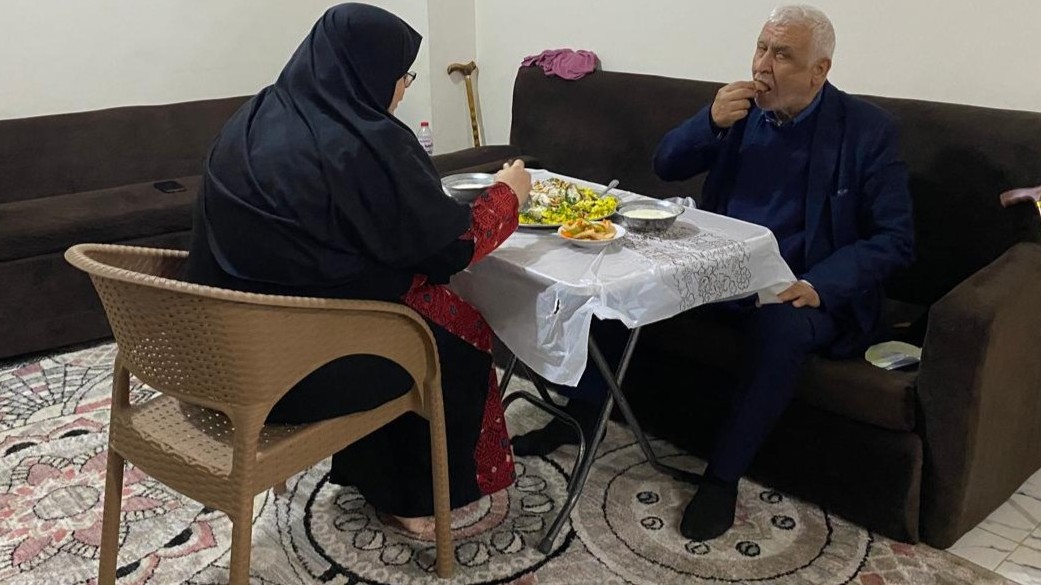
Although he has applied for an investment residency permit, as well as for Egyptian citizenship through the real estate investment program, he received neither. "There is an unannounced political decision not to grant residency to Palestinians from Gaza because the Israeli plan for displacement has not been implemented," he said. "We do not blame them—but at least they should grant us the ability to invest and enroll in schools without having residency," he told Qantara.
Among the restrictions, Palestinians in Egypt are also barred from opening bank accounts—except at the Abu Dhabi Islamic Bank—as well as from launching investment projects or purchasing agricultural land. Al-Khazandar’s numerous investments are in Gaza, particularly in the energy sector, and he is among the businessmen supplying fuel to Gaza, albeit in smaller quantities than before the war.
Al-Khazandar insists that the return of all Gazans is essential: "Everyone will return sooner or later; we cannot live outside Gaza." However, he adds that he personally will not return until Hamas disarms and the basic necessities of life are restored to the Strip. Until that happens, he will remain with his family in Egypt.
This text is an edited translation of the Arabic original. Translation and editing: Jannis Hagmann and Jess Smee.
© Qantara.de